Studio Visit: Mariona Benedito + Bayona Valero
Shared Space, Shared Vision
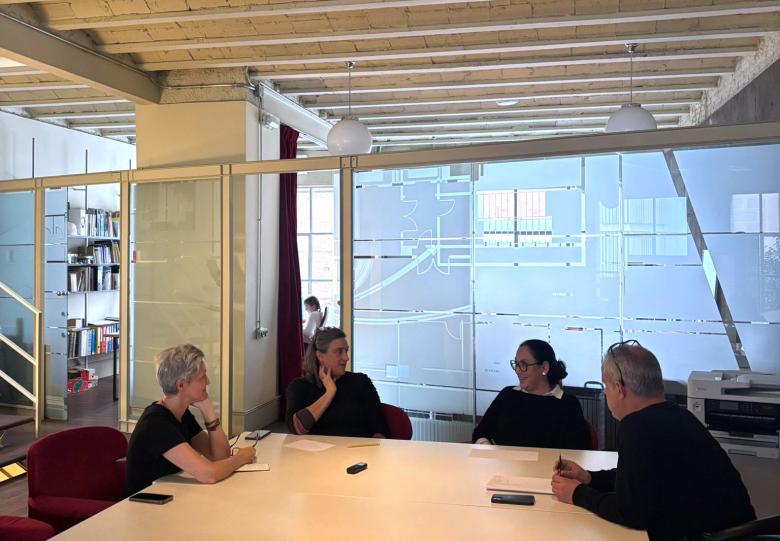
Spanish-Architects visited the shared Barcelona studio of architects Mariona Benedito and Bayona Valero Architects Associates ahead of them hosting the second installment of Architecture Studio Sessions in early March. Talking to them in a single conversation allowed for the observation of not only two established careers, but also the dialogue that develops between them. The interview unfolded naturally, in a fluid exchange where ideas were nuanced and complemented one another. An honest conversation about how to sustain a small practice, how to position oneself in the face of the housing crisis, and how to practice architecture responsibly in a fragile and changing context.
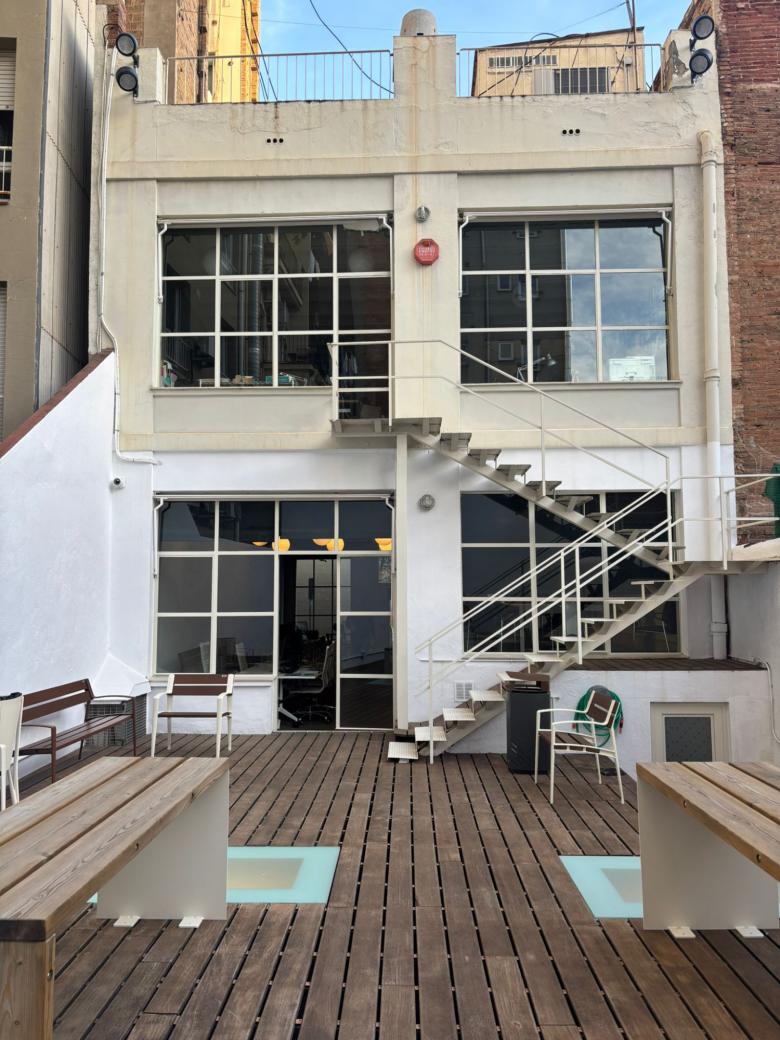
Ana María Álvarez: How would you describe the space that share?Marta Bayona: It is a dynamic and welcoming space that brings together a diverse group of people: Bayona Valero and Mariona Benedito, who practice architecture; La Invisible, a lighting design studio; Cities Connection, which helps promote Catalan architecture; and Benito, who has turned the space into a venue for conferences, talks, and the exchange of ideas on architecture, design, and the city.
Albert Valero: I would add that, given the size of the space, there are relatively few of us working here. So we work in a calm environment, which is essential for what we do.
Mariona Benedito: It’s welcoming because, even though people come and go—whether they’re here for the talks or to visit us—we’re surrounded by friends and colleagues. That’s something special.
Mariona: Marta and Albert found this space and set up the coworking environment. I came here after parting ways with my business partner. I loved the place and thought it was essential to share infrastructure and expenses.
Marta: These days, architecture firms are small (there are just two of us; Mariona is one of them). It’s hard to find a space like this—pleasant and well-located—unless you share it. On the other hand, ours is a very insular industry, but we’ve tried to come together to help each other. So it’s part strategy and part survival—it’s about adapting to the times.
Albert: Door to door, or even in the same room, because there's a curtain separating us.
Mariona: We have an acoustic curtain that helps us block out noise when we have a meeting (so we won't be disturbed), but there have been times when we've been competing: the reality of architecture competitions means you're constantly measuring yourself against colleagues who are just as good or even better than you. And that's the situation we've found ourselves in.
Albert: The curtain turns on at that moment because we don't usually have it turned on.
Mariona: But we've also done competitions together many times—without the curtain.
Marta: Yes, positive influence—you always learn by observing. We share our competitions and ongoing projects with each other, and we’re always discovering new ideas or finding new ways to collaborate.
Mariona: We’ve also shared our network of collaborators and materials we’ve tested on projects that we think could be useful to others, including construction solutions that some of the firms have tried out. We have a network that’s more direct and responsive, which is much better than going it alone.
Albert: At the same time, there’s a tangible aspect to it, isn’t there? We’ve created an environment for work and reflection, where we can discuss various topics. It’s a kind of collaborative work dynamic, which is nice when we’re just starting out and there aren’t many of us.
Marta: We haven't criticized each other much... When we've done competitions, for example, we have sometimes had disagreements.
Albert: I don't remember right now. As for criticism, I don't think we've come across any so far.
Mariona: No, there haven’t been any moments like that. What we have had, though, are some exchanges of views on city issues, but that’s enriching as well. On the other hand, we’re all university professors, which means we stay up to date on what’s happening and what’s in the works. If any of us has seen or attended an event, we exchange opinions and information. In these cases, the criticism isn’t personal; rather, we express different opinions, which may be conflicting or radical.
Albert: There have been moments of exchanging views, rather than criticism.
Marta: We’ve been in the profession for 26 years now, and we’ve developed a fairly distinct style, even though we don’t have a signature look that says “this is Mariona Banedito” or “this is Bayona Valero.” Being at the university, constantly on the move, seeing new things, and immersing ourselves in them makes every project a unique process and a specific response to the moment. We started almost from scratch.
Mariona: I agree with Marta. We’re constantly learning and don’t rely on tried-and-true solutions. It’s exhausting and draining, but every time we start a competition, we do so with the excitement of trying something different, of not repeating the same formulas. Bayona Valero has built much more than I have; they have developed more public works, while I have focused more on ephemeral spaces—this is something that definitely sets us apart. And together we have entered competitions or submitted proposals for specific projects throughout Catalonia and beyond.
Albert: We’re talking about craftsmanship—it’s what sets us apart and defines how we work: on a different scale, with the work divided into phases. And it’s a positive thing that we’re involved from the beginning to the end of a project. There is no hierarchy, and this allows us to be involved in the entire process: from the most formal aspects of the architectural design project to invoices and claims with the administration.
Albert: I believe that when working in a city—in a specific landscape—our primary responsibility is to create a lasting project that transforms that environment. This is a huge responsibility. We think twice before drawing a single line or even starting a project.
Mariona: Beyond appearance and transforming a space, the real responsibility lies in how it changes the daily lives of the people who use it. How can we be more generous? By making a school a place where learning is as enjoyable as possible. Or, despite budgetary constraints, regulations, administrative hurdles, and bureaucracy, by striving to make housing as good as it can be. That is the responsibility.
Marta: I would also say that it is our responsibility to try to anticipate future changes in the way we live and to design buildings that are more sustainable. We have to anticipate these changes, even though we often lose competitions because we’re too far ahead of our time. It’s also essential to think about shared spaces for living or working. Today there are more cooperatives, and I think this has to do with the way architecture is evolving and trying to bring issues to the table to pressure institutions with concrete examples.
Mariona: I also think that the fact that we’re in academia means we’re constantly engaging in this kind of mental exercise—we’re always thinking ahead and creating opportunities that the administration might not have thought of. They have to buy into our ideas, and now that we’ve got a few gray hairs, we’re able to achieve more than we did at the beginning.
Albert: Especially because institutions have their own way of doing things—a certain inertia—and it’s incredibly difficult to change their ways. We don’t lose hope, even though it’s hard, and we keep making proposals, because sometimes we’re lucky enough to find people who are open to moving forward.
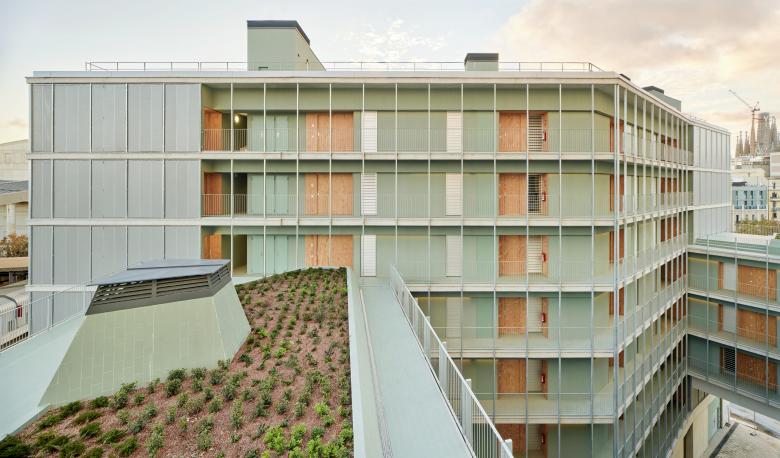
Mariona: It’s impossible not to take a stand in the face of such a disaster. It’s primarily an economic issue and a matter of social housing policies that, so far, here in Spain, have been mishandled. A great deal of public housing was built using construction methods that were groundbreaking at the time, but it has been sold off. Today, we would have a stock of housing that is already built and protected, which could be improved at little cost.
We need housing; we have to build it. I believe the future lies more in repurposing buildings originally intended for other uses into housing.
Albert: It’s true that there’s a housing shortage and that the public housing stock is in the state it’s in, but we need to change the culture of owning more than one apartment and, above all, preserve certain areas and cities facing housing pressure. Anyone living in a city should have access to housing within a certain financial range that doesn’t require paying 80% or 100% of their salary. Therefore, I believe this is not just a matter of housing construction policies, but a policy that protects city residents.
Marta: I also think there’s an administrative issue that needs to change: public processes for building housing can take up to a decade. For example, it took us ten years to develop the housing complexes in Glòries. As long as the process remains so lengthy and costly from an administrative standpoint, how can we possibly build as many homes as they say we need? All administrative processes must be streamlined and made more efficient.
Mariona: Perhaps the private sector could step in here, with incentives from the public sector to offer affordable housing and receive tax breaks, for example. Not everything can fall on the public sector. This is already happening in Austria and Switzerland.
Housing is more valuable for creating a friendlier city, where neighbors know each other, than for having a city full of Airbnbs, where no one says hello and the place feels lifeless. In Northern Europe, private developers can undertake major renovations on existing buildings.
Albert: Or promotes cooperatives, as in Switzerland.
Marta: In Switzerland, different families share living spaces and live together in shared apartments. Of course, the apartments are very large, but there is a culture of greater respect for preserving both indoor and outdoor spaces as a shared resource.
Albert: Here, we have a culture where everyone is expected to have their own apartment, their own home. Perhaps there needs to be a paradigm shift. We live in a society that has been living the same way for a hundred years.
Mariona: But a hundred years is nothing. Sharing your living space has other advantages, like growing old together. There are other ways of living that work, but here we aren’t used to them. Just as we value public health care and public education, having public housing means taking care of the spaces and sharing certain areas.
A lot of people want to live in La Borda. First of all, because someone had the courage to try a different way of life. So there are small steps being taken toward models that benefit society, that help people live longer, and that allow children to interact with older people. It’s actually really great.
Marta: Furthermore, the family unit is so diverse and complex. Many people live alone. And many people are already planning ways to share living spaces and care for one another in their later years.
Albert: When people talk about this way of life as an innovation, I think about how my grandparents lived in the village: all together under one roof. Uncles, children, and siblings sharing a large space. So we haven't invented anything.
Mariona: Exactly, even though it was the same family. It’s much easier to envision this kind of shared structure built from the ground up, rather than a public developer undertaking this type of project where the residents come from very diverse backgrounds. That approach doesn’t work very well. On the other hand, a cooperative of people—who might be colleagues or distant acquaintances—who agree to undertake such a project together is more likely to thrive.
Albert: We can also talk about co-living in countries like Senegal or Morocco, where several people who are not related share living spaces. It is a cultural issue. However, it should be noted that this type of living arrangement is associated with poverty and scarcity.
Marta: And that's not really the case. We need to change our perspective on this.
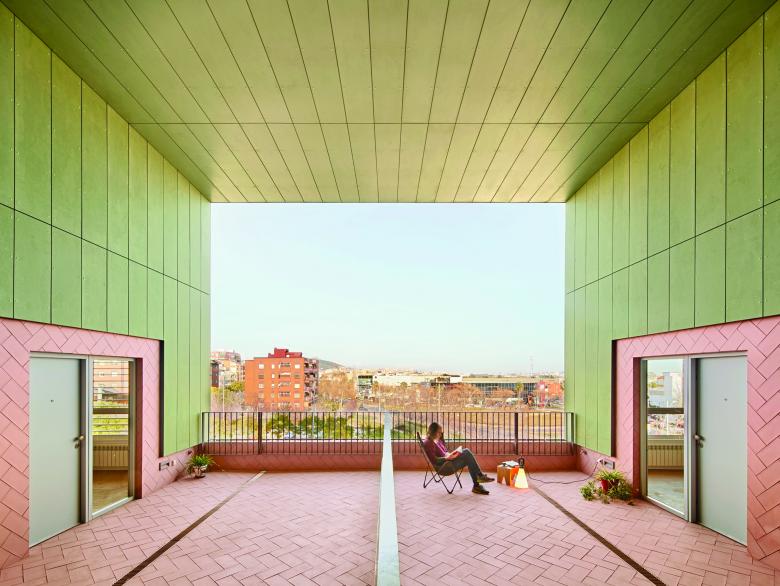
Albert: We are absolutely clear that, when we practice architecture, we want to contribute something to the city, to the landscape, and to the site. This is non-negotiable, and we focus our projects on this.
Marta: Therefore, the design of the ground floors is essential: contact with the ground, the creation of public space within the building itself, for example. We place an emphasis on providing solutions that strengthen the building’s relationship with its surroundings.
Albert: We are very clear that a building, aside from having private uses, serves a purpose because it occupies a space and must contribute to the public realm.
Marta: We are looking for a clean, uncluttered aesthetic that blends seamlessly with the surroundings.
Albert: We are interested in the simplicity of materials and in making the most of the tight budgets typically associated with public architecture. I believe that architectural firms working in the public sector seek the most cost-effective way to create comfortable and appropriate spaces. We work with materials in their most basic form, certainly, but our goal is to optimize resources.
Marta: Ever since the first project we won right after graduating, I've been obsessed with shared spaces: organizing communal areas, keeping spaces open to their surroundings, and creating more fluid environments.
Mariona: For my part, I’m obsessed with finding something that is beautiful and that can also bring about change in that place. To develop a project that isn’t just about designing spaces, but that influences the place where it’s located and the people who live there. I had the opportunity to work on the renovation of an existing building, including a major energy-efficiency upgrade, which received an honorable mention from the New European Bauhaus. These kinds of projects challenge me: they’re socially and economically ambitious, and beautiful.
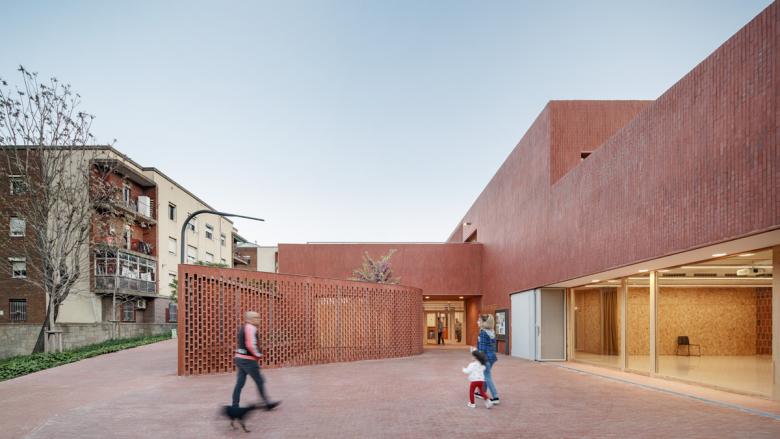
Albert: For us, the Casal de Trinitat Nova in Barcelona. On the one hand, it represented a change in scale for us (we had previously worked on large-scale projects, and this one is 1,000 m2). It is a plaza-like building: we realized that what was needed there wasn’t a building, but a public space. The lesson we learned was that sometimes, rather than thinking about building, we need to think about creating a space for a neighborhood. The program was developed with the residents, so we learned a lot from the future users, who clearly shaped the building’s form. Additionally, it received the FAD People’s Choice Award.
Marta: Here we’ve managed to create a building that functions as public space. It clearly illustrates our approach: the roof is public space, and the same material covers everything—the floor, the roof, and the facades. It gives the impression of a topography. This is a recurring theme in our projects: topography, the creation of varying levels and platforms that integrate the building.
Another project worth mentioning is Block B in Glòries, Barcelona. The main challenge was working with a very large team—both within our own firm and with the other firms designing the surrounding buildings. This involved challenges related to communication and coordination; for example, when deciding on materials to maintain a somewhat cohesive look while still allowing for creative freedom.
Albert: The biggest lesson was seeing and sharing how each team approached the same challenges in different ways.
Mariona: One of the projects I’d like to mention is a large-scale one, at least for me: 79 public housing units in Sant Boi, a municipality in the Barcelona metropolitan area, which I developed with my former partner Martí Sanz and Estudio Herreros. It took eleven years of my life, during which many things changed on a personal level, yet I was focused on a single architectural project. There were several challenges, in addition to the years of development: managing a very small budget; working with a flexible government agency, IMPSOL, which allowed us to build a neighborhood where there was nothing and to propose community spaces despite the need for maximum land use efficiency; and collaborating with a very large team that also made the construction a success.
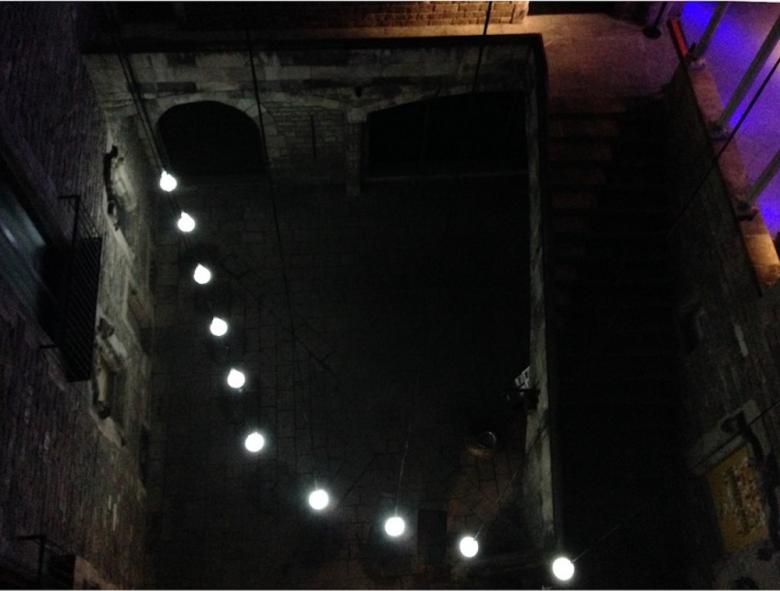
Another project, completely different and an aspect I really enjoy, is Les llàgrimes de Santa Eulàlia: a three-day workshop with students that culminated in the installation of the project at the LLUM Festival in 2014, which won the FAD Award for Ephemeral Interventions. With a low budget, we managed to create magic by suspending tears of light in a dark courtyard. The challenge was the material, so we used basketballs as a mold, which held the water pressure and created a perfect sphere of ice, with light inside. We built it ourselves, too—a challenge I really enjoy.
Albert: The future lies in AI. And, personally, I have a healthy respect for the implementation of AI, as well as for the creative and knowledge-based processes we've been discussing.
Mariona: I think the profession will have to become more open and allow for more flexibility. For example, when it comes to a home, each client should be able to choose the finishes. We should allow for structures to be left unfinished, so they can be refined over time, and so everyone can do it their own way. We all want to personalize our spaces. As architects, we don’t need to control everything; we have to let go. I think there’s room for change.
Albert: We are aware that architects believe they dictate what things should be and how people should live. But they are nothing more than another player in the process—a facilitator.
Marta: I think this is a profession that needs to be given more respect. I feel that there is exploitation, both in the public and private sectors, because people don't appreciate a project or the work that goes into creating it.
On the one hand, I think it’s because we’re not good at communicating the value of what we do. So this is something we need to improve: recognizing our own worth and spreading the word about how important our work is. On the other hand, there needs to be a shift in our relationship with money, and that involves valuing ourselves as well. Professional organizations need to help us put a stop to abuses—a problem that has existed ever since fee schedules were deregulated.
Albert: The administration itself is already calling for a reduction in fees for public tenders, where lower costs are viewed favorably.
Marta: We still need to learn how to negotiate budgets. We’re creative people in a profession that’s exciting and that we enjoy, but we want to make a living from it without so much uncertainty.