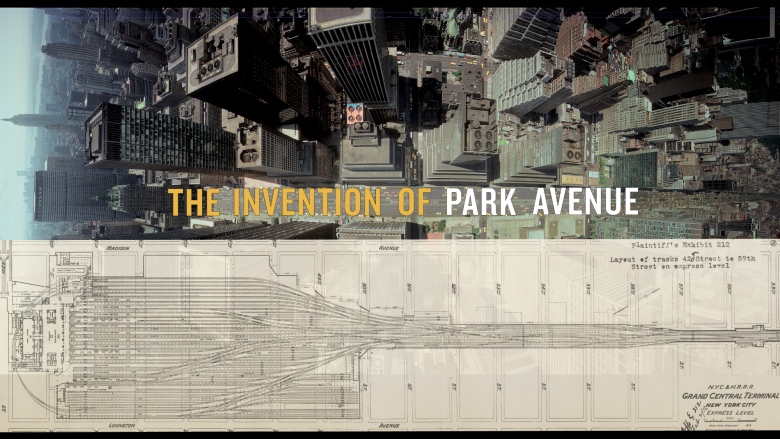
The Invention of Park Avenue
In the century since Grand Central Terminal opened in 1913, after more than a decade of massive construction, the blocks from 42nd to 53rd Street were transformed from a noxious, impassable railyard into one of Manhattan’s most desirable and prestigious addresses: Park Avenue.
In 1903, when New York State banned steam locomotives in Manhattan after a deadly Park Avenue tunnel accident, the New York Central Railroad undertook a plan of unprecedented scale and expense. They would electrify their system and vastly enlarge Grand Central by double-decking the train tracks in the entire 70-acre railyard. In doing so, the railroad’s engineers, architects, executives, and capitalists created the “ground” for an urban alchemy that produced some of the most valuable real estate in the world. Their investment also sparked the engine of growth for the length of the avenue and the broader development of modern Midtown.
Park Avenue has been reinvented by the real estate pressures of “highest and best use” at least three times. Its first life as a zone of posh hotels, clubs, and apartments began to shift toward tall office buildings in the mid-1920s. In the postwar years, a boom in speculative office towers answered growing demand for modern, air-conditioned space. Soon the iconic Lever House, Seagram, and Union Carbide buildings recast Park Avenue as an elite corporate corridor. In the 21st century, incentivized by the City’s rezoning of East Midtown, shiny new skyscrapers of even greater height and density have continued to redefine its trophy architecture.
There would be no Park Avenue without Grand Central, but that first act of creation – an avenue out of thin air – was the catalytic connection of rail and real estate that gave Park Avenue its extraordinary, evolving New York identity.
- Cuando
- 11 de febrero hasta el 26 de septiembre, 2026
- Donde
-
The Skyscraper Museum
39 Battery Place
10280 New York, NY, USA - Organizador
- The Skyscraper Museum
- Enlaces
- More information
The Skyscraper Museum