Architectural Narratives
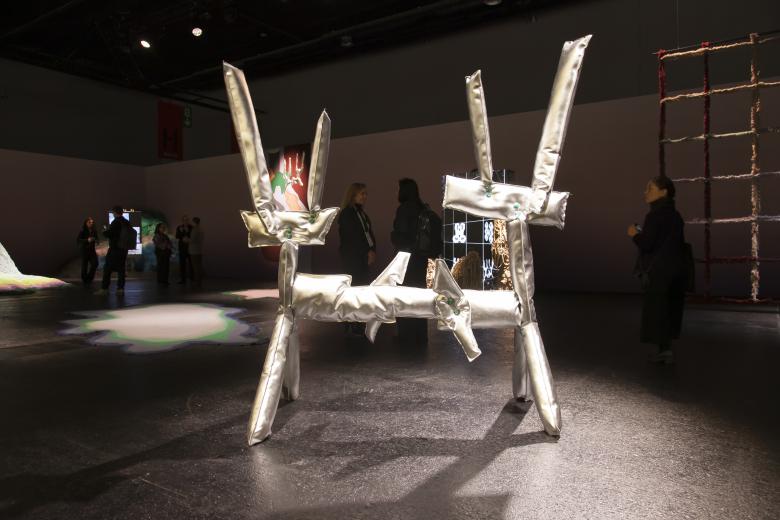
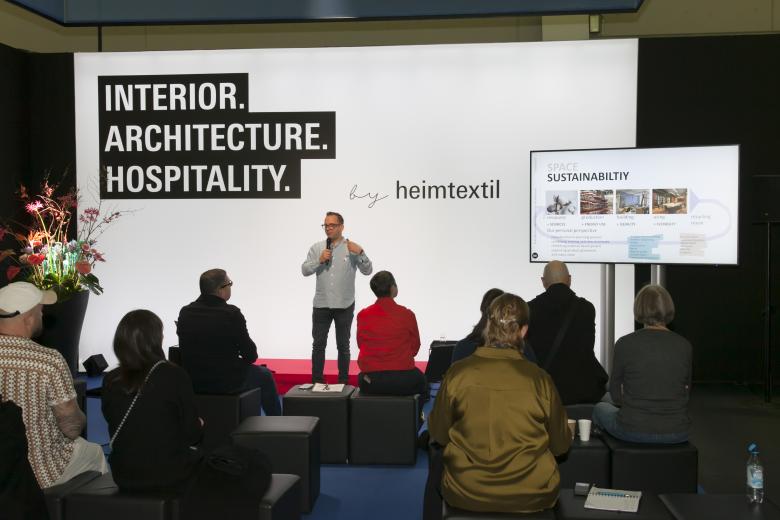
Home textiles are increasingly establishing themselves as defining elements in interior design. New impulses were provided in mid-January at the Heimtextil 2026 trade fair and the expert presentations organized by World-Architects in the event program.
Inspiring visual impressions and the tactile experience that is so crucial in textile interior design were captured at Heimtextil in Frankfurt in mid-January. The tension between craftsmanship and technology, and in particular the supporting role of artificial intelligence, was seen as an opportunity. Sustainability and functionality continue to shape design. The focus is on high-quality, durable, and natural materials. Textures are deliberately mixed and aesthetic standards are high. Interior design has long since moved away from viewing textiles as purely decorative or functional elements in a room. Textiles have become protagonists. They are intended to have an impact in a room with their visual and emotional power.
“For us, design is never l'art pour l'art, or art for art's sake, but rather a tool for telling spatial stories,” says Elisabeth Ramm, associate at Atelier Brückner in Stuttgart. In her keynote “The Fabric of Story – Exhibition Design in Dialogue with Material, Space and AI,” delivered as part of the Talks + Tours organized by World-Architects in collaboration with the trade fair, Ramm provided insights into the studio’s work. “We design spaces to give them meaning. Sometimes the material itself becomes the storyteller, and craftsmanship becomes a narrative medium, a cultural memory. I am fascinated by understanding how material and space, and now also the dialogue with AI, create synthetic textures and aesthetics that in turn become carriers of meaningful content.”
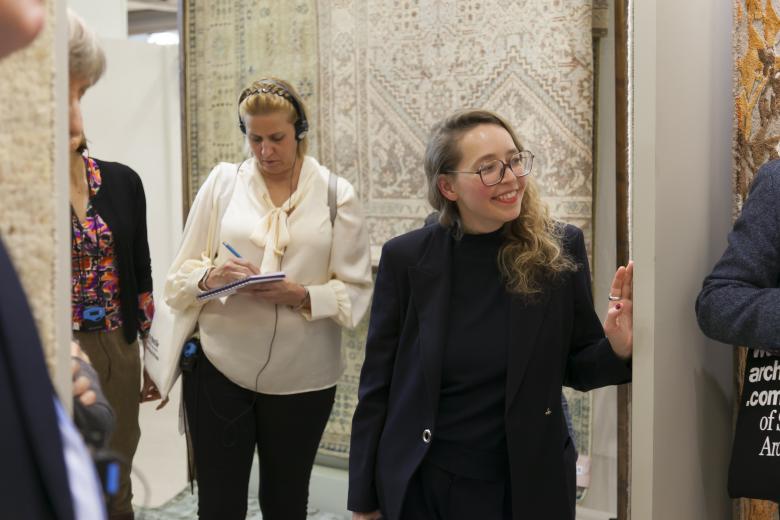
The importance of architectural narratives was also the focus of the second member of the World-Architects expert panel, architect Piotr Misiewicz, Head of Design at de Winder Architekten in Berlin. “Floor coverings shape the atmosphere, structure floor plans, and support architectural narratives,” was his core message. “They connect users and space. In combination with light and haptics, they mediate between intended function and experienced emotion, thus contributing to an optimal spatial experience.” The team at de Winder Architekten is driven by “architecture that goes beyond the mere design of physical structures. Spaces are not rigid forms, but living systems of relationships with social functions and emotional effects.”
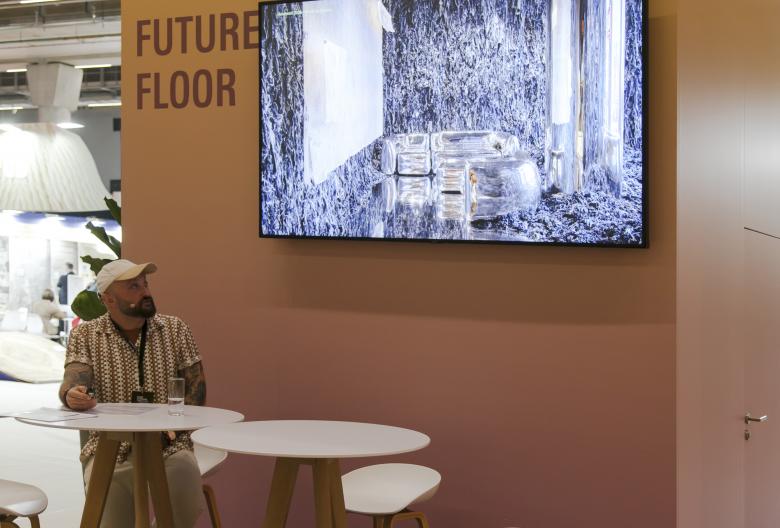
With the intriguing question “What does it take to keep a craft alive?”, interior designer Mauro Brigham, founder and creative director of the Brussels-based firm ncbham, began his lecture “Expanding your craft” as part of the free Talks + Tours series. Brigham reflected on design as a constantly changing field characterized by experimentation, risk-taking, and the insights gained from these experiences. It does not require repetition, but rather the courage to embrace the unknown. “Every project becomes an opportunity to develop, to stumble, to discover. Evolution is not a given, but must be earned through courageous action.”
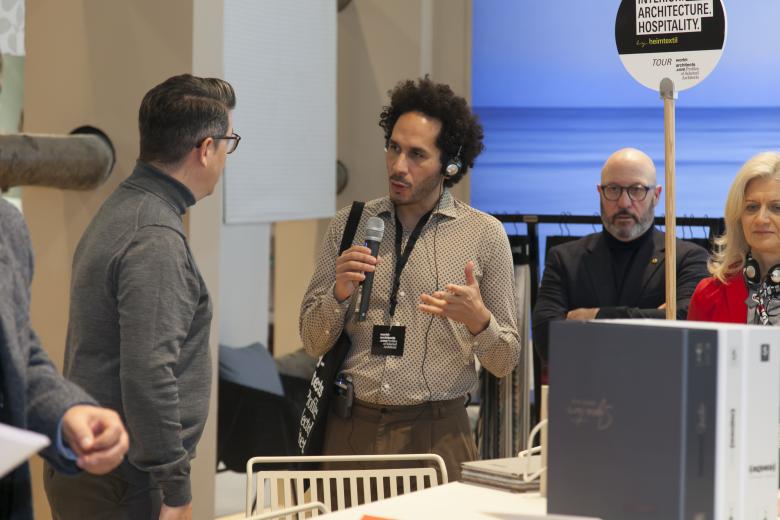
The quartet of speakers was rounded off by interior designer Andreas Jacob, associate at brandherm + krumrey interior architecture in Cologne. The central questions in “Textiles in Space” were how textiles affect interior spaces, what advantages they offer in terms of design, and how interior designers can translate these materials into a uniform spatial language. And here, too, we experience a sense of déjà vu: "Carpets, curtains, and ceiling panels are more than just functional elements in a room. Textile materials are design-defining elements: they structure rooms, influence acoustics and atmosphere, and significantly shape the perception of interiors,“ said Jacob. ”Through conscious material selection, spatial choreography, and conceptual clarity, complex spaces are created that are both functionally and emotionally compelling."
The next edition of Heimtextil will take place from January 12 to 15, 2027, at the exhibition grounds in Frankfurt am Main. Learn more