Team Led by Níall McLaughlin Architects Wins Competition for New 'Museum of Jesus' Baptism at Bethany, Jordan'
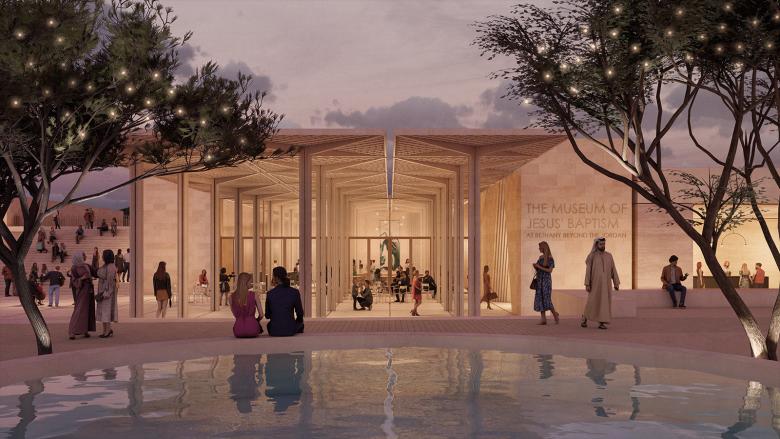
The Foundation for the Development of the Lands Adjacent to the Baptism Site has announced that the team led by Níall McLaughlin Architects (NMLA) has won the Museum of Jesus’ Baptism at Bethany, Jordan – International Design Competition, besting the six other finalists in the two-stage competition.
This week's news comes three and a half months after the seven finalists were revealed in the international design competition organized by Malcolm Reading Consultants, and just two weeks after Níall McLaughlin was named the 2026 recipient of the RIBA Royal Gold Medal. Needless to say, it has been a very good start to the year for Níall McLaughlin and the other members of his eponymous London practice. For the design of the Museum of Jesus’ Baptism at Bethany, Jordan, NMLA is working with a team that includes Kim Wilkie Landscape on landscape design, Nissen Richards Studio on exhibition design, Arup on engineering, and Studio ZNA on lighting.
The Foundation for the Development of the Lands Adjacent to the Baptism Site aims to open the new museum in 2030, coinciding with the approximated bimillenary of Jesus Christ's baptism by John the Baptist. Bethany Beyond the Jordan, now an archaeological site and destination for Christians, is believed to be the site where Jesus's baptism took place. The competition brief called for a “story-led museum and garden” that will serve visitors to the holy site, “offering space for reflection and learning and, depending on the individual, preparing visitors for a profound spiritual connection.” The museum is expected to welcome between 400,000 and 450,000 visitors annually once it is completed in four years time.
This is how the NMLA-led team described their project when it was named a finalist last year:
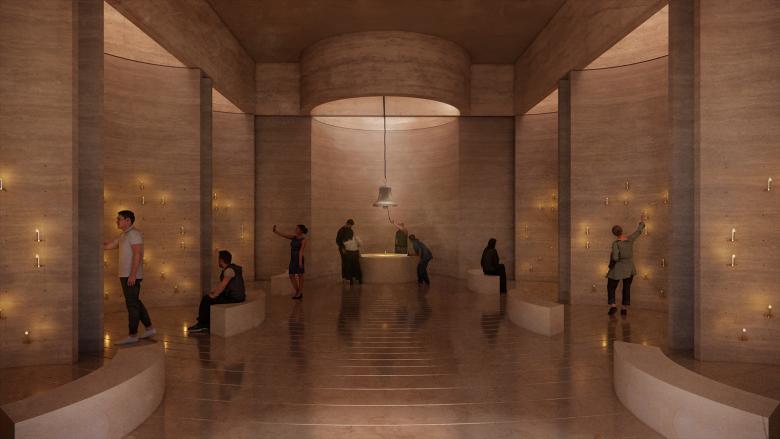
The museum is an east-west journey. It combines permanent allegorical elements with flexible galleries. Exhibition spaces are held between deep walls containing displays, circulation, and services. The materials – rammed earth and stone – come from the land nearby and can be built by local labor and resources.
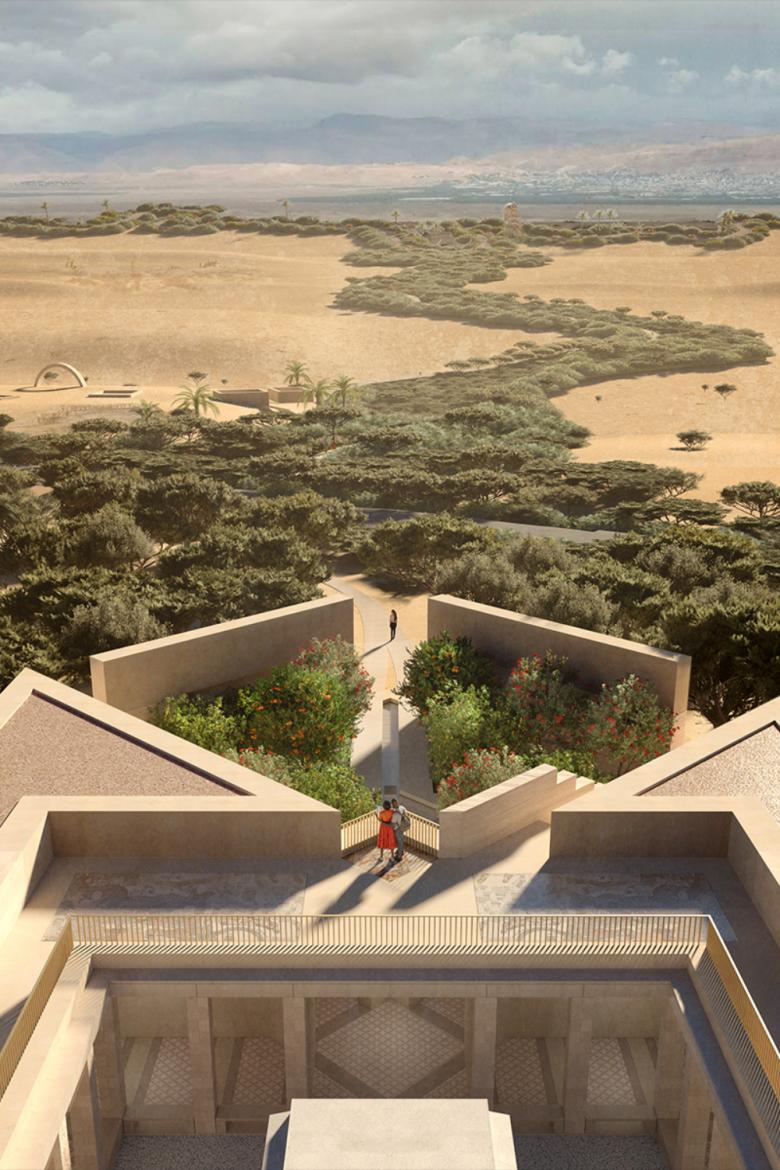
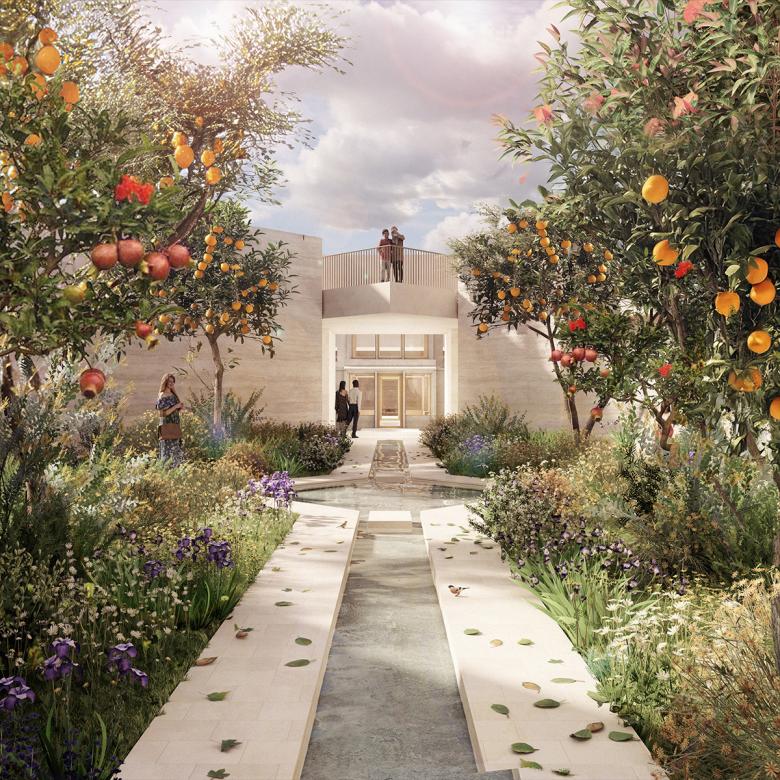
Descending into the earth from an arid wilderness garden you cross a water-filled rift and re-emerge into the light to a fruitful paradise garden. The eastern entrance and western exit face each other across a public square. The facing doorways are a triangle and a circle, emphasizing a life in Christ as the Alpha and Omega. Between them, an open stepped landscape rises onto the roof. We imagined it as an elevated archaeological site with mosaic floors between low stone walls. From this raised public space, you can view the valley of the Jordan River and the pilgrimage route to the Baptism Site.
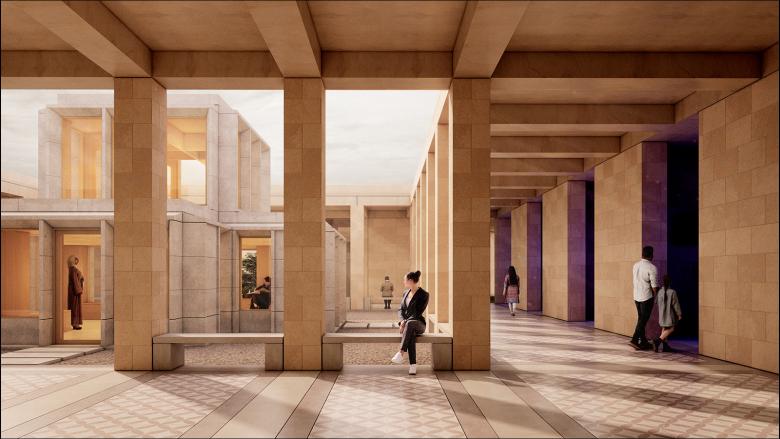
“This proposal responds sensitively to the luminous setting in the wilderness and the adjacent UNESCO site,” Dr. Tharwat Almasalha, chair of the competition’s advisory panel*, wrote in a statement commending the winning design. “Though modest in size and form, the design has exceptional resonance: it will be attuned to human and divine connections.” This week's announcement further praises NMLA's “close attention to Jordan’s vernacular architecture” via the incorporation of locally sourced stone and rammed earth, the way Kim Wilkie Landscape's design “allows the wilderness to gently embrace the museum and fills walled gardens with scented native species,” and how Nissen Richard Studio's exhibition design “uses variation in light, sound and material to create an absorbing immersive atmosphere that expresses the museum’s narrative arc of ‘wilderness, water and witness.’”
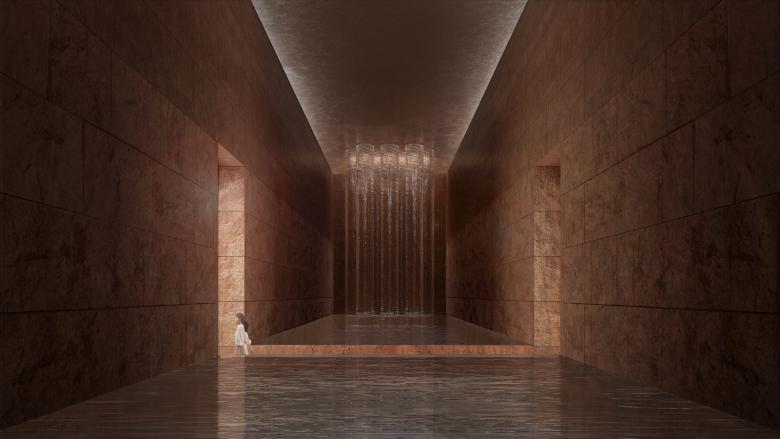
“We are delighted to receive the news that we are the winners of the competition for the Museum of Jesus’ Baptism at Bethany, Jordan. It is an extraordinary site with a profound history. The brief was beautifully written, and the shortlist was exceptionally strong. We felt honored to be chosen to participate with such an interesting group. The challenge of the design was to find a way to allow the architecture to mediate between a charged landscape and the sacred narratives that arose within it. It demanded a building that could work with allegory. At the same time, the project needed to use local labor, skills, and resources to achieve something with a sense of social responsibility and low carbon expenditure. We now look forward to working with the Foundation to develop the design in dialogue with enthusiastic local and international experts. We relish the opportunity to learn more about this beautiful country.”
- Dr Tharwat Almasalha (Chair), Chairman of the Board of Trustees, The Foundation for the Development of the Lands Adjacent to the Baptism Site
- Professor Barry Bergdoll, Meyer Schapiro Professor of Art History, Department of Art History and Archaeology at Columbia University
- Mr David B. Greenbaum, Director of Culture and Museums, Gensler
- Princess Alia Al-Senussi, PhD, Senior Advisor, KSA’s Ministry of Culture and Art Basel; Visiting Professor, Virginia Commonwealth University, Qatar; Chairman, K11 Art Foundation International Council
- Mr Ousama Gabi Ghannoum, Member of the BDZ Board of Trustees and Member of the Museum Committee
- Professor Mónica Luengo, Art Historian, Landscape Architect and Heritage Consultant; Member of Honor of the International Scientific Committee on Cultural Landscapes ICOMOS-IFLA
- Dr Leen A. Fakhoury, Heritage expert and Architect; Industrial Professor – German Jordan University (GJU)
- Mr Aziz Husein, Global Lead, Built Environment, Aga Khan Trust for Culture (Aga Khan Foundation)