b720: The Practice of Questioning
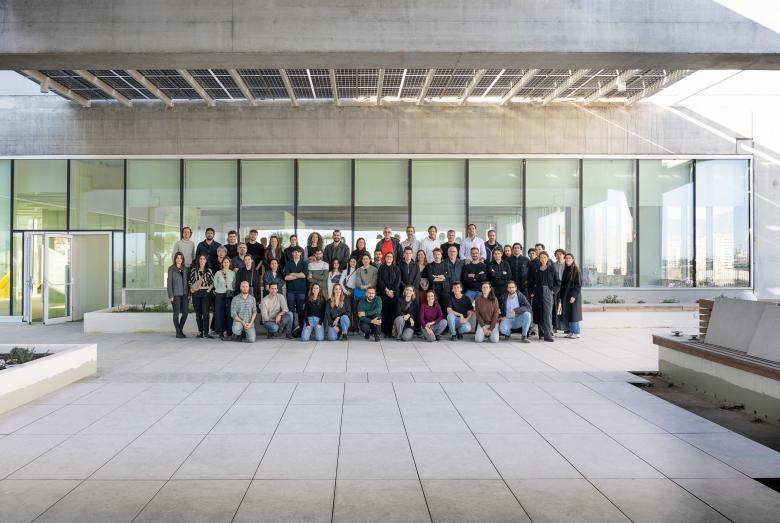
At b720 Fermín Vázquez Arquitectos, architecture begins, not with a form, but with a stance. In contrast to the inertia of a discipline often defined by style, the firm insists on a different approach: designing requires understanding, questioning, and taking direct responsibility for the city and its inhabitants.
Based in Barcelona and Madrid, the practice of b720 Fermín Vázquez Arquitectos spans different scales, contexts, and urban cultures that, rather than conflicting, intertwine. At this intersection, they develop a vision capable of operating on a global scale without losing sight of the local details.
In our conversation ahead of the firm's Architecture Studio Session on April 15, Fermín Vázquez advocates for an architecture that focuses less on authorship and more on the ability to interpret, negotiate, and make informed decisions; he champions a practice that moves away from immediate gestures and relies on analysis, time, and doubt as design tools. In an increasingly complex world, for Vázquez, true value lies not in offering quick answers, but in asking better questions.
I think we are what we’ve always been—and certainly quite a bit of what we wanted to be. We’re a firm that strives to make interesting contributions to the field, and at the same time we feel a sense of responsibility to serve society. Architects say it all the time, but it’s true: we feel a strong sense of responsibility.
Furthermore, we have the resources to tackle highly complex projects and compete on a global stage. Likewise, although we operate out of two major Spanish cities—Barcelona and Madrid—we remain deeply rooted in our local communities. I say this because, as architects, we’re interested in discovering cultures and learning about different contexts, but we’re very aware of the importance of truly understanding a place. So we have a good and useful combination of being local with an outsider’s perspective: we’re very much from Madrid and very much from Barcelona, and at the same time we can view both places with a bit of distance to be more objective or find different and varied solutions.
It makes a big difference. The first thing you realize is that they aren’t as different as we think. Of course, they’re two cities built differently, and they even have different ways of understanding themselves, but they don’t seem so different when you work in remote places. What’s interesting is the subtlety of that difference—because we learn from it, because it’s enriching, and because we manage to develop an intimate, closer, and almost emotional connection to both cities.
Intervention is always necessary. The point is that architects must continue to assert their role as useful agents. Without wanting to sound self-serving or arrogant, an architect’s importance lies in their ability to envision the city from a comprehensive perspective. For us, this comes naturally; it’s what we do, and we know there are many other ways to view the city: from an economic or legal perspective, for example, but also from a personal, familial, or even psychological one.
We see many of these situations unfolding simultaneously, and we understand them relatively well, beyond just shaping them. But it’s not just about shaping them or resolving functional challenges—whether simple or complex—but rather about understanding all of the interests we’re accustomed to managing, negotiating, and listening to. And I think that’s almost the most rewarding part of what we do.
To get back to your question: it’s an ongoing challenge because cities have never stopped growing—and, for the most part, they continue to grow. Urbanization is still on the rise, so these skills, so to speak, are more relevant than ever.
I’m old enough to have seen a few trends come and go, and while this is certainly open to debate, we try to avoid creating architecture based on form or the pursuit of form as our primary approach.
I’ve never really seen architects as overly artistic. When an architect starts to see themselves as too much of an artist, that’s when things start to get problematic. We’re something else entirely, although it’s true that we’re driven by a sensibility very similar to that of many artists. There’s a deeply cultural undercurrent in what we do and in the things that interest us, but we’re something else entirely.
Our work has a direct impact on people’s lives and their day-to-day routines in a very tangible way. And that, I believe, compels us to work differently—without giving up on those impulses that make the world a better place, which are undoubtedly tied to the way things are, to the way our cities are shaped.
It's not a starting point that we consider suitable for the vast majority of projects. And I think that explains that statement.
Yes, that's true. You never really know why it happens... I suppose we end up influencing each other. It's true that every piece of work we create reflects a kind of ongoing conversation within the studio that probably attracts a certain type of colleague and collaborator. And this, too, builds up and adds layers over time.
I have tried not to impose my own quirks, beliefs, or preferences. But there are certainly matters of principle, values, and conscientious approaches that remain constant and are shared. At the same time, our concerns have evolved.
We are often asked to look ahead and predict the future. I’m not entirely sure we’re the best people for that, but it is certainly part of our mandate, so it forces us to consider strictly contemporary issues in a rapidly changing world. Perhaps we are living through one of the most rapidly changing periods in our societies, in the world, in the tools we use, in the interests that surround us, in the economy, in energy... We must stay attuned to these changes, and that has undoubtedly caused our architecture to evolve. Clearly.
They vary. When we’re given an assignment, the first things to consider are inevitably the location and the timeframe: the project takes place in a specific location, and there’s a distinct physical and temporal context. We also evaluate other factors, such as the scope of work, the needs, and the requirements of the task at hand.
Before jumping to conclusions or coming up with ideas, it is essential to analyze the context and the needs. How has it been done before? Has anything similar been done before? Was it successful or not? Are we capable of improving on what has been done before? Why is that? What makes it different? What makes it special? What makes it unique? What does our client want, and why? What impact does this have on the rest of the city and on society? What resources do we have available? How much time do we have to do this?
We make an effort to answer these questions before we begin developing proposals. The proposal process itself takes time; we test and critically review our ideas, including various alternatives. Because designing is about making choices, we like to explore different paths on the decision tree.
This gives us a greater sense of confidence that the final proposal won't be entirely wrong. I think it’s a somewhat dry methodology—a kind of figurative restraint, very serious—which isn’t incompatible with putting in tremendous effort, whether in terms of layout, composition, or even ornamentation.
We realize that there are certain things we need to get under control before diving into the project with our quirks, obsessions, or more personal interests—which, in the end, are of concern only to architects.
We are comfortable with this and take a certain pride in managing complexity. It is true that, these days, an architectural project has become an excessively complicated thing to manage (for reasons that are beyond the scope of this discussion, but which we have given some thought to).
On the one hand, regulations are part of this process—a rather revealing part, because they seek to obtain assurances and confirmations from various stakeholders who are sometimes far removed from the specific issue at hand, have a narrow perspective, and whose views may conflict. The goal may be laudable or desirable, but this entire effort is disproportionate to what it is expected to achieve, given the cost involved and the number of people involved.
Technology and technical expertise enable us to bring in experts who can help us better understand the context of each project, the considerations surrounding a problem, or the requirements of what we want to test. Our profession is becoming less intimate but more interesting because each project comes to the table with considerations drawn from an increasingly diverse range of fields.
These are opportunities to learn and to set aside assumptions based on expert data.
First and foremost, it is a matter of responsibility. If the project goes ahead, it will have a massive impact on people’s lives and on cities in the near future. It is an ethical responsibility, a challenge that requires careful consideration before rushing into things too soon with improvised or intuitive proposals.
Sometimes it’s not easy; often you feel like you don’t have all the necessary information. And even if that’s the case, you know there are things that simply shouldn’t happen. But I believe that, just like the Hippocratic Oath doctors take, our guiding principle is to do no harm. While the progress of the 20th century has brought countless benefits, we’re surrounded by so much harm. With the knowledge we have now, we could have minimized it significantly, at least over the last 50 years.
The explosive growth of cities has left many issues unresolved. I believe it is our responsibility to get it right, to create projects that truly improve the world, and to avoid making any irreversible mistakes.
EDIT: Any of them, actually. Although we’re known for developing large-scale projects, we also take on very small projects, and we’re interested in them. The future of our cities lies not so much in large-scale projects, but in the small ones—the ones that truly transform the environment in which we live.
All the small buildings that are constructed every day (which are likely to be homes) should be conceived and built with more care, more caution, more dedication, and more sensitivity—without gimmicks, without architects trying to show off. It is our responsibility to do this well, with love, because the sum of all these small interventions is what shapes our cities. It is far more important than large-scale projects; with a large one, we already know that its uniqueness has a relative impact.
In any case, we currently have several major projects underway. For example, we are simultaneously working on two of Spain’s largest train stations: Sagrera in Barcelona and Chamartín in Madrid. Both have an enormous impact, not only on the mobility model and their role as gateways to the city, but also on the urban fabric and the lives of the neighborhoods surrounding them. This is due to their character and the way they shape a way of living and understanding the city: from the way people work, the way they live, the way they move; the way people shop, sell, have fun; and almost even the way they view the world.
All of these projects are quite large, of a certain magnitude, compared to smaller interventions.
In reality, evolution is a gradual process. In fact, you often only notice it in hindsight. As things unfold, you realize that your interests have shifted; you think you’re offering a specific, distinct response, but you can’t help but sense a certain way of doing things—methods that end up spreading over time or simply surviving.
I couldn't single out any one project; I think we're constantly evolving. What is certain is that there have been impacts. For example, since we've collaborated with so many people, there's an impact on our work, on trying to put ourselves in someone else's shoes.
It’s common to put yourself in your client’s shoes—or in the shoes of citizens (including future ones). But it’s interesting to put yourself in a colleague’s shoes. Some have very distinctive handwriting or interests, so putting ourselves in their place helps us free our hand and incorporate their concerns and experiences.
There are challenges that are universal, that aren’t specific to our profession, but to humanity as a whole. To a certain extent, we live in an unpredictable world. An unsettling world, one shaped by this universal uncertainty.
Our profession is closely tied to technological advancements in areas related to construction, which impacts both the results and the tools at our disposal. We don’t know where the acceleration driven by artificial intelligence is taking us. It’s not just a matter of representation, but of evaluating our own methodology. We’re interested in it because we take a highly analytical approach to projects, so we suspect it’s a tool that can be useful beyond representation, especially in analysis. But it’s true that not knowing the limits of this advancement causes a certain unease.
Another issue is the role architects play in framing the questions. We have been pushed to simply provide the answers, sometimes even superficial ones like “What should this building look like?” I think this is part of a broader context of an increasingly specialized society, which ties into what I was saying earlier about the involvement of experts. I believe that we architects still have an interesting, holistic perspective. So it’s essential to insist that we return to the heart of the matter and persist in questioning the issues at hand.
The answers can vary in depth, ranging from the more superficial, so to speak, to the more substantial. But I believe architects must once again be the authority on this issue. It’s not just a corporate matter: I believe this will lead to better proposals, better projects, and better cities. I believe we must emphasize our ability to make this broader contribution.
I don't know. It's funny because architecture is always seen as a very vocational profession. It's very common for people to tell you that they always wanted to be an architect. And it's a wonderful profession. This ability—the capacity to imagine things, to plan—has a profound effect on those who aren't trained in it; to them, it seems magical and fascinating to see how someone can figure out exactly what needs to be done. Something that, of course, once you've been trained, you eventually realize isn't all that impressive.
And I don’t want to downplay it, because there are many others. I’m in awe of people who cook well, or someone who can perform a heart transplant or write a play. But yes, it’s probably just that we architects love what we do. We have a kind of need to do it. In fact, it can be somewhat dangerous because that need to create has sometimes led architects to be overly proactive, proposing solutions that weren’t sufficiently thought through or justified. It's something that should be approached with caution, but it has the advantage of keeping you active. It's not easy to stop.
In our case, Ana and I founded this firm nearly 30 years ago, and we realize that at some point we will eventually step back from active practice (even though many architects never stop working). There will always be some level of activity, but I imagine it won’t be at the same level. That’s why we’re committed to ensuring that the firm we founded continues to thrive over time. I believe we develop projects that are worth producing, so we'd like to see that continue.
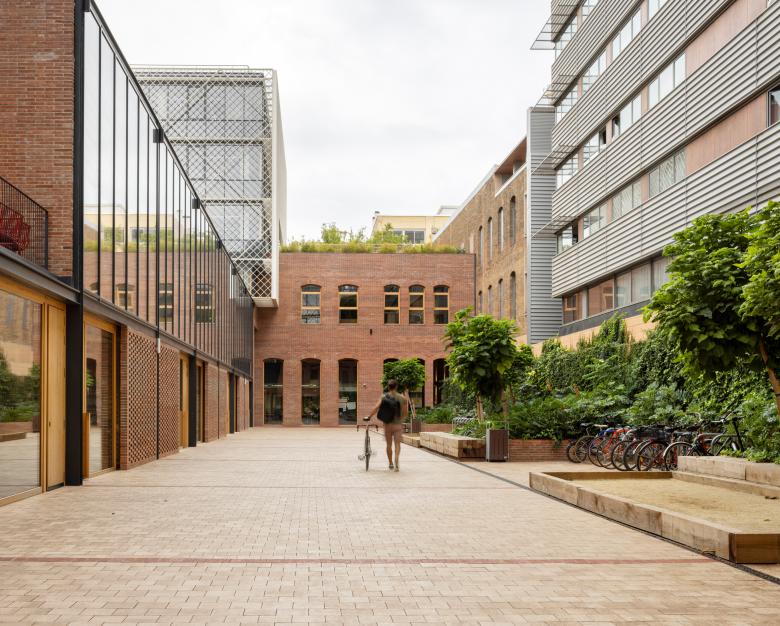
I’m very interested in regeneration projects—in critically assessing the best and worst aspects of existing buildings and finding ways to repurpose them. We’re increasingly drawn to working on existing structures—buildings originally constructed for other purposes that now need to be updated. I’m interested in urban regeneration in general.
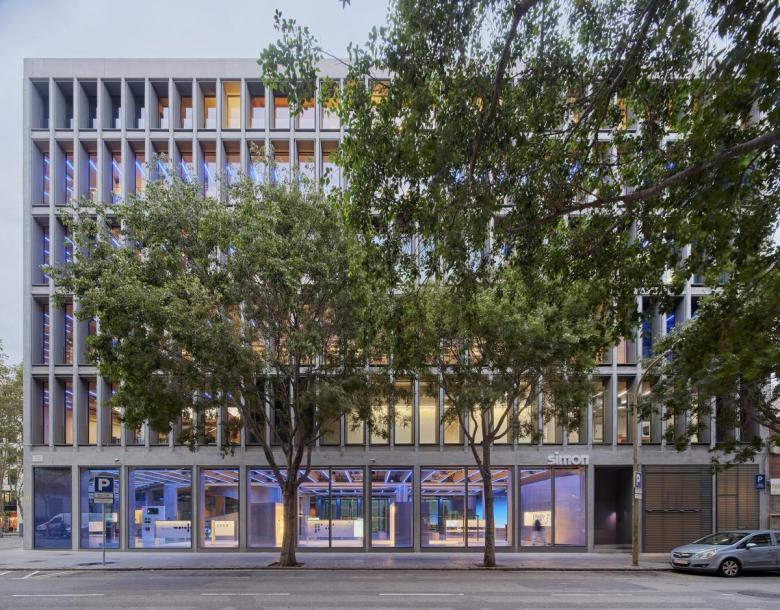
I feel that projects are particularly well-executed when they don’t unnecessarily occupy new land, when they don’t destroy but rather make use of existing spaces. The redevelopment of the AZCA area in Madrid is one example. Or the project we’re developing for Roca City, a true new neighborhood in Alcalá de Henares; it involves the regeneration of an obsolete industrial space that will be transformed into an exemplary neighborhood, reusing much of what exists and what once existed. Or the new Simon headquarters in Barcelona’s Poblenou district, a former factory that is now its corporate headquarters. This was a nondescript building, likely destined for demolition, from which the value of the original structure was preserved.
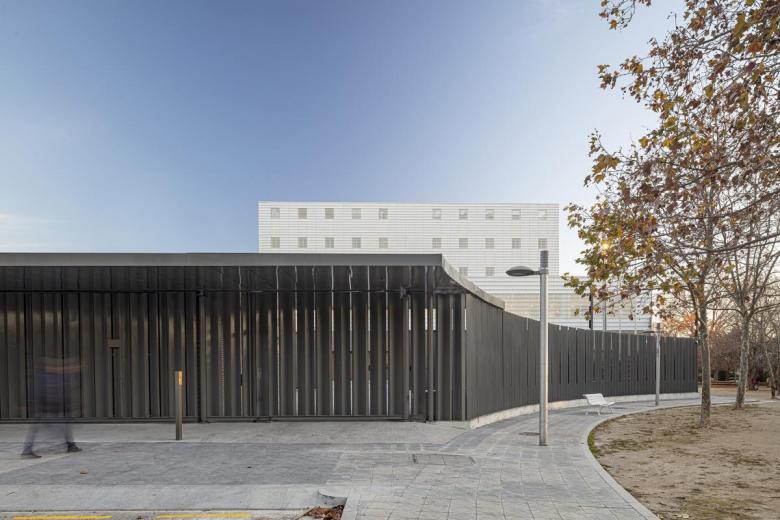
I believe that more and more projects of this kind will be created and developed. Of course, I’m also interested in new construction that doesn’t take up additional land, such as the pavilion we’re building at the Fira de Barcelona. But I think working with existing structures is particularly valuable for architects today.
Articles relacionats
-
The Three-Body Problem: Trapped in a Wave Sandwich
Eduard Kögel, Scenic Architecture Office | 13.04.2026 -
-
-
Spaces for Cars – And for People
Kennedy & Violich Architecture, Ltd. (KVA) | 02.03.2026