Outside the Gates of Cairo, a New Home for the Gods
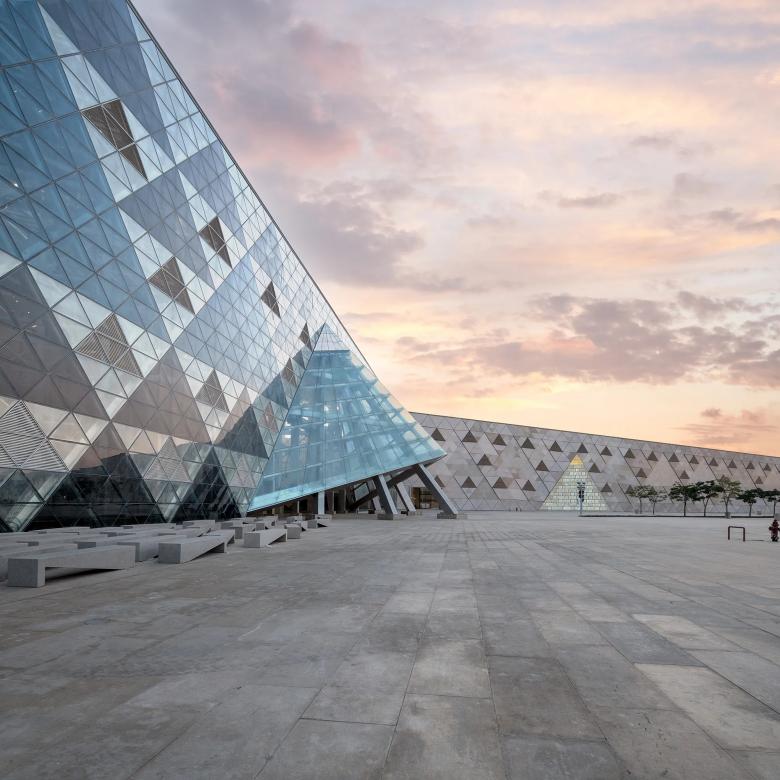
Egypt's new National Museum is impressive: Dublin's heneghan peng architects has found its own architectural language, and Stuttgart's Atelier Brückner captivates with its scenographic design of the Tutankhamun gallery.
It has become an epoch-making building, a billion-dollar feat that leaves virtually nothing to be desired. The largest and certainly the most important archaeological museum in the world, the Grand Egyptian Museum, or GEM for short, on the outskirts of Cairo, has become the new home of gods and pharaohs. Thousands of years of cultural history along the Nile comes to life in 40,000 square meters (430,000 square feet) of exhibition space.
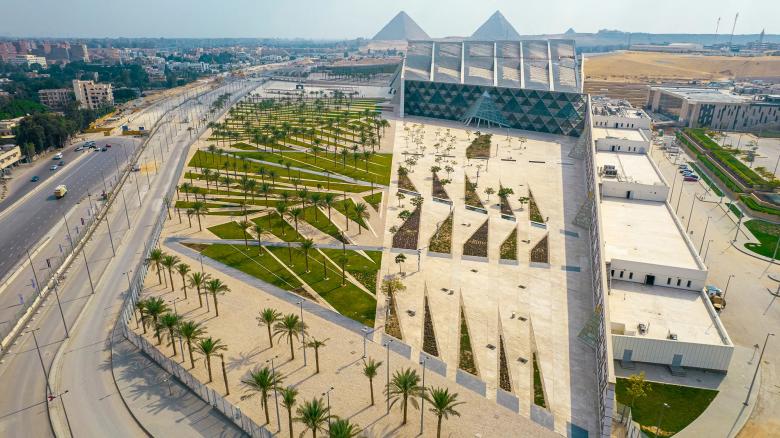
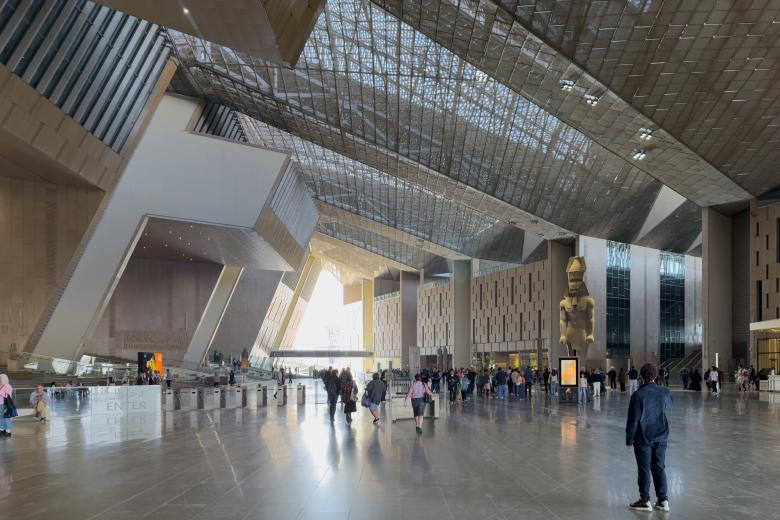
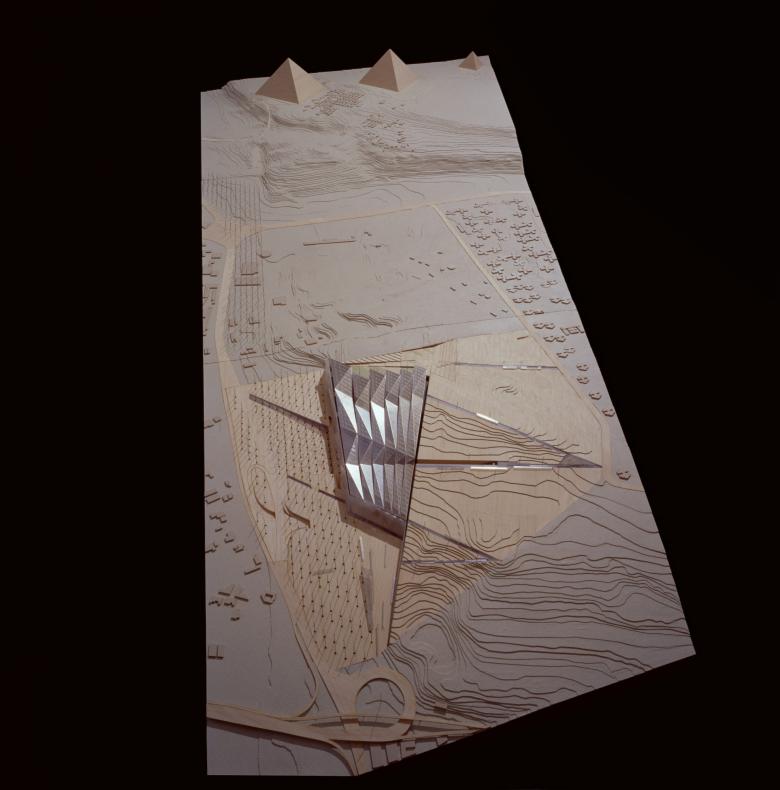
A sprawling 50-hectare (123-acre) desert site north of the pyramids and south of the new Sphinx International Airport was available. In 2002, Dublin's heneghan peng architects won the international architectural competition that attracted 1,557 entries. A quarter of a century of planning and construction went into the project. Anyone who approaches the complex, having navigated the confusing periphery of multi-lane highways, subway bridges, extensive bus and car parking lots, and rigid barriers and checkpoints, and stands in front of the pyramid-shaped entrance to the monumental structure, will not be surprised by this. Upon entering, visitors are immediately overwhelmed by the vast entrance hall.
The contrast could hardly be greater, because anyone who has ever visited the former Egyptian National Museum on Tahrir Square in central Cairo, a typical historicist museum building from the late 19th century, will remember how hundreds of sarcophagi were stacked in old-fashioned glass cabinets, stored more than displayed—and still are today. The somehow charmingly cluttered, literally dusty museum has itself become an exhibit of museology from a hundred years ago. The conservation conditions are correspondingly inadequate, indeed appalling, as the artifacts, preserved for millennia, fade in daylight, sometimes even direct sunlight, and in an uncontrolled climate. Many exhibits have been moved to Giza, but the aging museum has not become any emptier; far too much remains in storage.
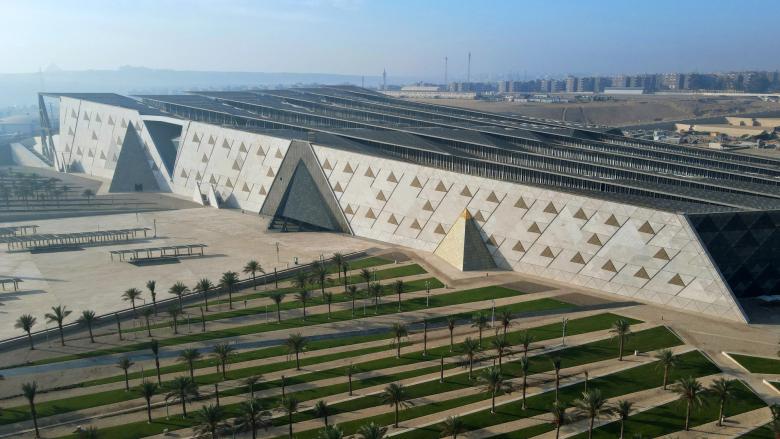
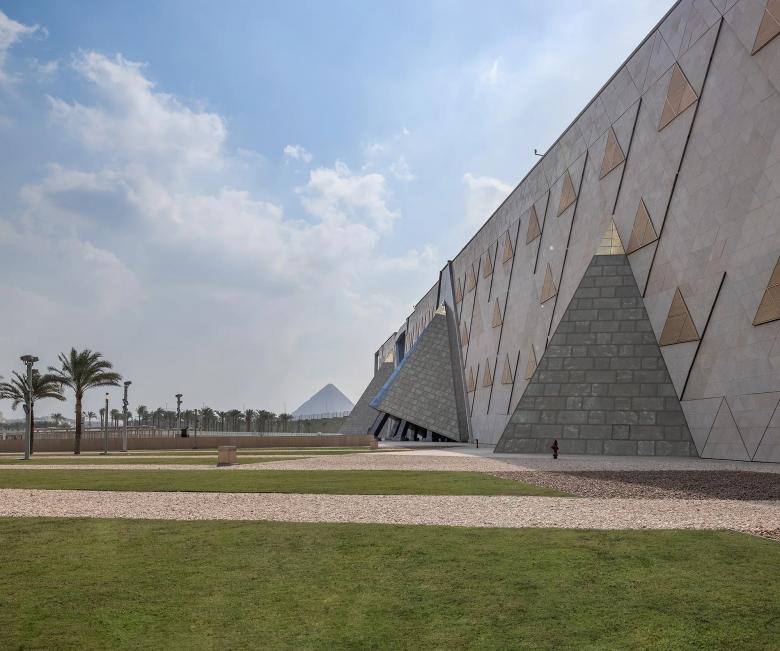
The new GEM stands outside the gates of Cairo, where the architects have masterfully structured the required building mass while still giving it an appearance of weight that can enter into dialogue with the ancient ruins two kilometers (1.25 miles) away. The triangle, which dominates the building inside and out as a structural and decorative motif, also relates it to the geometry of the pyramids.
The main building, divided into seven parallel, slightly fanned-out wings, bridges the difference in elevation between the Nile Valley and the desert plateau and addresses this difference in its interior design. The firm of Róisín Heneghan and Shih-Fu Peng has succeeded in positioning a respectable museum building on the edge of the Nile Valley that does not even attempt to compete with the antiquities through historicizing appearances or its own monumentality.
Ramses II is first to greet visitors in the entrance hall. His colossal statue, weighing 83 tons and standing eleven meters (36 feet) tall, makes a magnificent impression in the spacious, high-ceilinged room. It was brought here in 2006 and the museum was built around it, so to speak, starting in 2008. Service areas, a cafeteria, and a restaurant are oriented toward this hall, which provides a good overview and orientation.
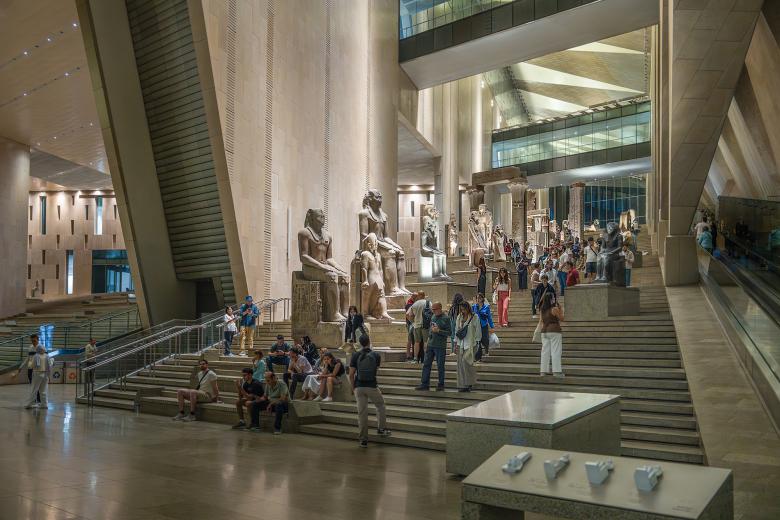
To the left, the hall rises in steps. The 180-meter (590-foot) long "Grand Staircase" with its many spots for seating is the architectural backbone of the exhibition area, connecting all levels. Ninety large sculptures, hieroglyphic stelae, monumental granite sarcophagi, and architectural fragments stand on platforms, arranged like a procession. The space, which tapers upwards, leads to a glass wall at the front of the uppermost platform, framing a view to the pyramids two kilometers away.
To the left is the first of twelve permanent exhibition rooms dedicated to the world of radiant gods and pharaohs. These rooms are arranged in a matrix-like, stepped layout across three wings, with visitors traversing them in a serpentine pattern. Cross-references are possible, and orientation is surprisingly easy. At the bottom, a glass bridge crosses the Processional Way, leading to the 7,500-square-meter (80,730-square-foot) Tutankhamun Gallery, the museum's showpiece.
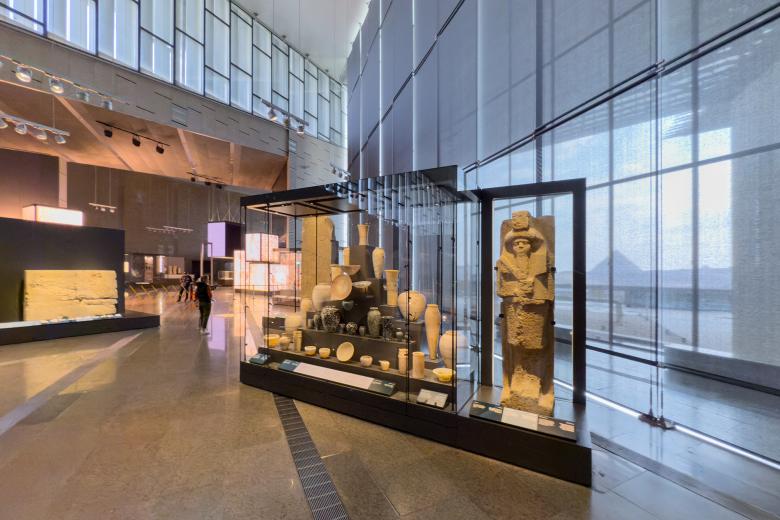
For Stuttgart-based Atelier Brückner, winning the competition for the Tutankhamun Gallery’s scenography in 2016 was undoubtedly a stroke of luck, but its realization presented an even greater challenge. A 30-strong team was mobilized within four weeks. Just six months were available for the concept and detailed planning.
Shirin Frangoul-Brückner's team set themselves the task of telling stories through the exhibits. Using Tutankhamun's tomb, whose contents are on display for the first time, as an example, visitors experience how Howard Carter discovered and entered the tomb a century ago. With him, they open the burial chambers, shrines, and sarcophagi one after the other, discovering the grave goods, treasures, chariots, models, and figures, the ceremonial robes, and, as the highlight, the famous golden mask. It is all, of course, specially displayed behind bulletproof glass, surrounded by enough space for the amazed audience. In the next room, "Identity," the mummy is unwrapped layer by layer, and DNA tests reveal what the pharaoh looked like and tell us about his origins and family.
The highlight of the presentation: The tour also works in reverse, telling the story chronologically, from the pharaoh's marriage, life, death, cult of the dead, and burial to the discovery of the tomb in our time.
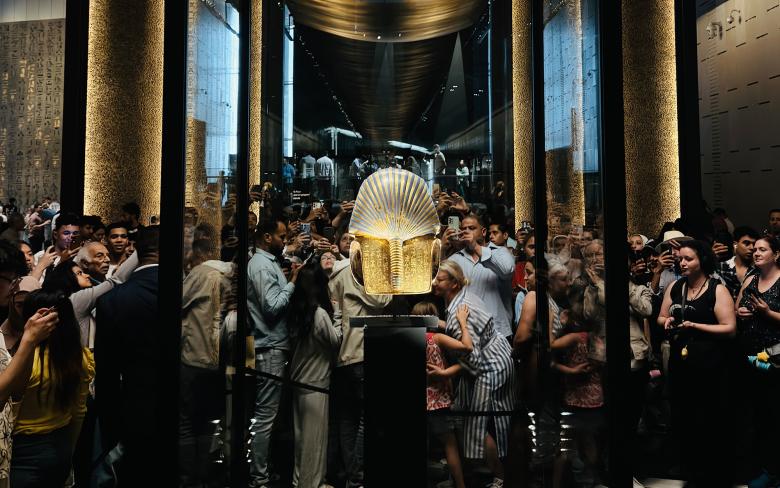
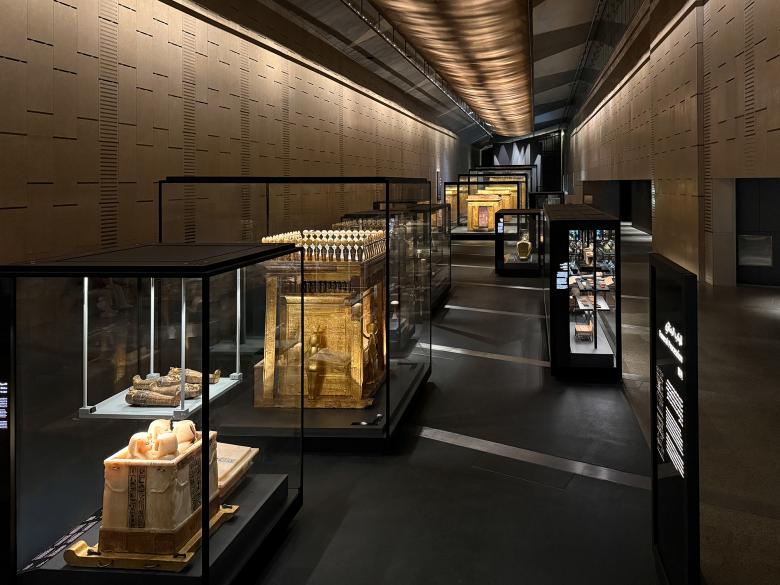
This storytelling, which also runs through the children's museum, is Atelier Brückner's great strength. Themes, processes, and narratives intertwine and captivate visitors to such an extent that hardly anyone leaves the building before three hours have passed, and many spend half the day here.
And once you're done, the Khufu Ship Museum is located next to the rear entrance and is also worth a visit. This sun boat, dating from around 2000 BC and therefore the oldest ship in the world, was one of the vessels used for processions, transfers, and the transport of stone blocks from Aswan to Giza. On display are the preserved remains, how they were recovered and preserved, and a full-scale replica. It is reminiscent of the Vasa Museum in Stockholm.
The perfect lighting by the internationally renowned Innsbruck lighting design firm Bartenbach plays a major role in the success of the project. Illuminating the old treasures in a way that is both sound from a conservation standpoint and bright enough to view, creating the desired atmosphere, positioning glare-free spotlights, and also setting the lighting for visitor movement and orientation is a fine art.
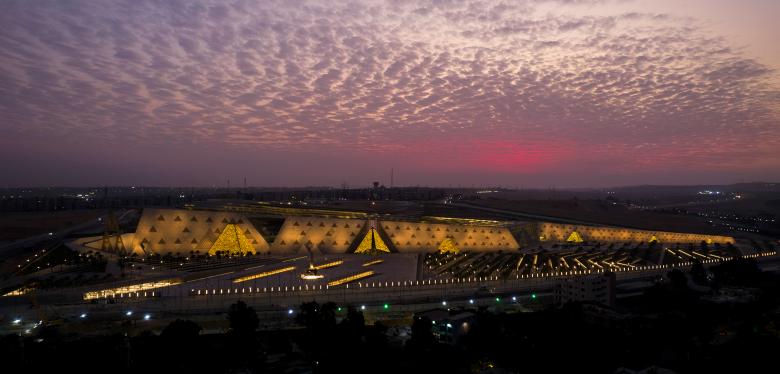
The large scale of the overall GEM complex stems from the peripheral program in the building and in the expansive low-rise wings, as well as the terraces and museum garden (landscape design: West 8) with the children's museum, the depots, the laboratories, and the restoration and conservation workshops. However, the museum was also intended to serve the Egyptian population as a cultural and educational venue and a center for research. A large library and a conference and education center are therefore also integrated into the complex.
In terms of organization and visitor flow, the building functions flawlessly, and in terms of design and atmosphere, it effortlessly strikes a balance between its own architectural aspirations and the presentation of the exhibits. Anyone expecting an Egyptian-style narrative staging or a pseudo-temple complex will be disappointed. The building certainly has its own, highly individual architectural language, but it remains abstract in terms of form and iconology, allowing the exhibits to tell their own story. In any case, the 15,000 daily visitors—the expected number as predicted by the museum—are certain: the most important archaeological museum in the world is also the most beautiful.
Grand Egyptian Museum
Location
Giza, Egypt
Client
Egyptian Ministry of Culture
Architecture
heneghan peng architects, Dublin and Berlin
Local partner: Raafat Miller Consulting, Cairo
Engineering
Arup, London; ACE, Cairo
Scenography Tutankhamun Gallery
Atelier Brückner, Stuttgart;
Lighting
Bartenbach LichtLabor, Innsbruck
Signage
Bruce Mau Design, Toronto
Landscape Architecture
West 8, Rotterdam; Sites International Egypt, Cairo
Award
1st prize in 2002 competition
This review was first published as “Die Götter sind umgezogen” on German-Architects. English translation edited by John Hill.