4 Architecture Exhibitions To See in New York City This Spring
Here we highlight four exhibitions in Manhattan and Brooklyn that opened recently or will open soon, ranging from a historical look at a swath of Midtown and alternative proposals for houses to monographic exhibitions on a late visionary architect and critic, and an architect from Austria.
The Invention of Park Avenue
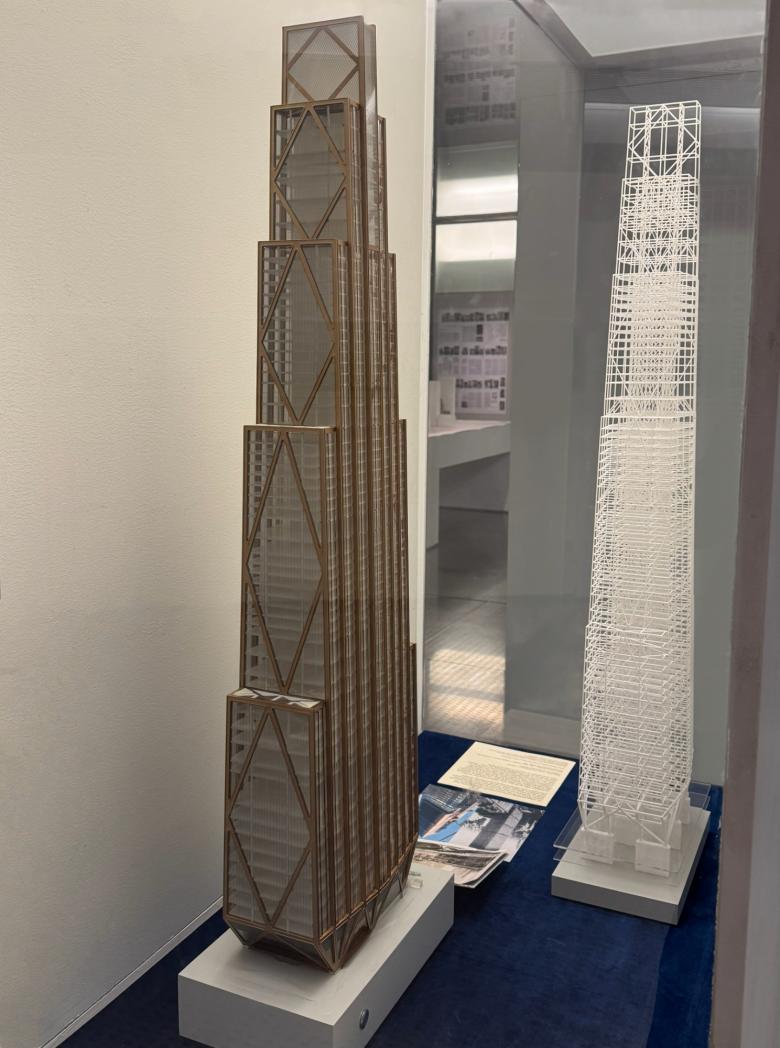
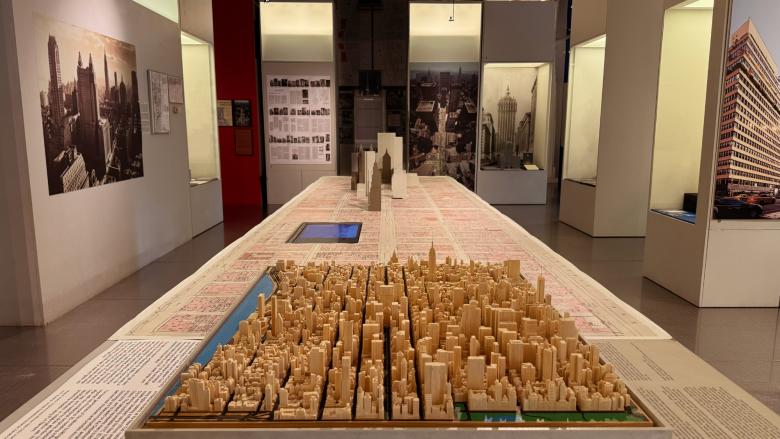
With the recent completion of 270 Park Avenue, the headquarters of JP Morgan Chase designed by Foster + Partners, the architectural world has been reminded once again that the towers lining Park Avenue north of 42nd Street are built over train tracks leading to Grand Central Terminal. A model of the supertall tower in The Invention of Park Avenue reveals its steel superstructure but also the foundation walls that its massive fan columns rest upon—walls that are carefully slotted between railroad tracks. Although the word invention in the title indicates how this exhibition at the Skyscraper Museum in Battery Park City is historical, looking at the circumstances leading up to the completion of Grand Central Terminal in 1913 and the towers that rose in its wake, Foster's tower signals the relevance of the exhibition today. If anything, 270 Park Avenue is just the first of what could be numerous towers built to replace outdated mid-20th-century skyscrapers along the avenue, thanks in great part to a rezoning that allows for taller towers. And with the city's Department of Transportation working with Starr Whitehouse Landscape Architects and Planners on a transformation of the avenue's namesake median, Park Avenue will see some dramatic changes in the near future.
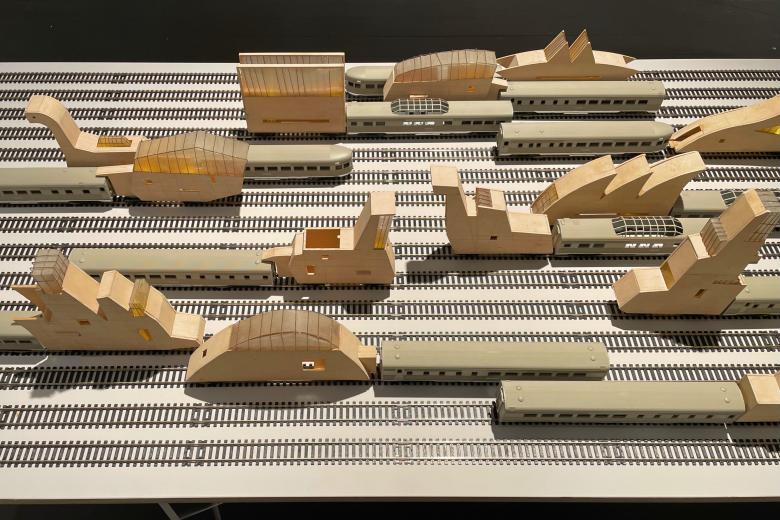
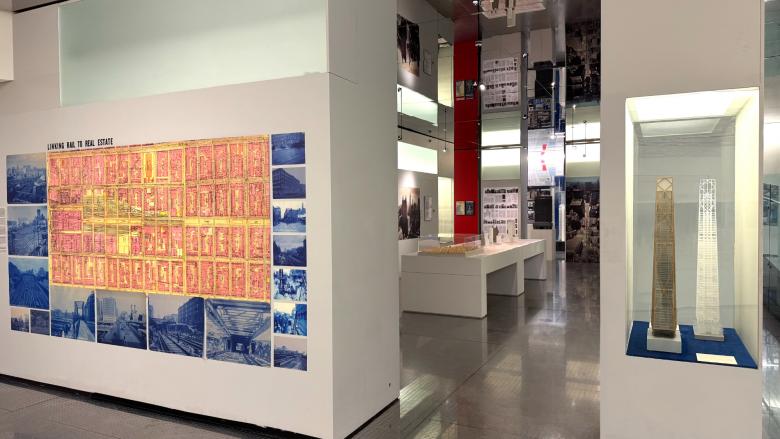
That potential drama is nothing compared to the actual invention of Park Avenue, though, which is illustrated through a slew of archival images and many architectural models in the exhibition curated by museum founder Carol Willis and Daniel J. Borrero. The shift from steam locomotion to an electrical railroad in the early 20th century led to a massive construction site north of GCT, as the railyard was double-decked, and visions of a “Terminal City” were envisioned by architects and planners. The buildings erected on air rights above the railroad tracks have risen (and fallen) in waves: hotels and apartment buildings in the 1920s, office towers fronting plazas after World War II (think Lever House, Seagram, and Union Carbide), and supertall skyscrapers like 270 Park Avenue this century. Not only does The Invention of Park Avenue clearly present this evolution, it illustrates how the wedding of railways and real estate is paramount in New York City, and how much of Midtown Manhattan today is a product of Park Avenue's creation more than a century ago.
The House Transformed
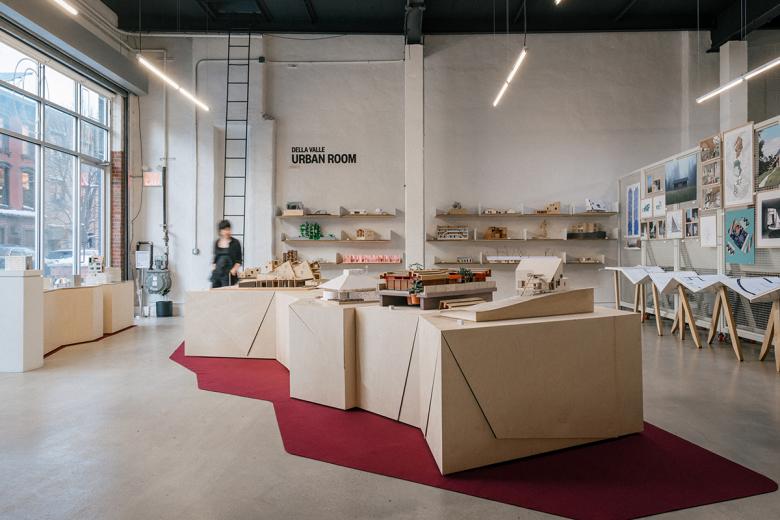
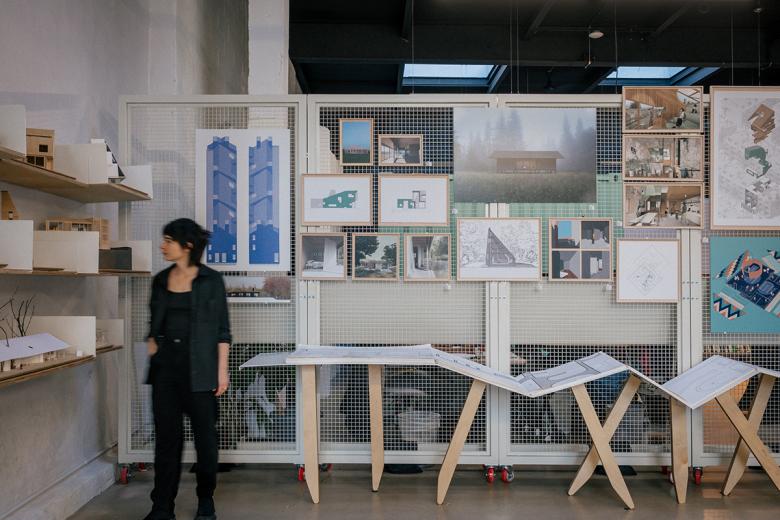
After 125 years, the Van Alen Institute left Manhattan for Brooklyn in 2019, opening a storefront space at 303 Bond Street in the Gowanus neighborhood the following year. The Urban Room is the nonprofit's venue for community-minded events and exhibitions, and the space is currently displaying The House Transformed, an exhibition of “new ideas for domestic architecture” that originated at Princeton University's School of Architecture last year. Curated by former Princeton dean Mónica Ponce de León, with Shoshana Torn and Massimo Giannone, the show features house designs by dozens of architects that reject “conventional notions of the nuclear family and a ‘one-size-fits-all’ approach to home.” The exhibition is full of drawings and models, many of the latter mounted on movable bases that allow them to be viewed from all sides.
People Cross Against the Light: Michael Sorkin’s New York
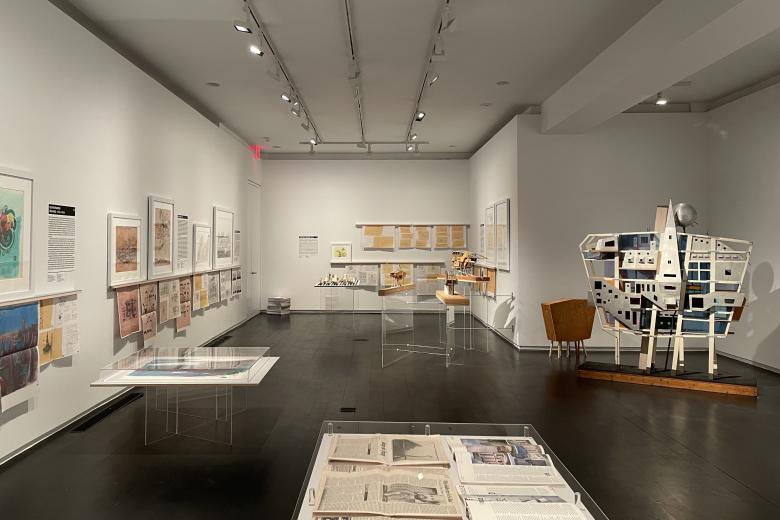
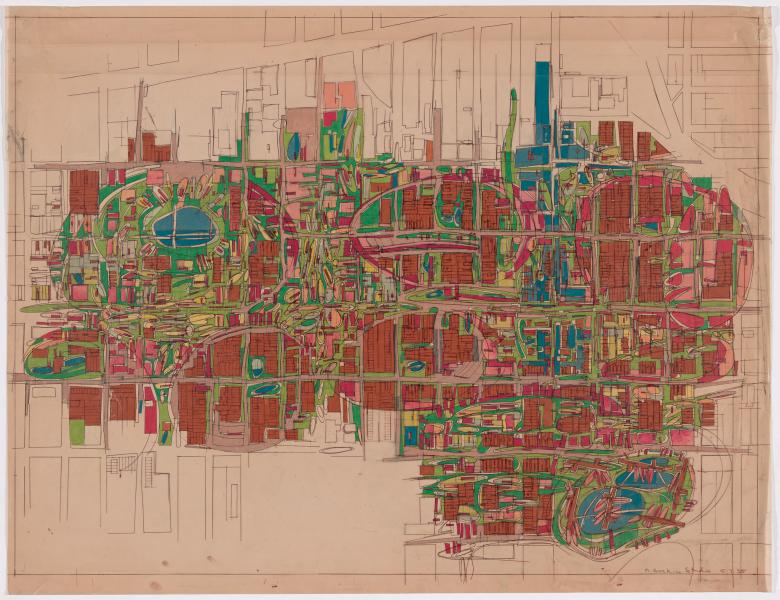
Six years after the death of Michael Sorkin, Columbia University's Graduate School of Architecture, Planning and Preservation (GSAPP) has mounted an exhibition of the influential architecture critic, urban designer, author, and educator, featuring some early projects alongside selected critical texts. While Sorkin is more widely known for the criticism he regularly contributed to the Village Voice and other publications, the exhibition at GSAPP's Arthur Ross Gallery seeks to align his architectural criticism with his architectural projects, seeing these outputs as intertwined rather than separated. Curated by Bart-Jan Polman, People Cross Against the Light: Michael Sorkin’s New York is a visual treat that is full of colorful drawings that are now part of the collection at Columbia’s Avery Architectural & Fine Arts Library, as well as numerous models loaned by Sorkin's widow, Joan Copjec. The exhibition is accompanied by a full-color newsprint that includes many of the same drawings from the exhibition.
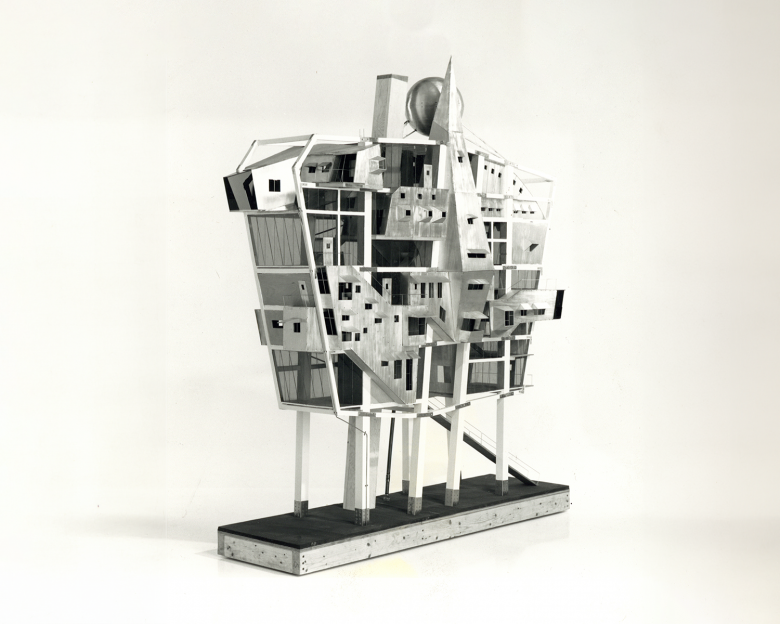
The title of the exhibition is taken from a 2010 article by Sorkin, “Nine Fabulous Things About New York,” a portion of which is printed on the wall of the gallery by the entrance. Here visitors* will find other excerpts emblazoned on the wall as well as a glass vitrine with publications that find Sorkin lambasting Donald Trump, Philip Johnson, Paul Goldberger, and others. Sorkin didn't limit his dislike of Trump the developer to the pages of the Village Voice, he worked with Lebbeus Woods and John Young, presenting the Time Square project on an episode of Eleventh Hour in 1989 as a visionary antidote to Trump's Television City proposal for the West Side Rail Yards. In this example of Sorkin's criticism bridging into a project, gallery visitors get to see drawings by Woods and watch the trio present the proposal on public television. It is a great lead-in to the handful of other Sorkin projects on display: Animal Houses (1989-1993), Tracked Houses (1990), Church Street (1991), Shrooms (1994), the Governor’s Island proposal (1995–96), and East New York (1995–96).
*Note that Columbia University's campus is open to active affiliate Columbia University ID (CUID) holders and approved guests only. To visit the exhibition, contact exhibitions@arch.columbia.edu at least two business days in advance of your desired visit date to request campus access. The Arthur Ross Gallery is open Wednesday-Friday, 12 pm–5 pm and Saturdays by appointment.
Dietmar Feichtinger: Architecture of Connection
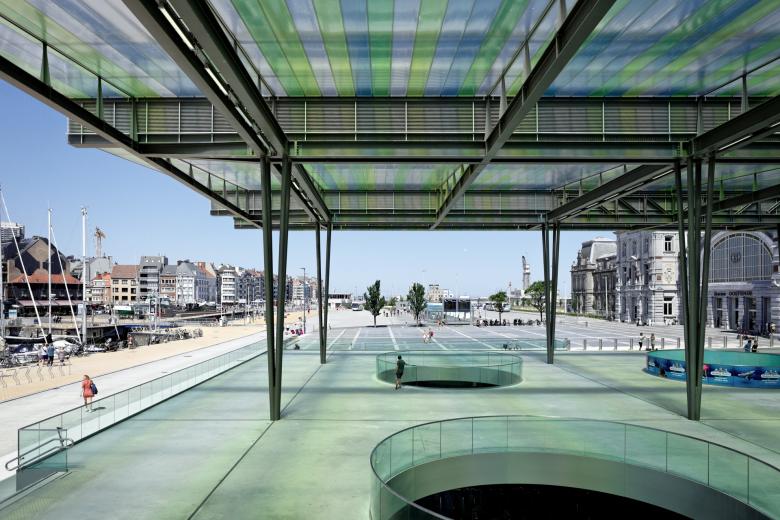
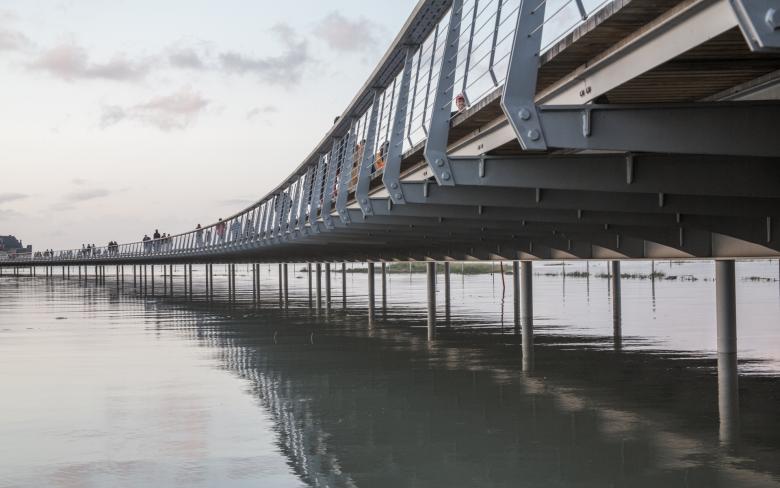
Since opening in its distinctive Raimund Abraham-designed home on East 52nd Street in 2002, the Austrian Cultural Forum New York (ACFNY) has hosted dozens of free exhibitions in its galleries, quite a few of them related to architecture (a couple pre-pandemic highlights are The Projective Drawing and Resident Alien). Opening soon is Dietmar Feichtinger: Architecture of Connection, a monographic exhibition on Austrian architect Dietmar Feichtinger, whose eponymous practice has offices in Paris and Vienna. The exhibition's subtitle reflects Feichtinger's fortes—bridges and infrastructure projects—though it also illustrates how his architecture in numerous other typologies “operates as a connective force between people, places, functions, and disciplines.” Curated by ACFNY director Susanne Keppler-Schlesinger and Stephanie Buhmann, the exhibition will present a selection of projects France and Austria, as well as Germany, Belgium, Denmark, and other countries, among them the Simone de Beauvoir Footbridge in Paris, Danube University in Krems, Austria, and the ongoing reconversion of the Lyon Perrache Interchange Center in France.