Now Open
The New New Museum, From the Top Down
Photo: Jason O'Rear, courtesy of the New Museum
Ahead of its opening on March 21, World-Architects got a sneak peek of the newly expanded New Museum, which has added an OMA-designed structure next to its 2007 building designed by SANAA. Here we present a photographic tour through the 60,000-square-foot building, from top to bottom.
Ten years in the making. The New Museum first announced its plans to expand in May 2016, and one year later they revealed that OMA partners Rem Koolhaas and Shohei Shigematsu would design the expansion. Koolhaas was no stranger to the institution founded by curator Marcia Tucker in 1977, given that he and OMA staged an exhibition on preservation, Cronocaos, there in 2011. Curiously, instead of being housed in the SANAA building, the exhibition occupied part of 231 Bowery, the neighboring building that the New Museum purchased in 2008 and used for exhibitions, archives, artist studio space, and office space. That building came down in 2022 and OMA's faceted glass and steel building rose in its place. The addition—OMA's first cultural building in New York—doubles the square footage of the 2007 building and connects to it on seven floors. OMA describes the new building—officially called the Toby Devan Lewis Building and done with Cooper Robertson (now Corgan) as executive architect—as a “part and counterpart” to the SANAA building that will turn 20 next year, the same year the New Museum itself celebrates its 50th anniversary.
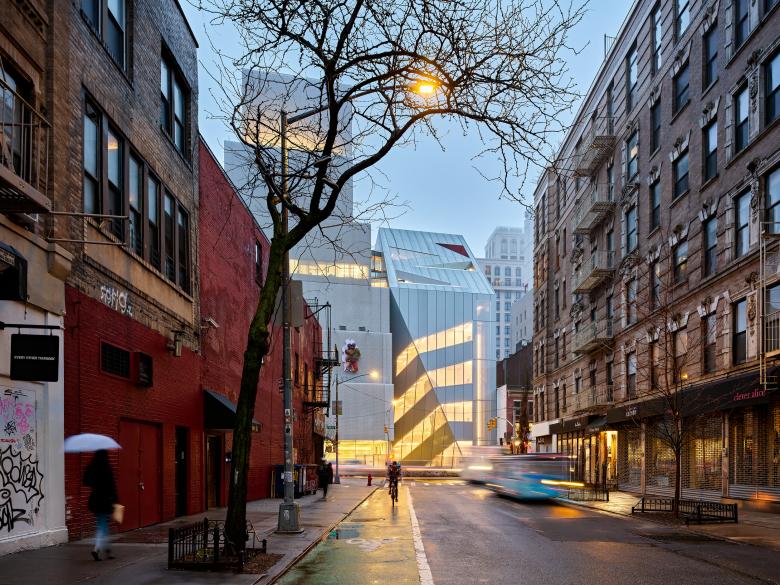
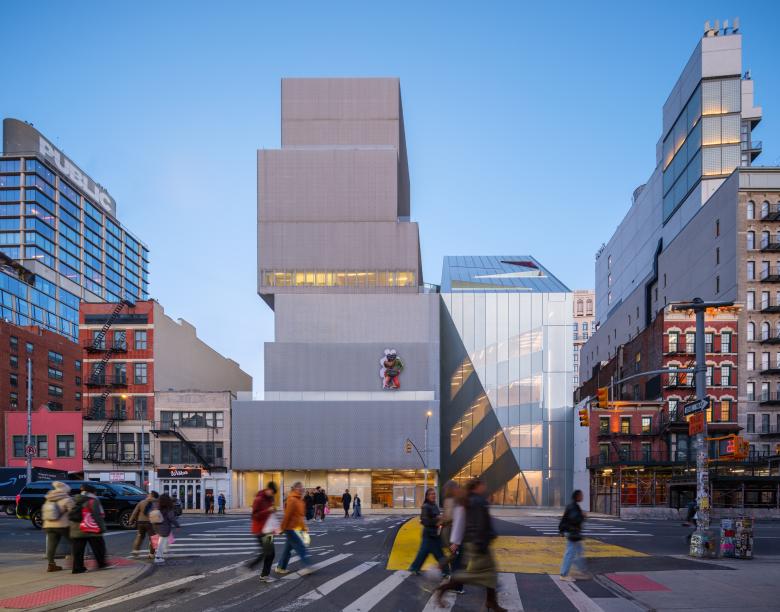
The museum at 235 Bowery gains prominence from its position at the end of Prince Street, just east of Nolita. (Photo: Jason Keen, courtesy of the New Museum)
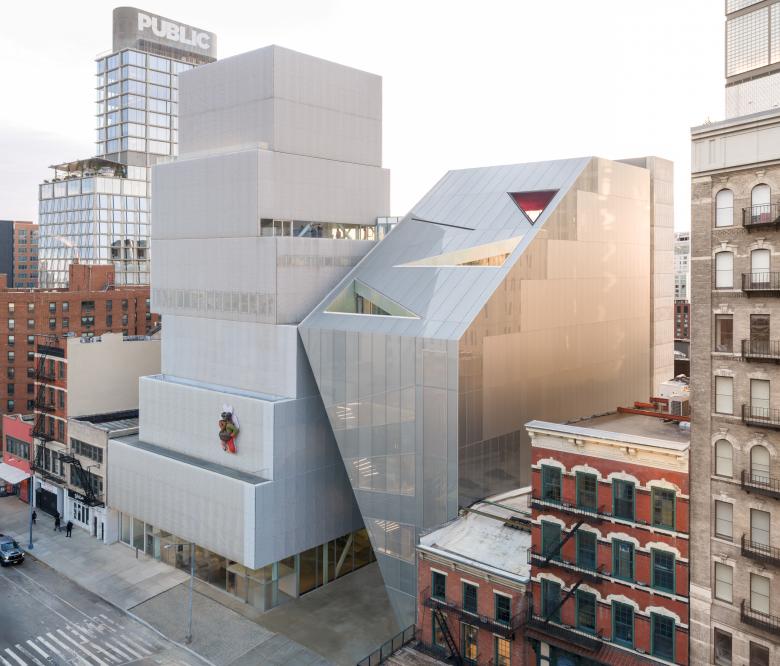
The faceted expansion by OMA creates a plaza at sidewalk level and “kisses” SANAA's bento box-like building at the edge at the top of the fourth floor. (Photo: Jason O'Rear, courtesy of the New Museum)
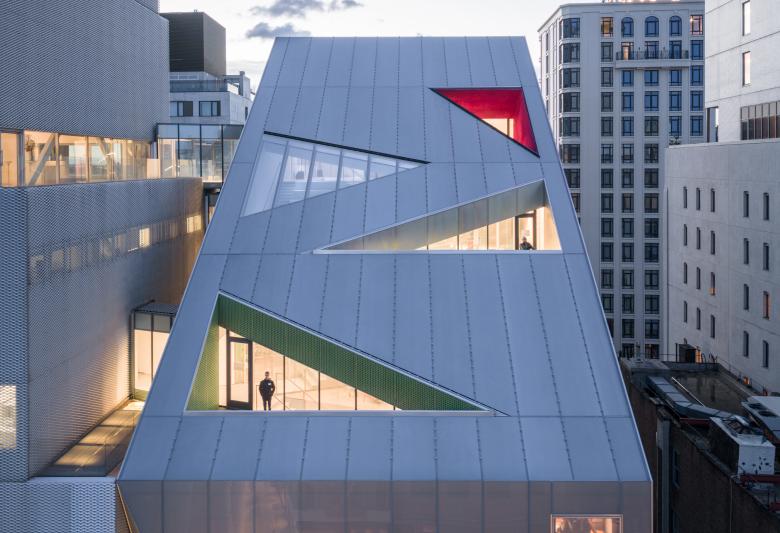
Floors 5 through 7 angle back sharply from the front facade and feature triangular terraces at each level. Note the glazed passages linking these floors to the 2007 building. (Photo: Jason O'Rear, courtesy of the New Museum)
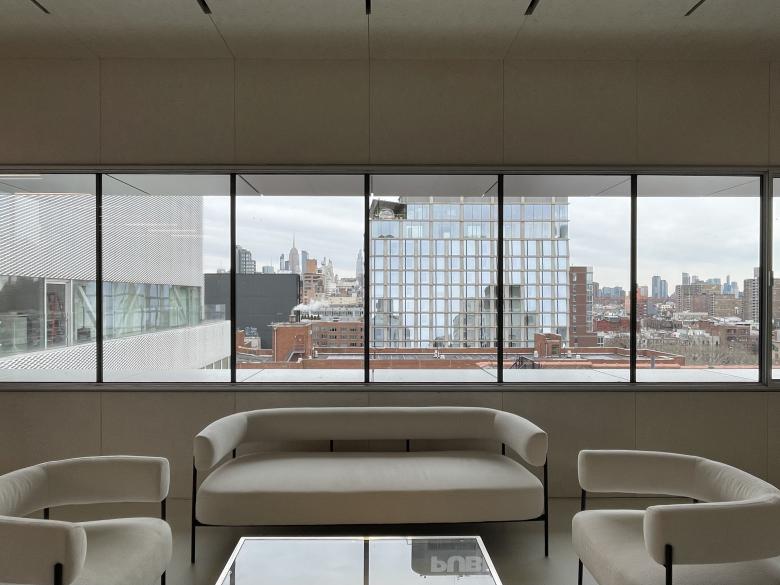
Instead of ascending the stairs in the new atrium, we took the elevator to the Sky Room on the seventh floor of the SANAA building and walked across a bridge to the top floor of the OMA building. (Photo: John Hill/World-Architects)
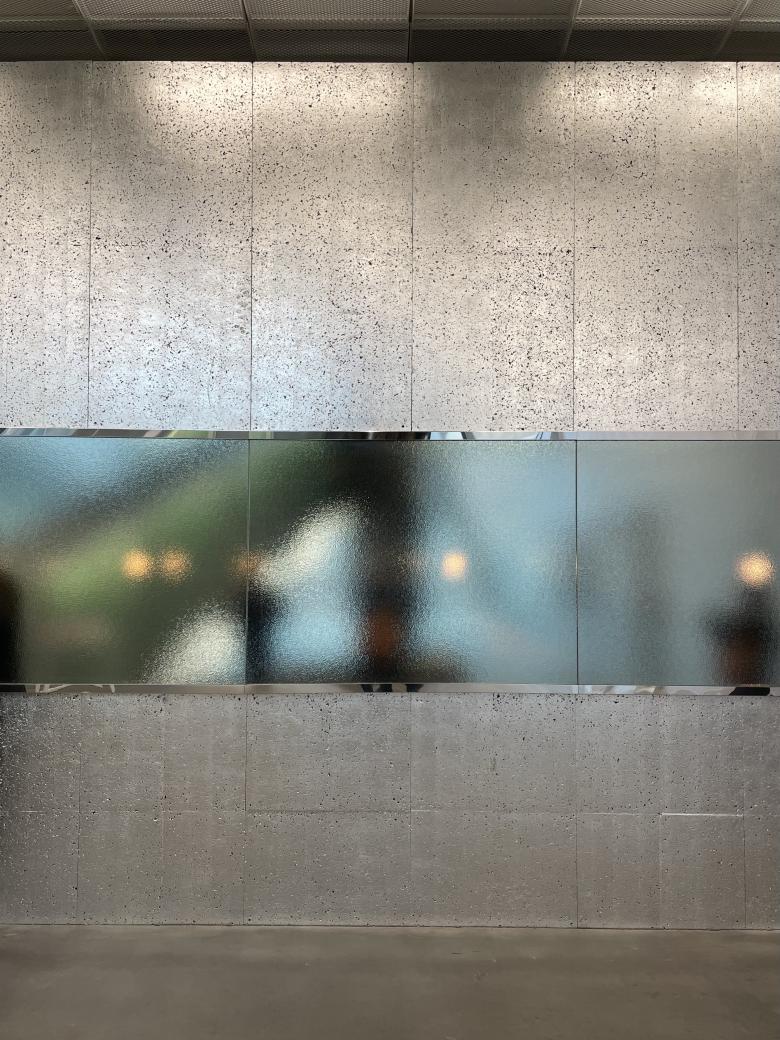
Sky Room South—as it's called on the visitor map, accompanying Sky Room North in the SANAA building—features a horizontal window (at left in previous photo) with views of the 2007 building's mesh facade and, in the distance, Herzog & de Meuron's 215 Chrystie. (Photo: John Hill/World-Architects)
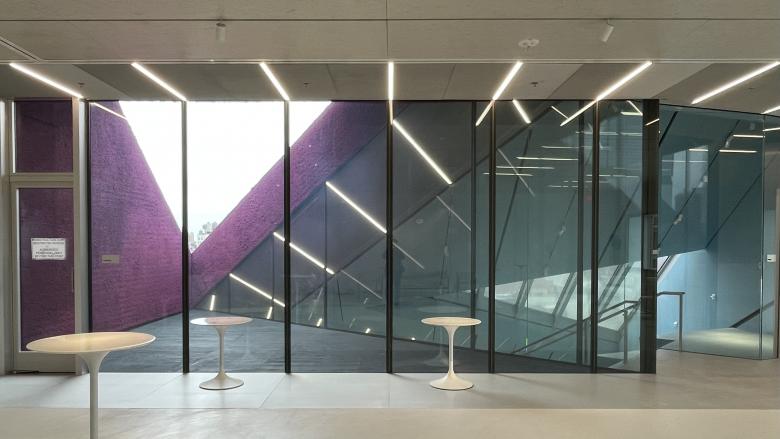
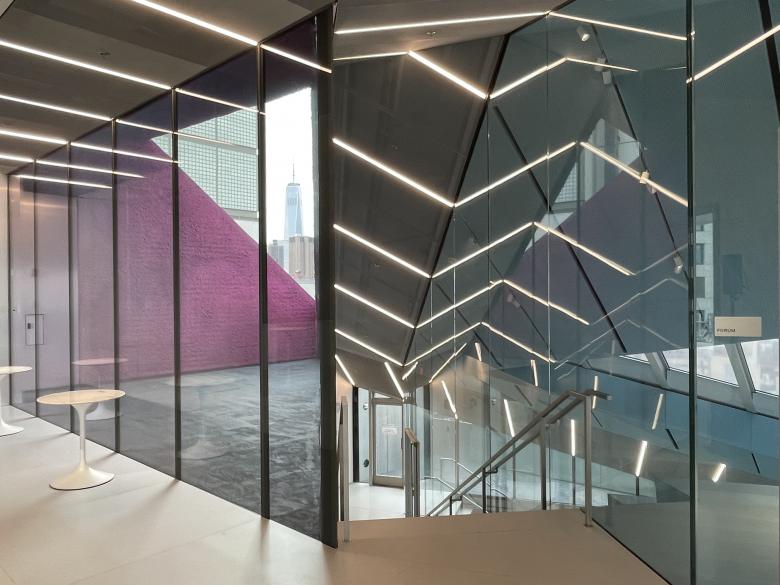
Adjacent to the Sky Room are a terrace, at left, and the multipurpose Forum, at right. (Photo: John Hill/World-Architects)
In between the terrace and Forum is a stair descending to the sixth floor. Note how the terrace frames—fortuitously, I'm guessing—a view of One World Trade Center to the southwest. (Photo: John Hill/World-Architects)
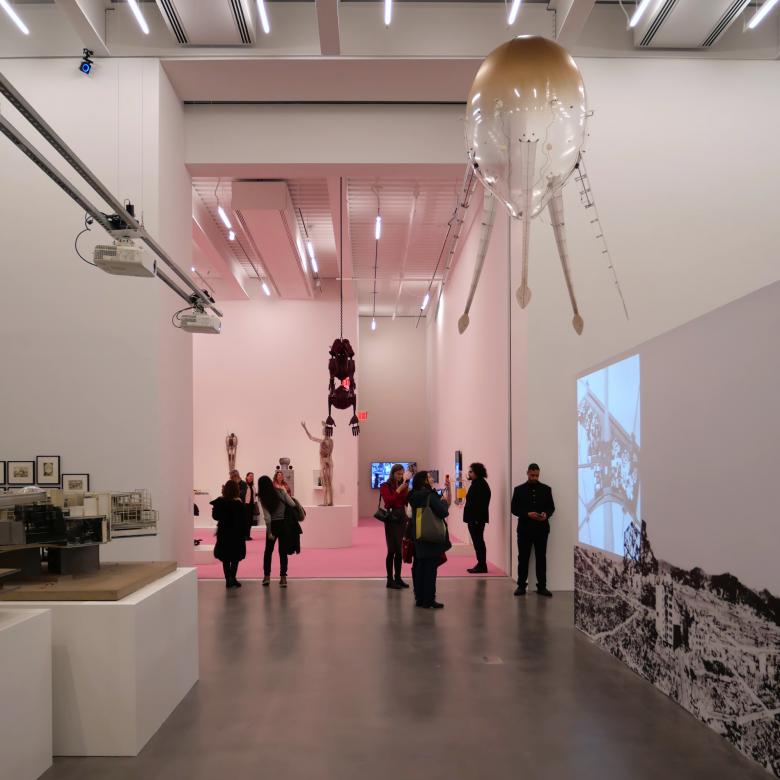
There are certain Piranesi- and Escher-like characteristics to the visually connected spaces in the OMA building. (Photo: John Hill/World-Architects)
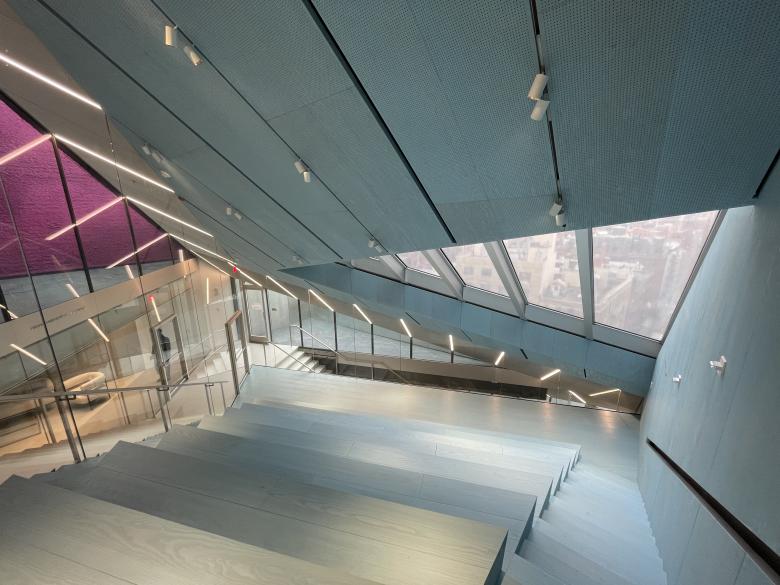
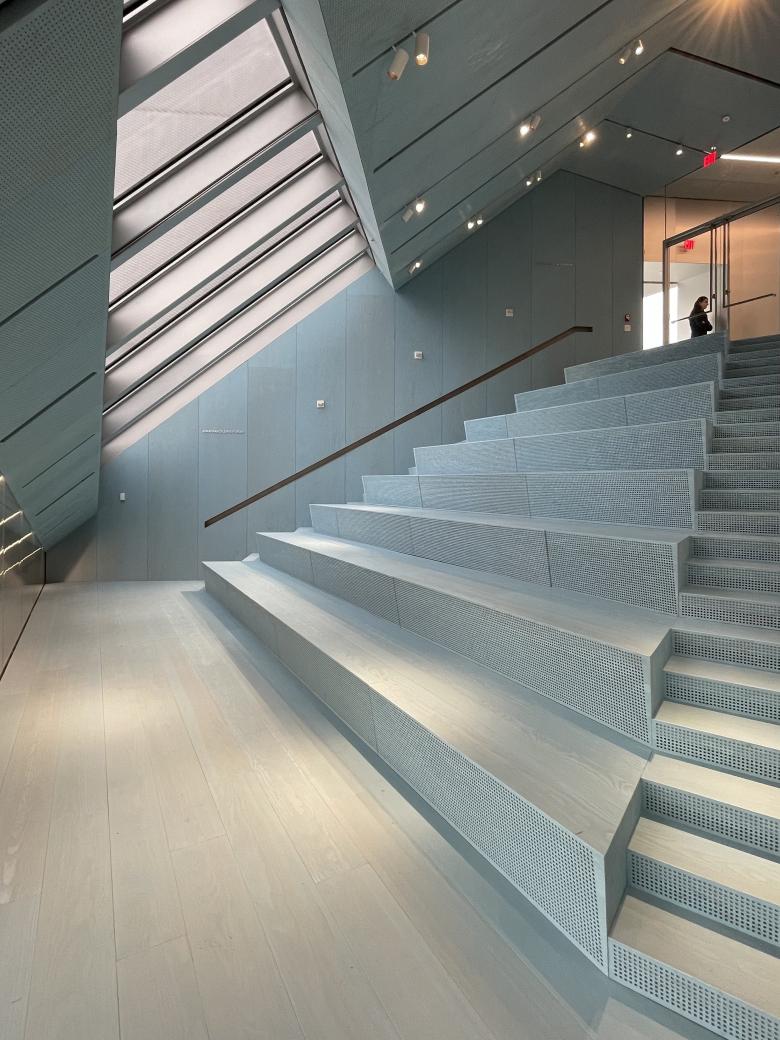
The vertiginousness of the steep Forum space is amplified by the triangular window looking down on the rooftops of buildings in Nolita and Soho. (Photo: John Hill/World-Architects)
The Forum has a seating capacity of 74. (Photo: John Hill/World-Architects)
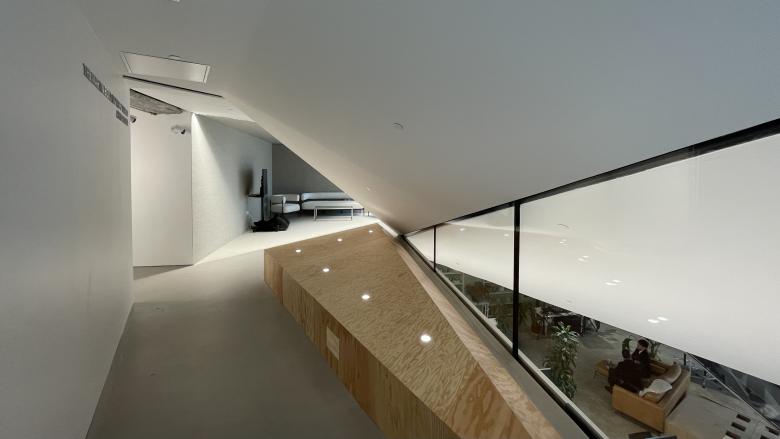
A space adjacent to the stair and Forum on the sixth floor … (Photo: John Hill/World-Architects)
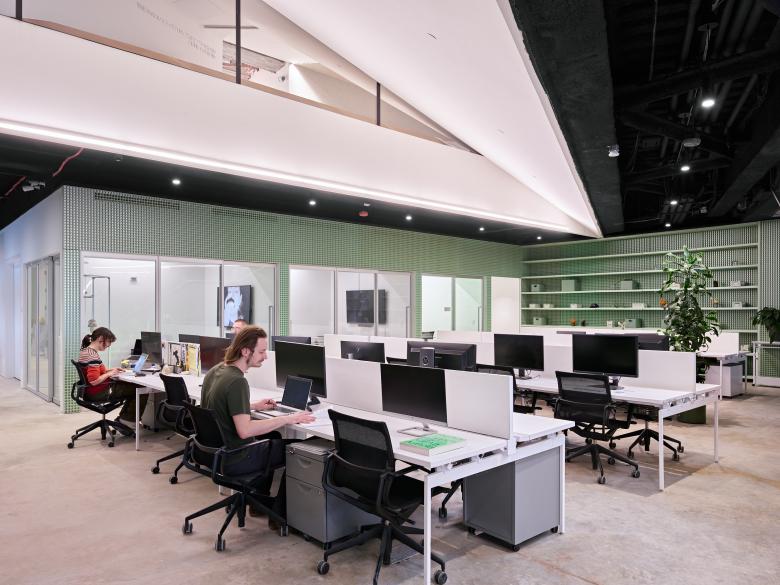
…leads to artist studios, connects to the 2007 building (via the walkway, seen here), and looks down to the NEW INC Offices on the fifth floor of the OMA building. (Photo: John Hill/World-Architects)
NEW INC, the New Museum's cultural incubator, had a dedicated space in the previous building on the site and now has a permanent home in the expanded facilities. (Photo: Jason Keen, courtesy of the New Museum)
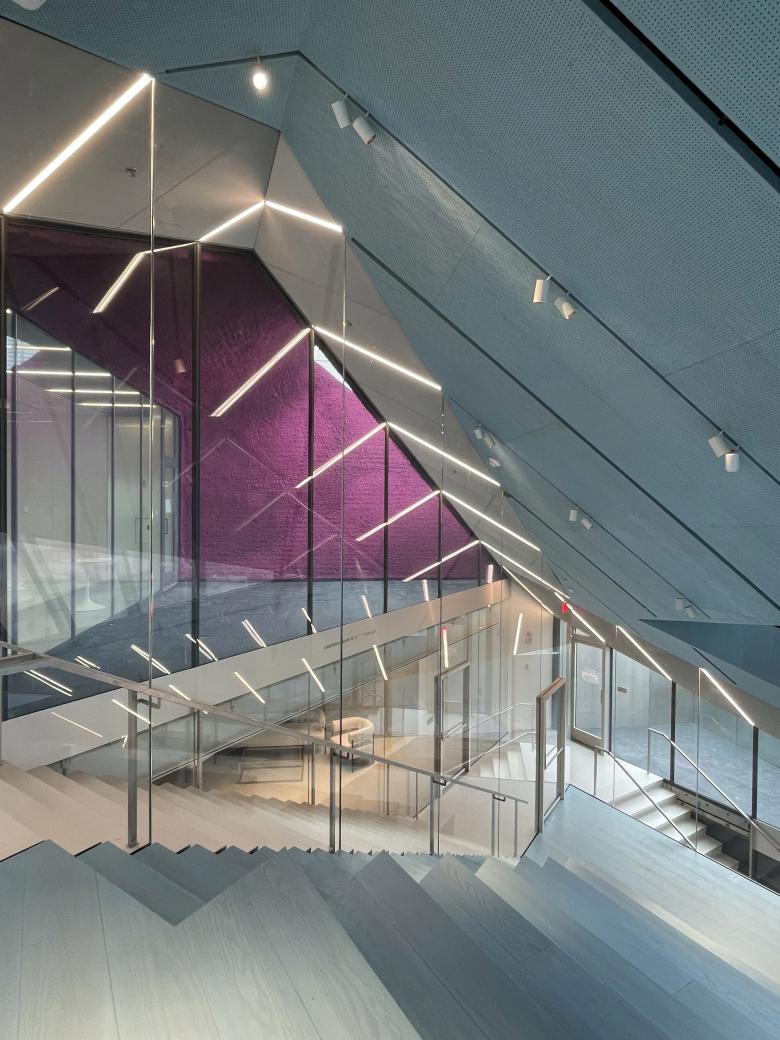
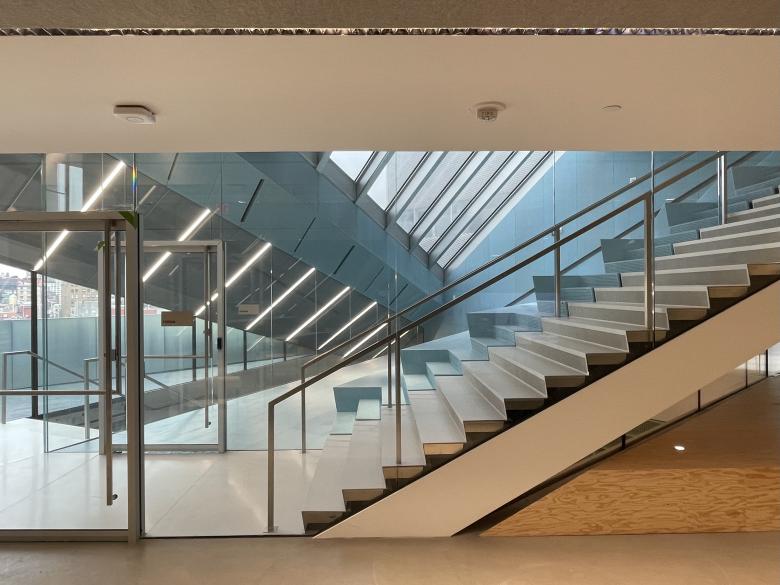
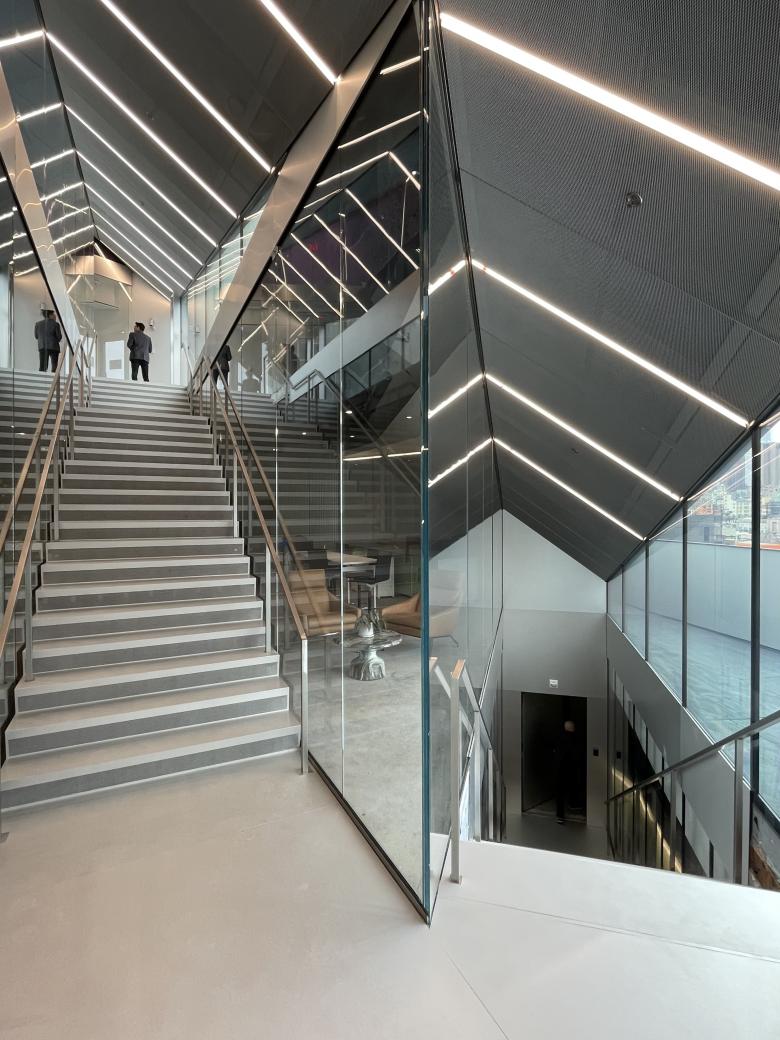
The stairs on the top three floors zig and zag their way through the different program spaces and gain natural light via the triangular terraces. (Photo: John Hill/World-Architects)
Given that the Forum, Sky Room, and other spaces atop the museum are only open to the public on select days, a door limits access to these floors from the four-story atrium, which we'll now descend. (Photo: John Hill/World-Architects)
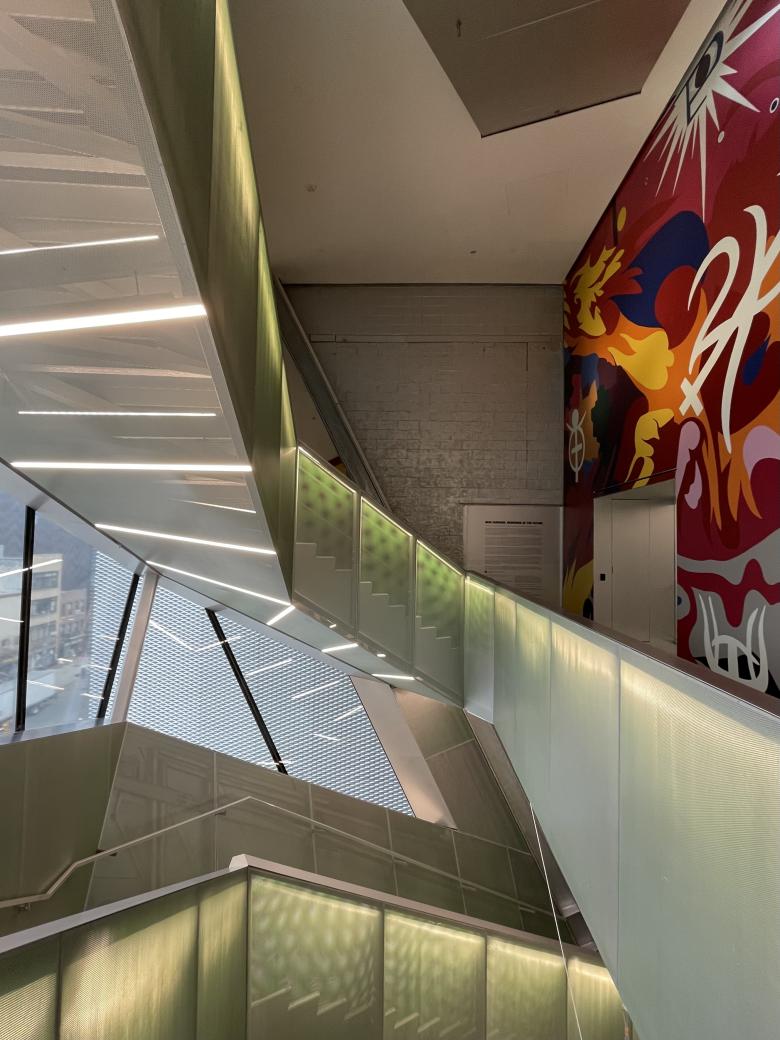
The colorful wall art at the top level of the atrium (at right) is Title Unknown (ca. 1960s–70s, reconstructed in 2025) by Ayé A. Aton. (Photo: John Hill/World-Architects)
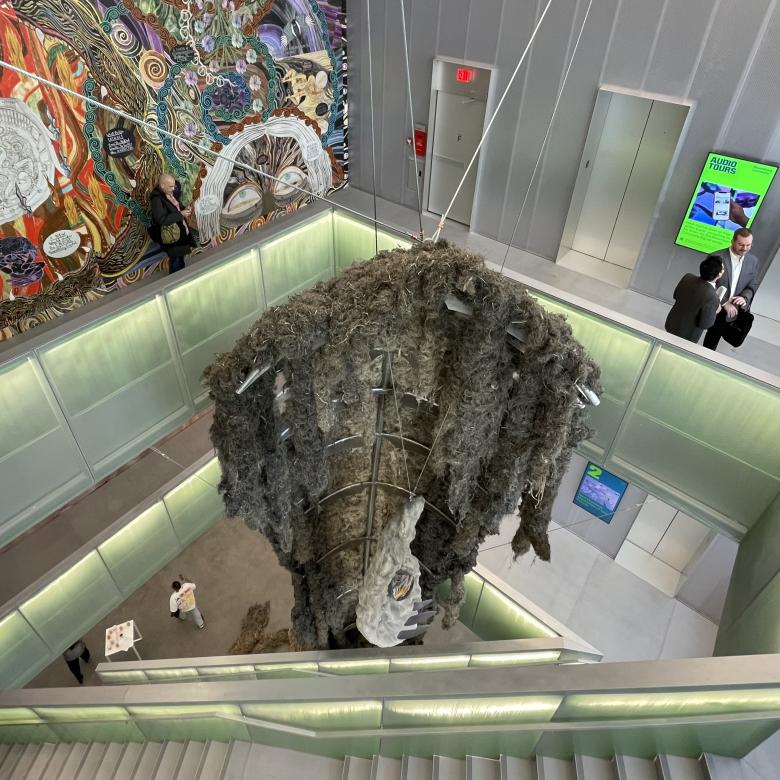
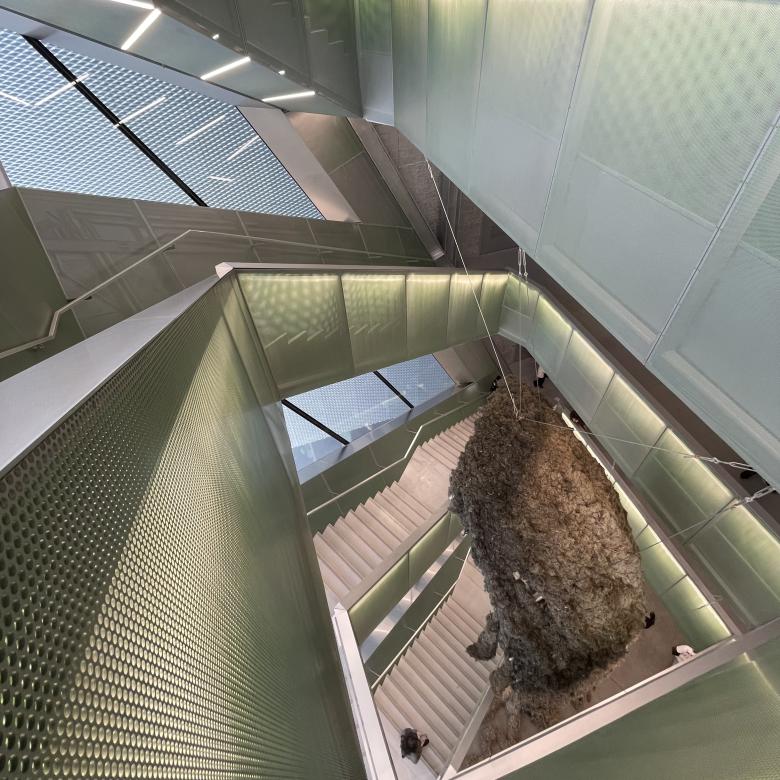
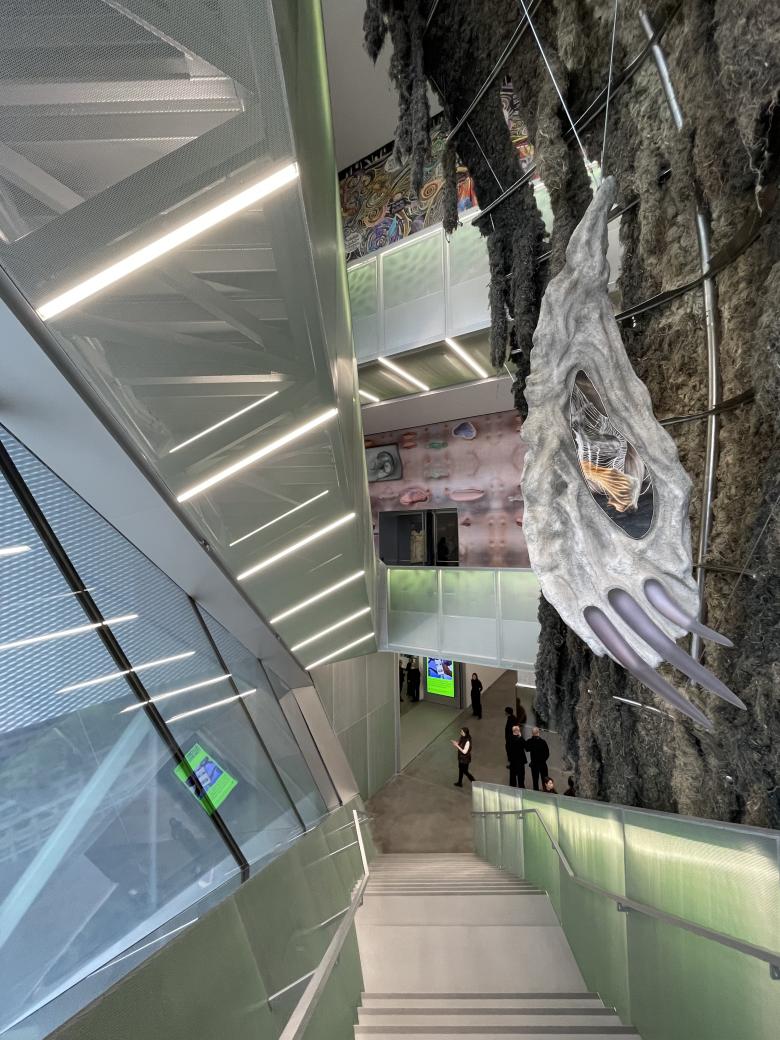
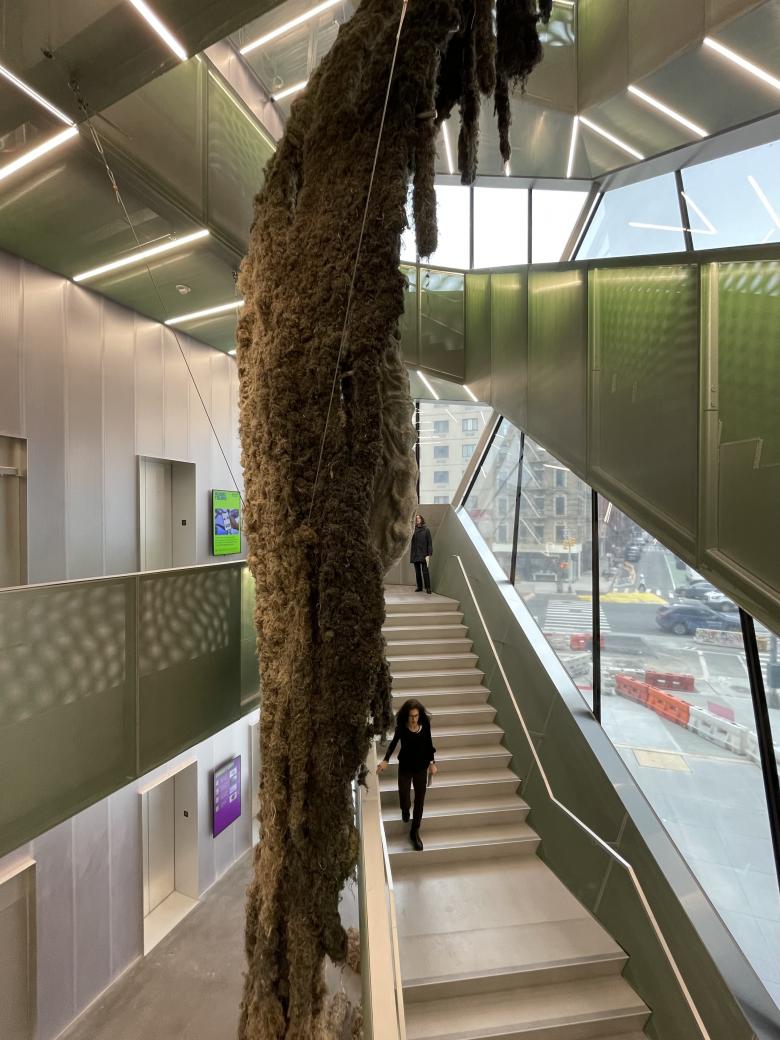
Looking down, other artworks coming into view: Emma Talbot's Cosmos (2025) on the wall of the third floor (top left) and Klára Hosnedlová's large-scale Shelter (2025) that spans three floors. (Photo: John Hill/World-Architects)
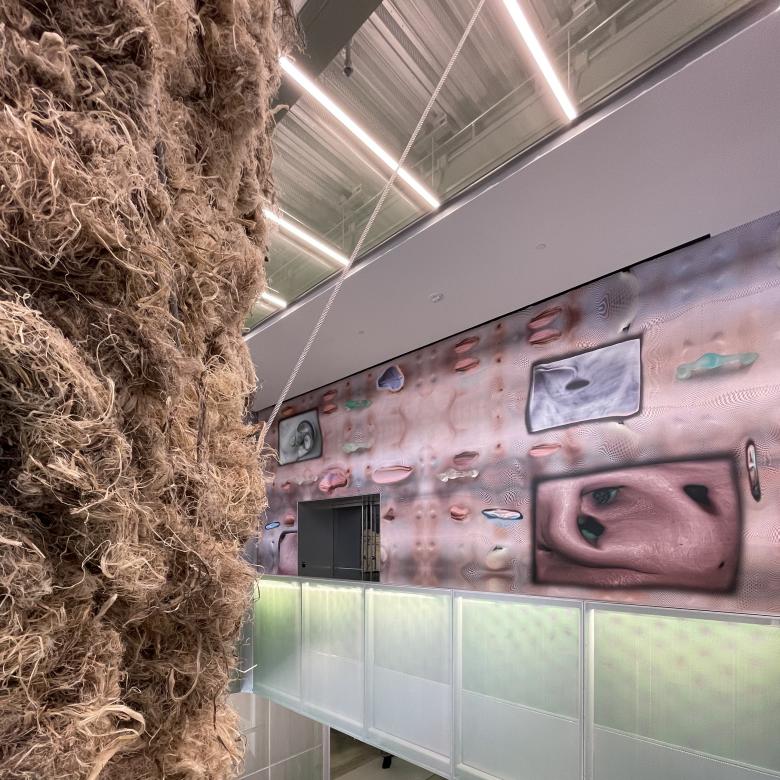
Here is a close-up of Shelter and a view of Tishan Hsu's ears-screen-skin (2025) on the second floor of the atrium. (Photo: John Hill/World-Architects)
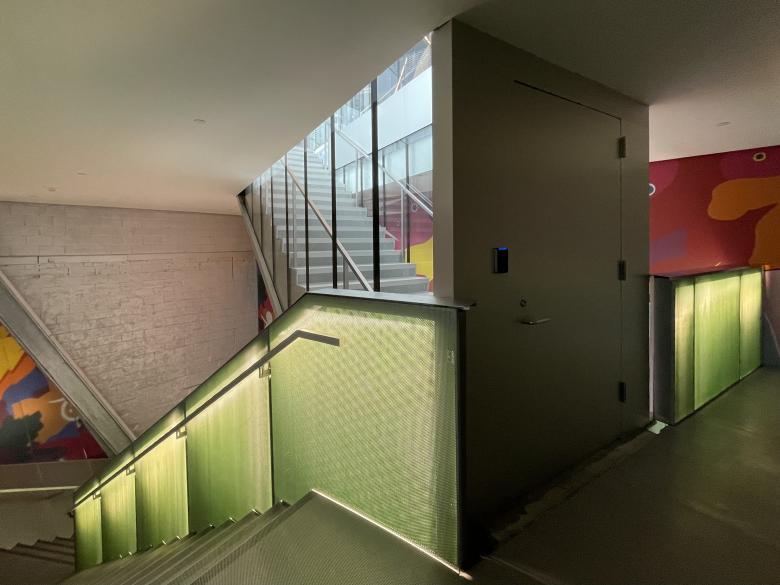
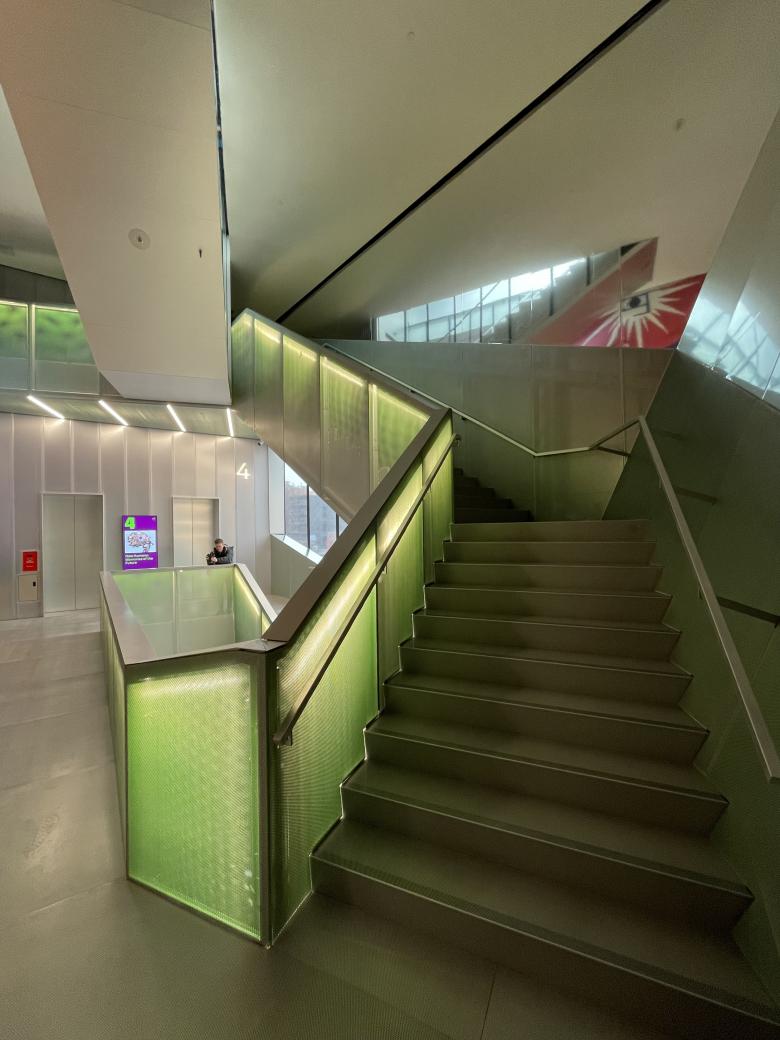
Although the artwork changes on each floor of the atrium, the architectural finishes are consistent, particularly the perforated metal guardrails with internal lighting that give the vertical space a green tinge. (Photo: John Hill/World-Architects)
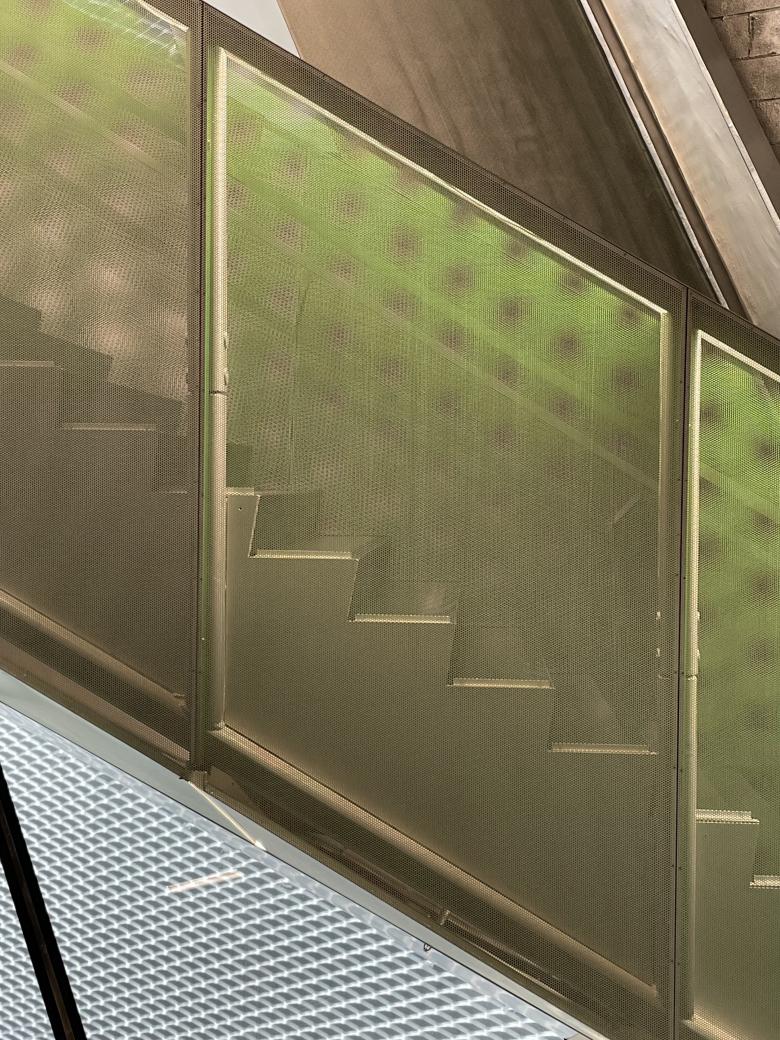
The perforated metal guardrails can be seen as an echo of, or homage to, the SANAA building, whose extruded aluminum facade can be glimpsed here through the facade. (Photo: John Hill/World-Architects)
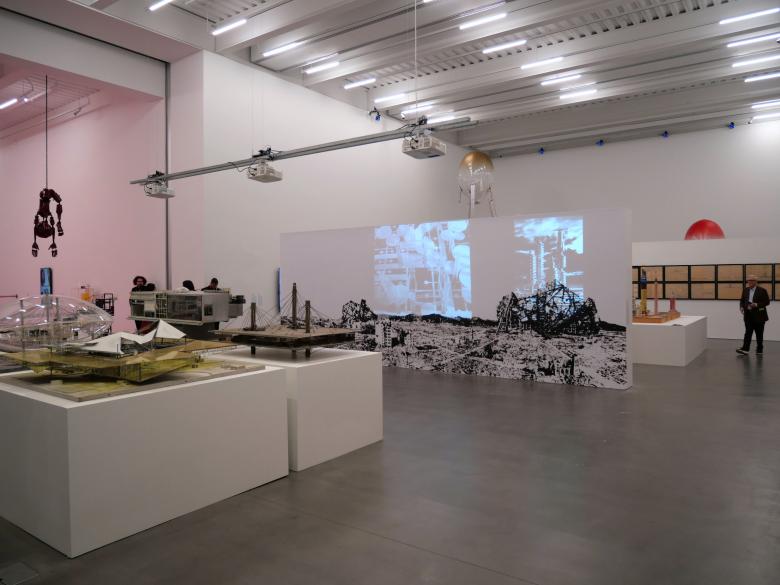
Let's take a brief detour into the gallery on the fourth floor, which is displaying the “Future Cities” component of the museum-wide New Humans exhibition; it features visions of new architecture by Constant, Hugh Ferris, Bodys Isek Kingelez, Anicka Yi, and others. (Photo: John Hill/World-Architects)
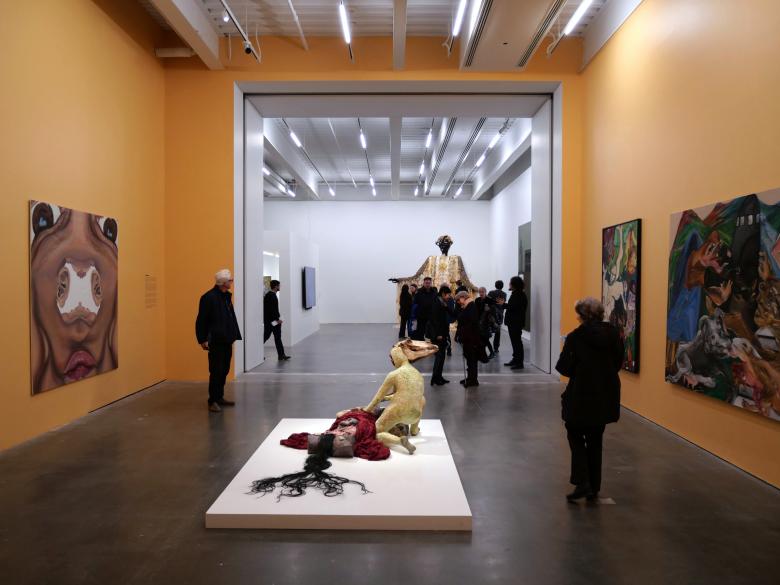
Large openings provide passage between the OMA and SANAA buildings, such that the aligned white-box galleries on floors 2 through 4 congeal into a single building, a single New Museum. (Photo: John Hill/World-Architects)
Although color is used to demarcate the galleries in the two buildings (the third floor is seen here), the exposed structure and otherwise basic finishes that don't try to compete with the artworks are consistent from 2007 to 2026. (Photo: John Hill/World-Architects)
The allusions to Piranesi and Escher from upstairs apply to the atrium as well. (Photo: John Hill/World-Architects)
Given that the New Museum is not a collecting museum, one can expect the numerous artworks in the atrium to change over time. (Photo: John Hill/World-Architects)
While many people during the press preview were drawn upstairs by the large-scale artwork in the middle of the stairs, the alternative approach of taking an elevator to the top and walking down—akin to Frank Lloyd Wright's Guggenheim—was a great way to experience the new New Museum. (Photo: John Hill/World-Architects)
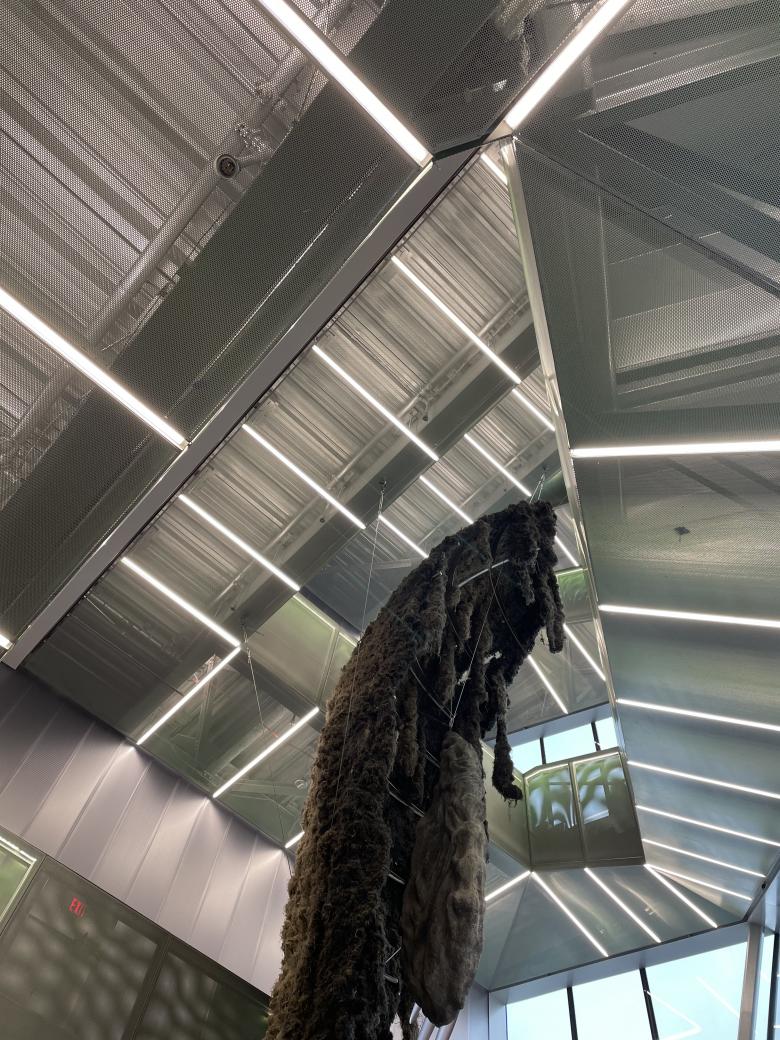
Looking up, one can see how the perforated metal of the guardrails is also used for the underside of the stairs and landings. (Photo: John Hill/World-Architects)
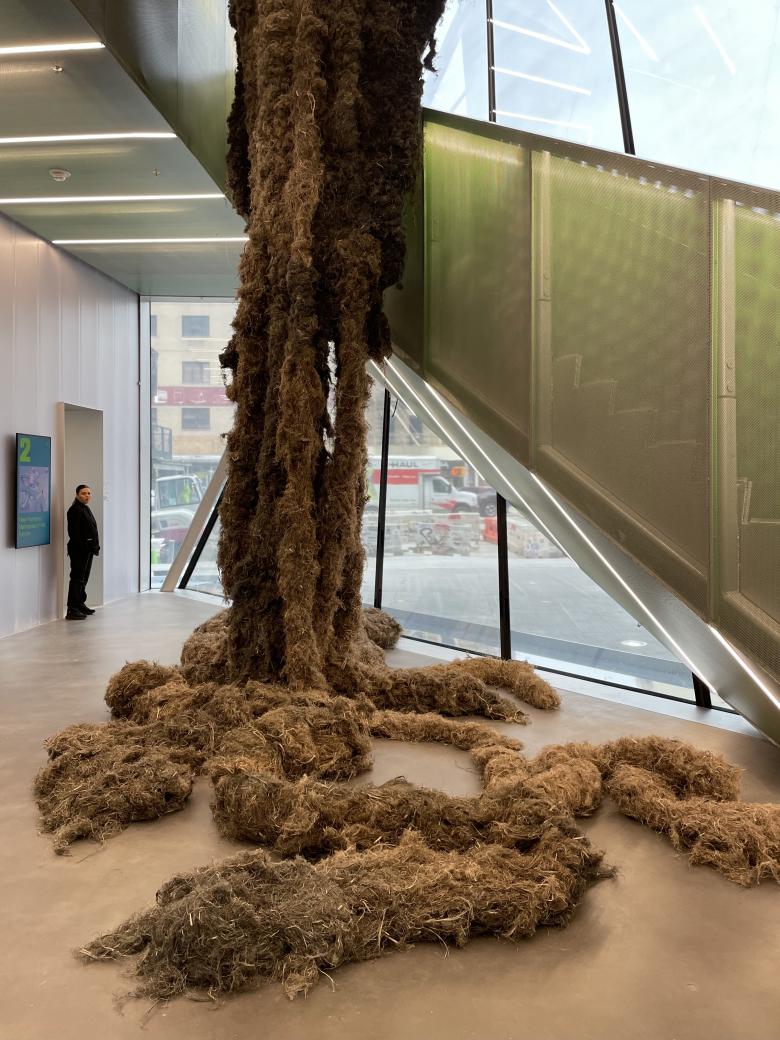
The base of Klára Hosnedlová's Shelter sprawls across the ground floor. (Photo: John Hill/World-Architects)
Behind this wall at the back of the atrium will be an OMA-designed restaurant, set to open soon. (Photo: John Hill/World-Architects)
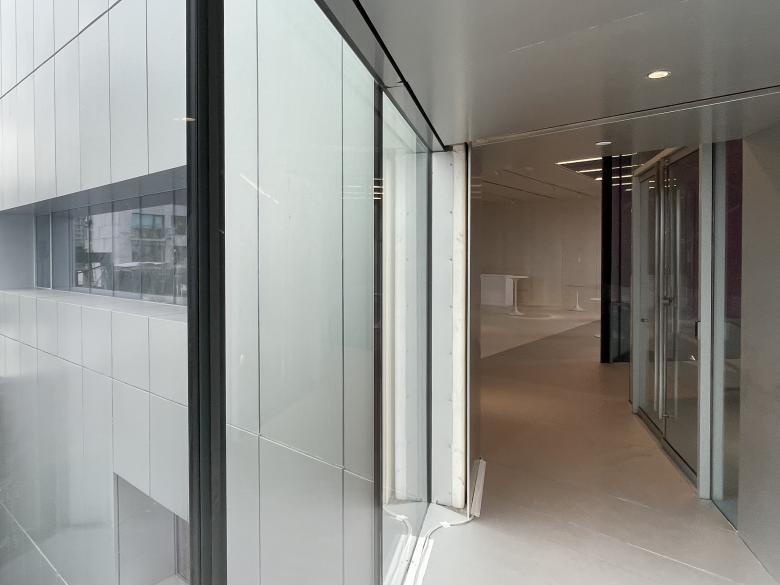
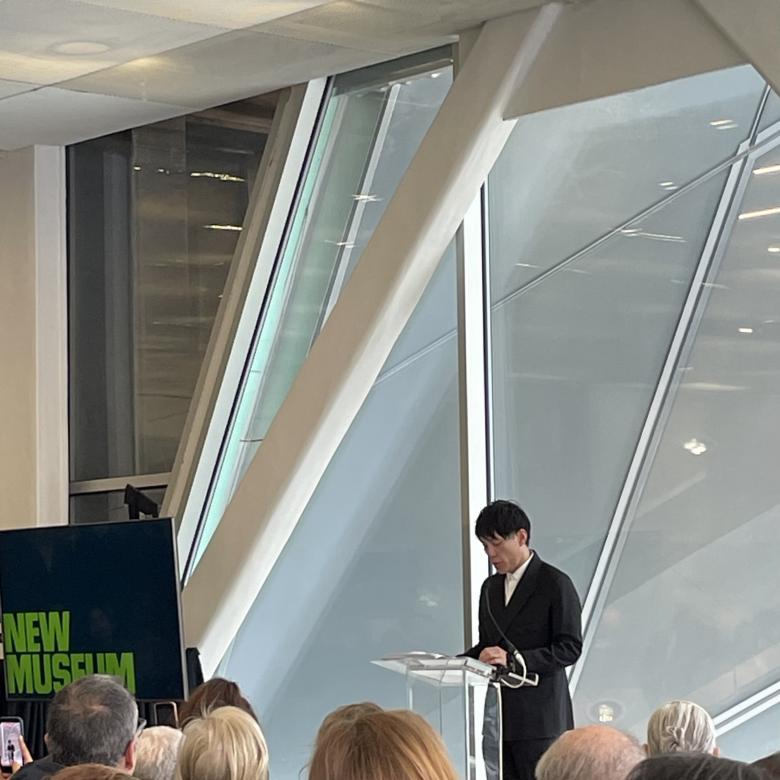
Lastly, here is a photo of OMA partner Shohei Shigematsu talking to the gathered press in the museum's lobby (aka Marcia Tucker Hall) on Wednesday, with the facade of the building he and Rem Koolhaas designed behind him. Although Koolhaas did not make it to New York for the opening due to an injury, a conversation between him and Shigematsu should take place at the museum in the future. (Photo: John Hill/World-Architects)