Marunouchi Architecture Tour
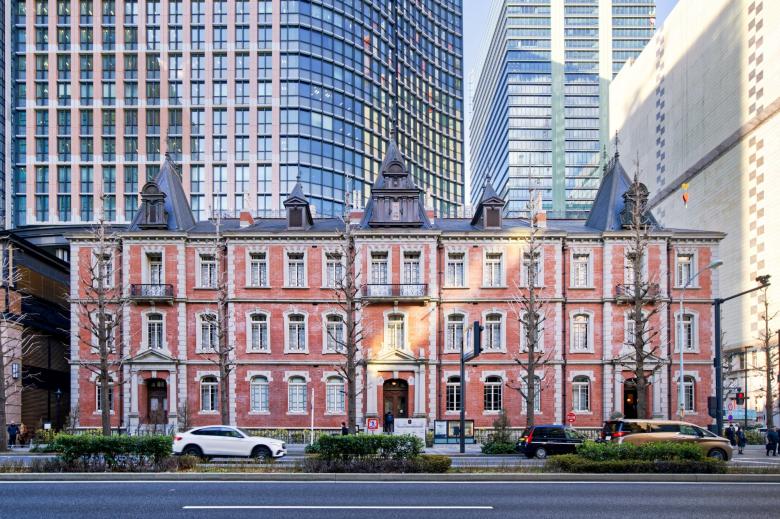
Mitsubishi Jisho Design Inc. recently presented the Marunouchi Architecture Tour. The tour introduced the company's "Inheritance Design" philosophy via visits to actual buildings in Tokyo's Marunouchi district, and included a report on the Marunouchi Architectural Materials Preservation Warehouse, which was unveiled to the media for the first time. The curators of Japan-Architects were in attendance and documented the tour.
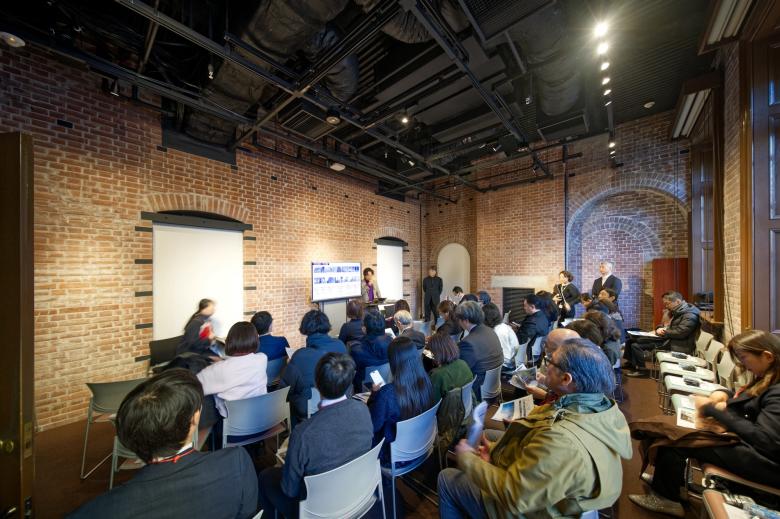
Ahead of the tour was an orientation at the Mitsubishi Ichigokan Museum, where attendees received an explanation of the history and achievements of Mitsubishi Jisho Design, the role of the Mitsubishi Jisho Design Architectural Heritage Design Office, and how Mitsubishi Estate has advanced the development and preservation of Marunouchi. Approximately forty architecture-related media representatives were in attendance.
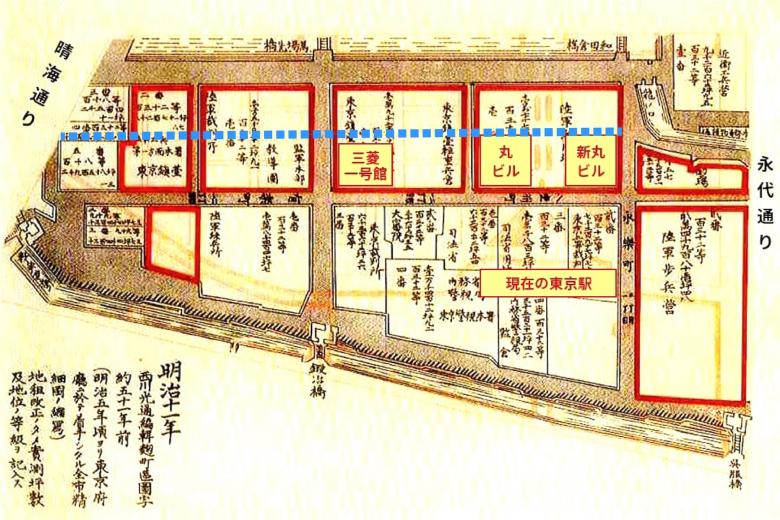
The land purchased in 1890 is shown in red, and Marunouchi Nakadori Street is depicted in the blue dashed line.
In 1890, Mitsubishi acquired from the Meiji government approximately 35,300 square meters of former military land in the Marunouchi area (red frame in the above image), including the site west of present-day Tokyo Station. The purchase price was ¥1.28 million, equivalent to three times the annual budget of Tokyo City at the time. The land was originally a feudal lord's residence, and the Marunouchi Nakadori Street (blue dashed line) was built through it, creating the office district.
To create a world-class office district in Japan, the Marunouchi Architectural Office—the predecessor of Mitsubishi Jisho Design—was established. British architect Josiah Condor was brought on as an advisor and a conscious effort was made to create architecture with an urban, street-oriented design perspective. Mitsubishi Jisho Design defines Inheritance Design as “design that clarifies the value of inherited cities and architecture, and creates new value for the future together with contemporary value.”
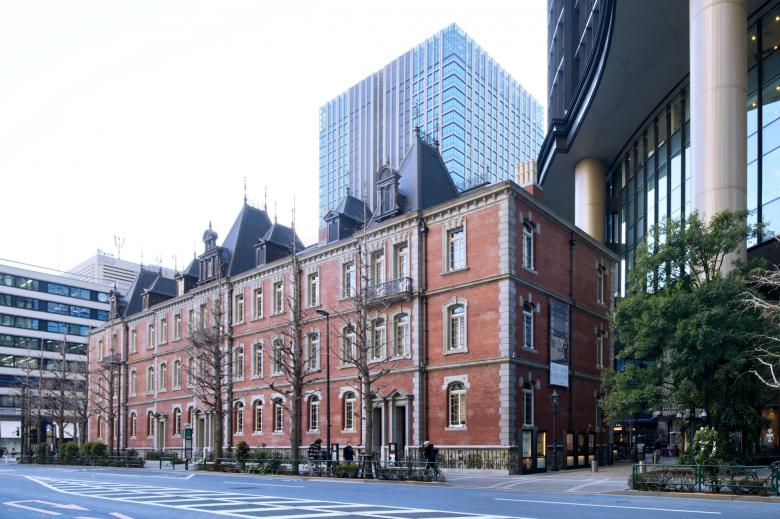
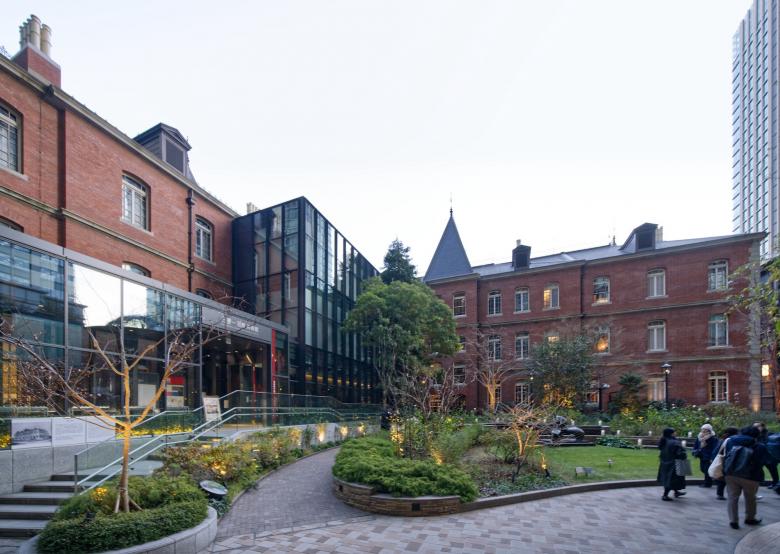
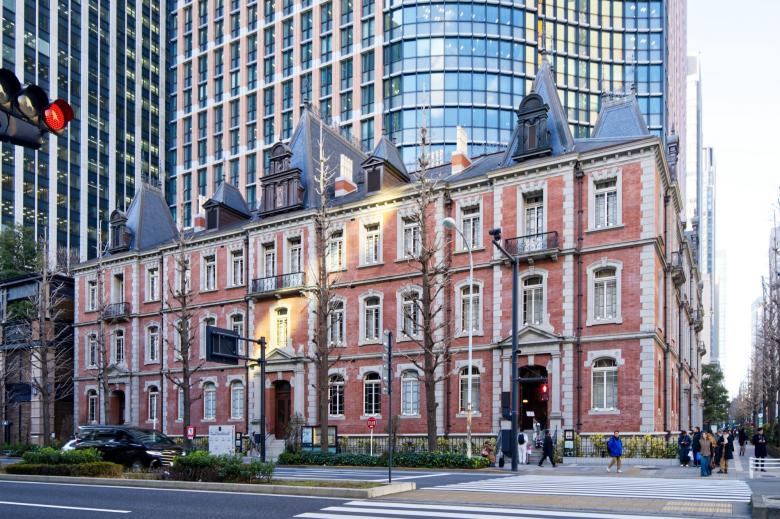
The first office building constructed by Mitsubishi in Marunouchi was designed by Josiah Condor and built in 1894, but it was demolished in 1968 due to deterioration. After the construction of the Mitsubishi Corporation Building, the old building was rebuilt in 2009 and opened as Mitsubishi Ichigokan Museum in 2010.
During the rebuilding, detailed investigations were conducted on various documents, photographs, and preserved components, in addition to meticulous examination of Meiji-period design drawings and actual measurement drawings taken during dismantling. Preserved components, such as the stone handrails from the staircase section, were partially reused within the building interior. Furthermore, various experimental approaches were undertaken, faithfully reproducing not only the designs and components but also their manufacturing methods and construction techniques.
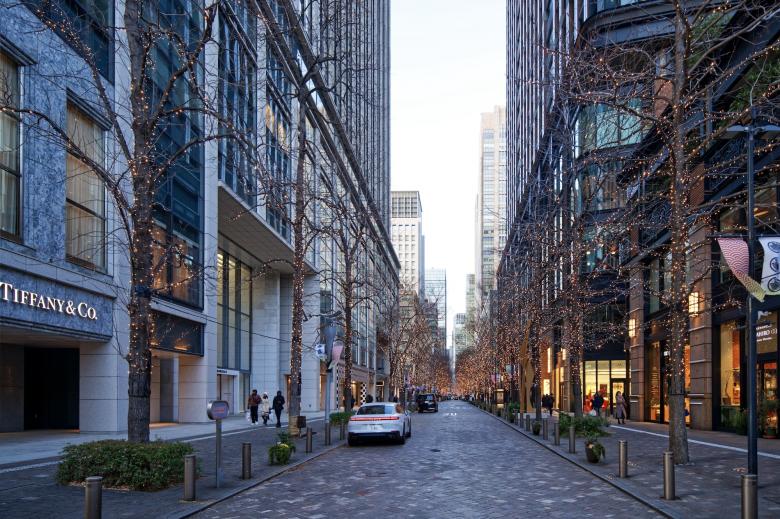
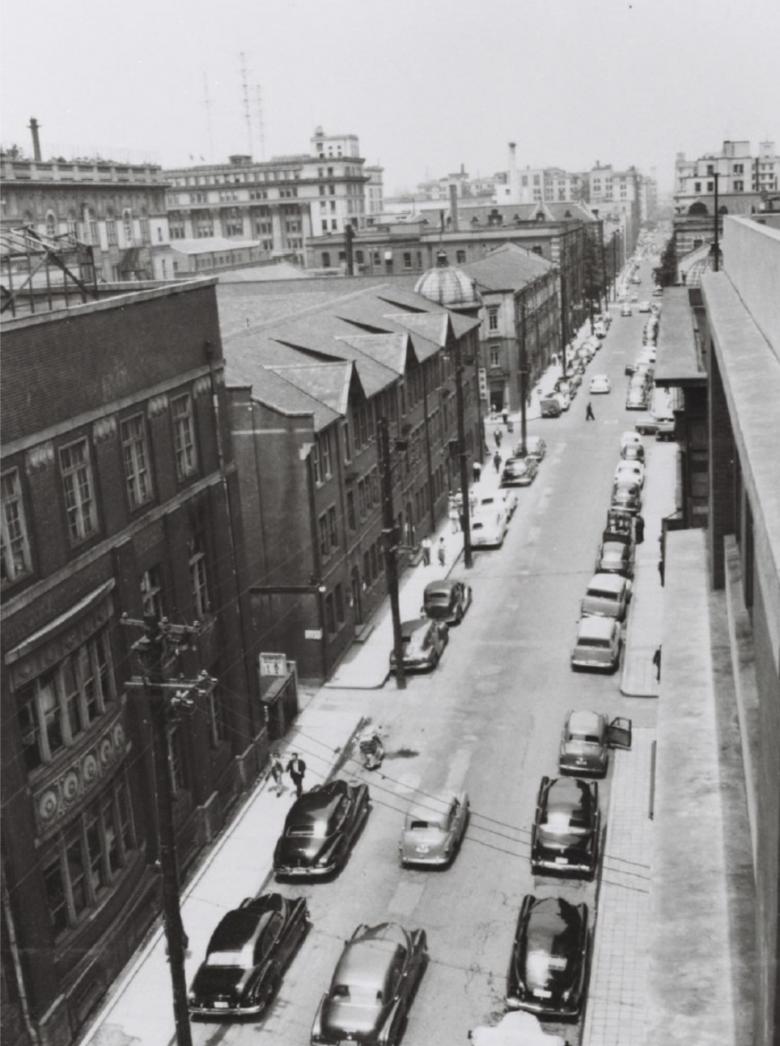
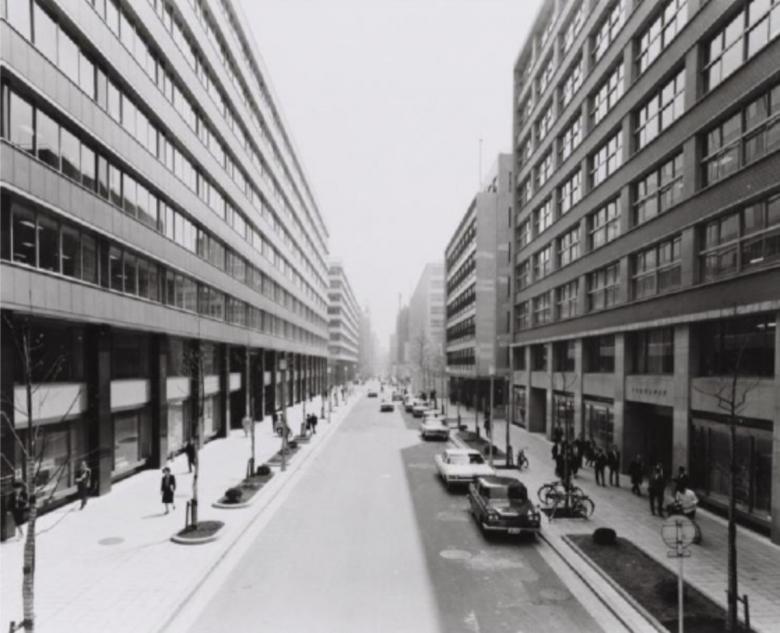
Many office buildings constructed during the Meiji and Taisho periods were rebuilt in the 1960s to address aging structures and a shortage of office space. Height restrictions were also raised to approximately 31 meters. Furthermore, in 2002 the street underwent renewal, narrowing the roadway width from nine to seven meters and widening the sidewalks accordingly.
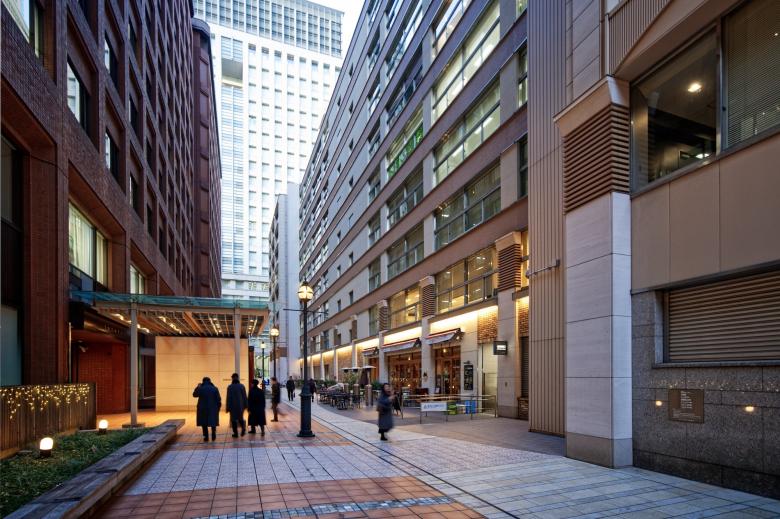
is a commercial plaza called "Marunaka Walk," which serves as a relaxing spot within the office district.
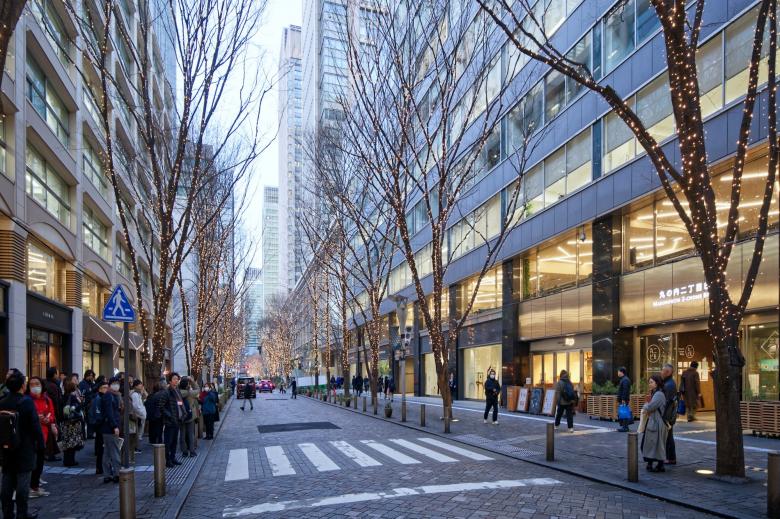
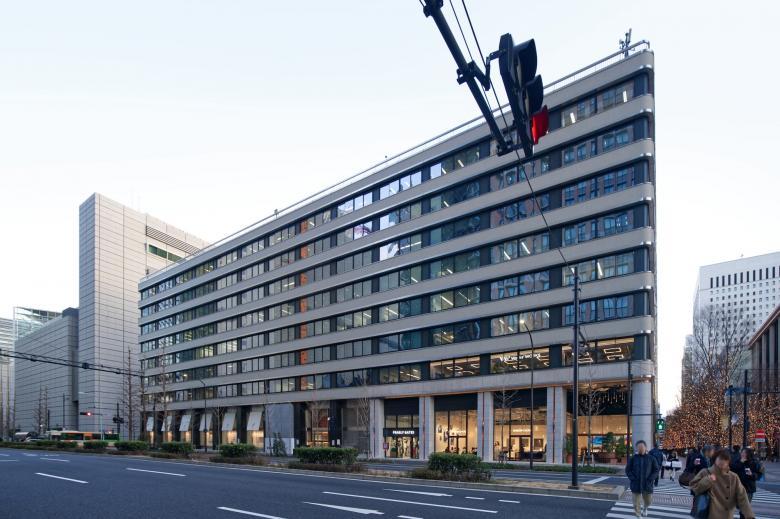
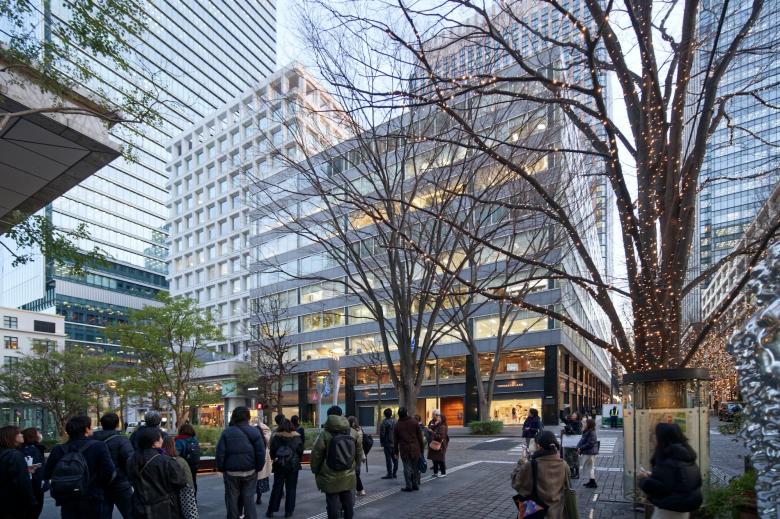
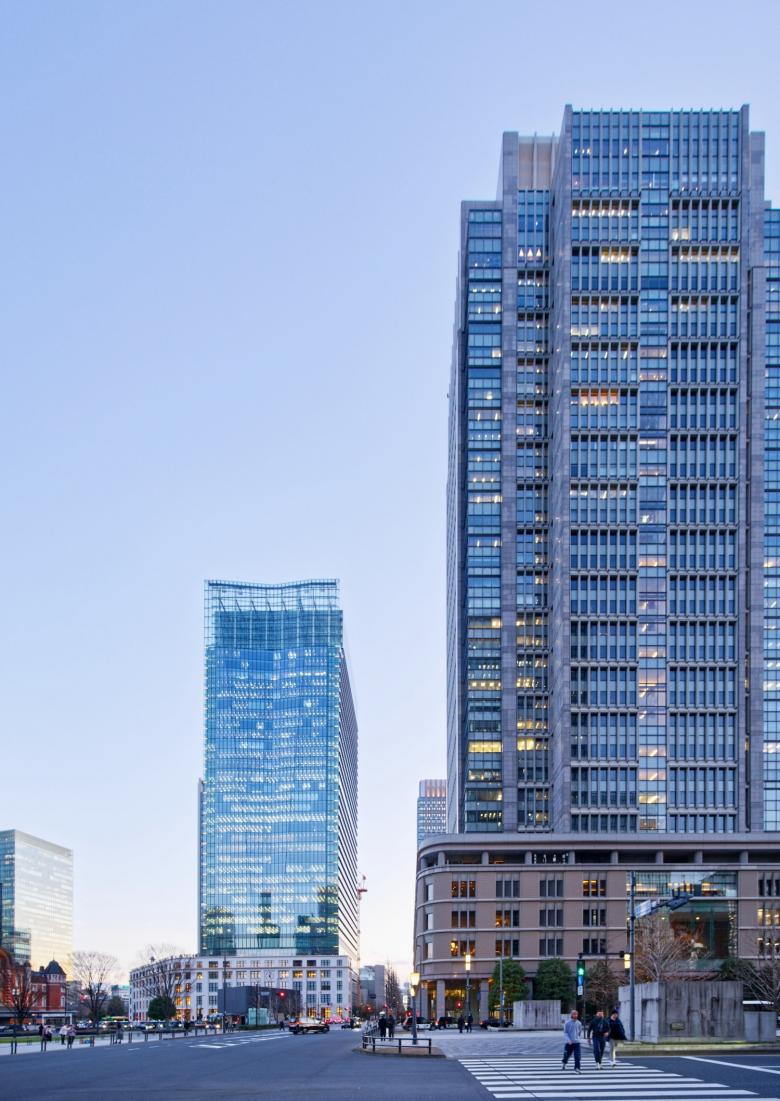
Subtle consistencies and difference were evident on the walk. For instance, the lighting at the second floors of the Marunouchi-Nakadori Building (at left in above photo) and Marunouchi 2-chome Building (at right in above photo), which also houses Mitsubishi Design, share the same design, lending a sense of unity to the street. Alternatively, variations in heights and floor area ratios of the Marunouchi 2-chome Building and Mitsubishi Building (below photo)—formerly the Mitsubishi No. 25 Building and the Mitsubishi Main Building, respectively—are due to differences in their reconstruction periods and the Building Standards Act in effect at the time.
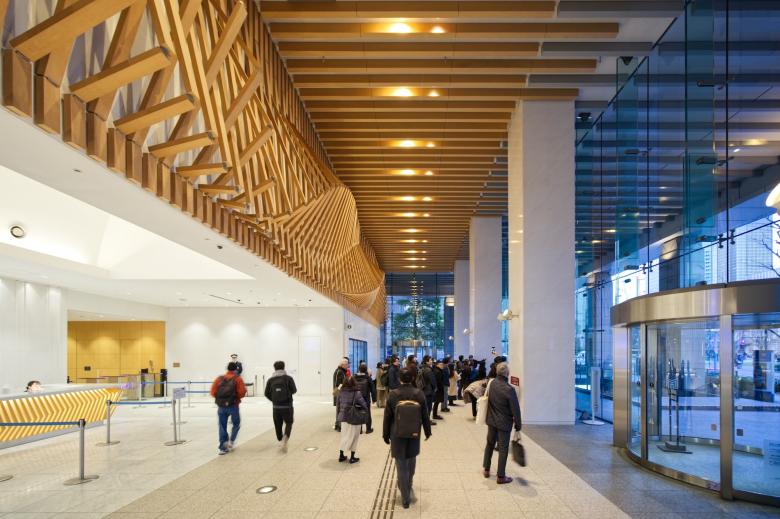
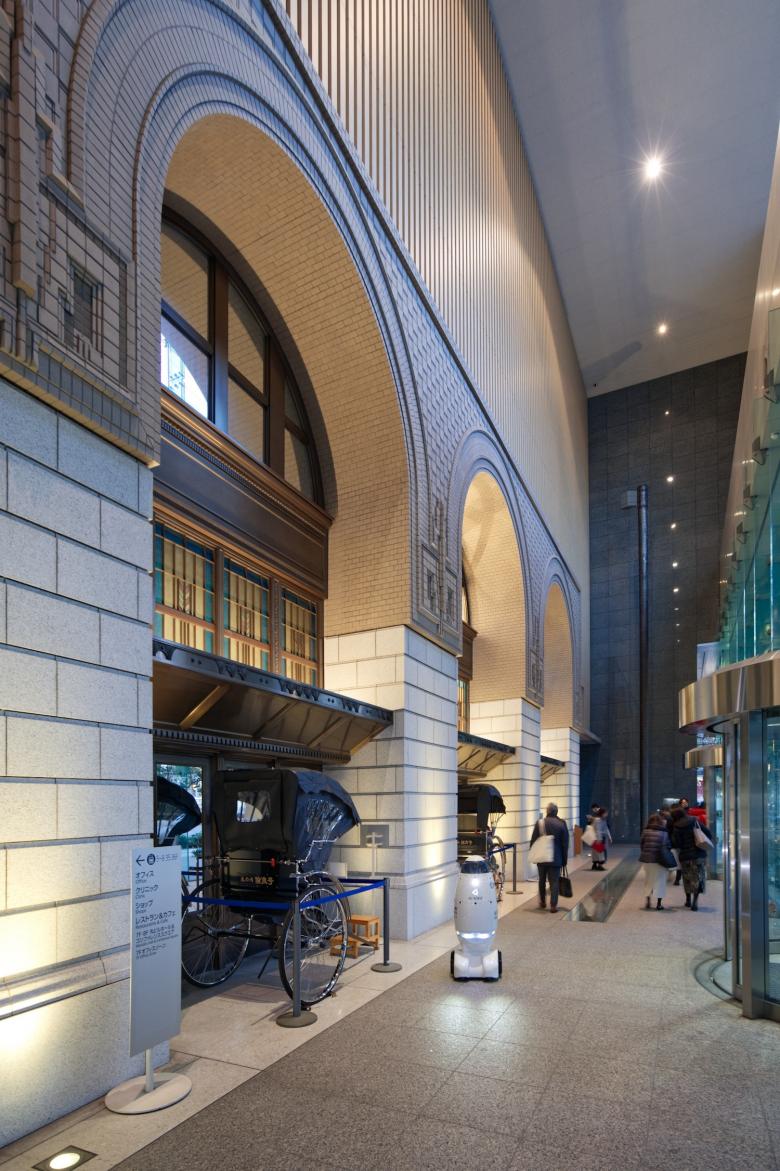
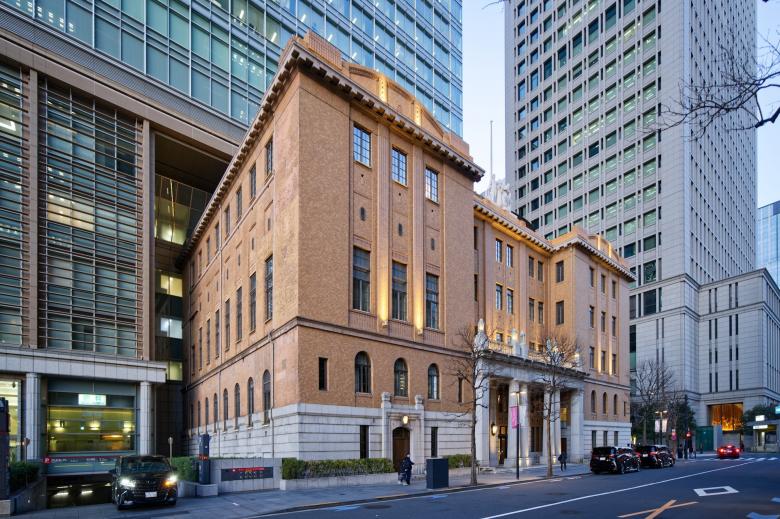
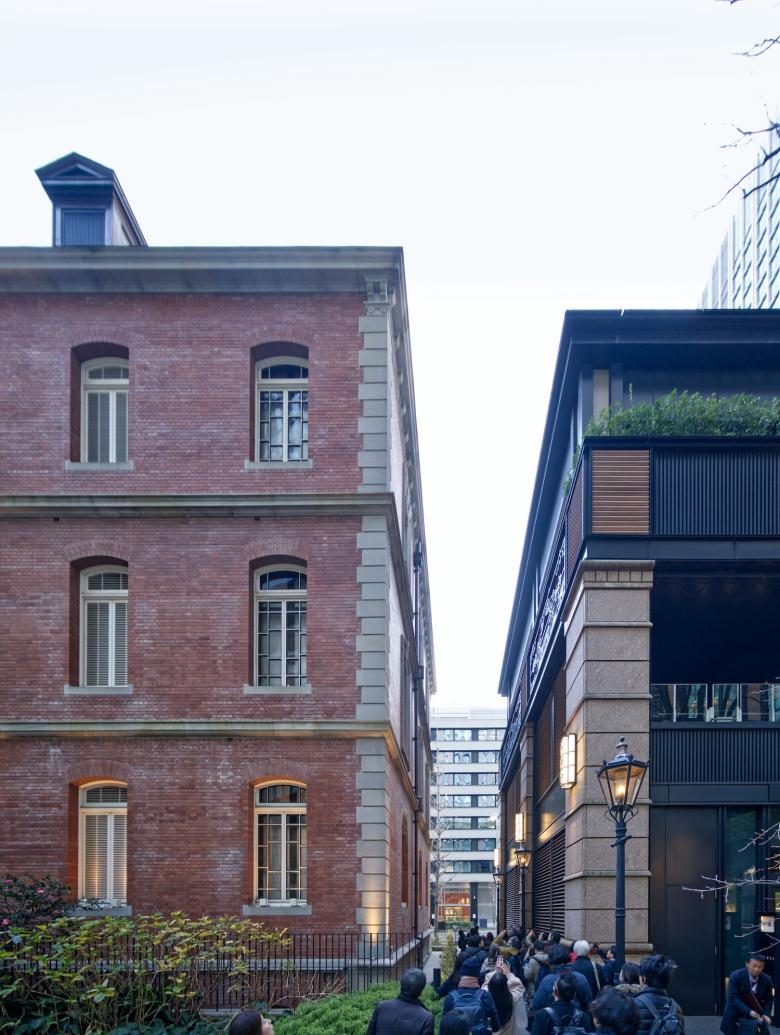
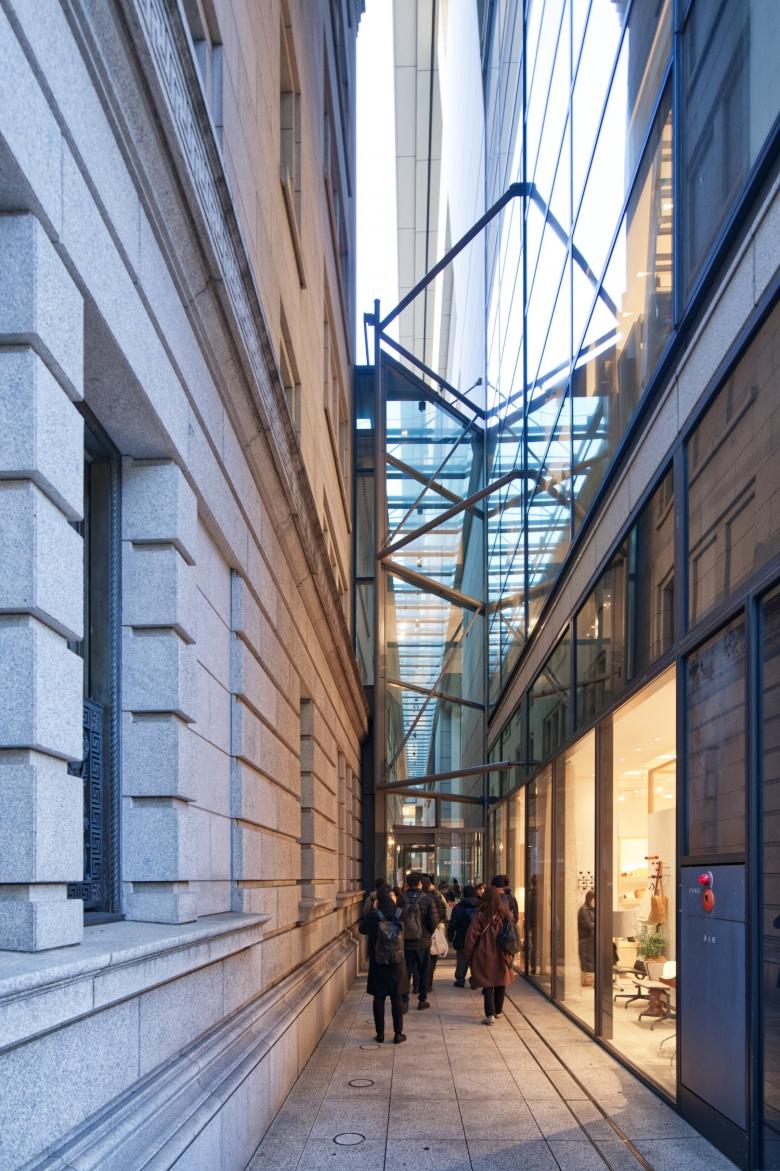
The Japan Industrial Club Hall, a registered Tangible Cultural Property, was designed by Yokogawa Tamisuke and Matsui Kitaro. Due to deterioration and insufficient seismic resistance, two-thirds of the structure was demolished. In 2003, it was rebuilt in a manner of preservation and restoration, integrated into the Mitsubishi UFJ Trust and Banking Building behind it. The side facade (above photo) incorporates the original bricks.
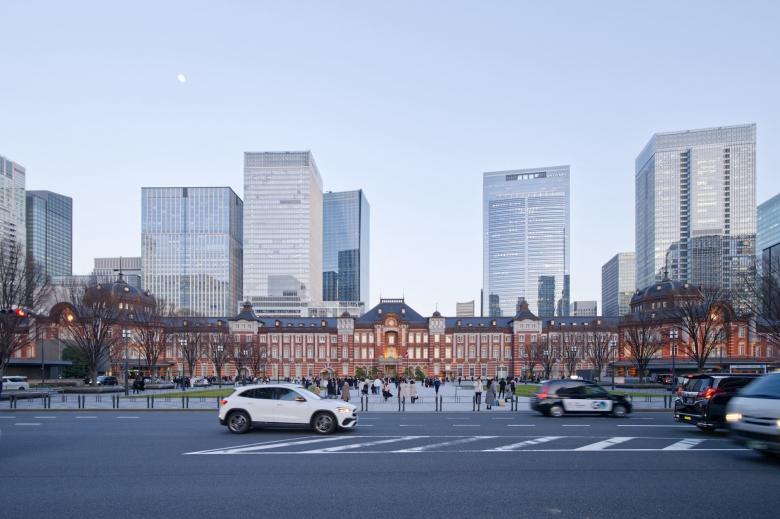
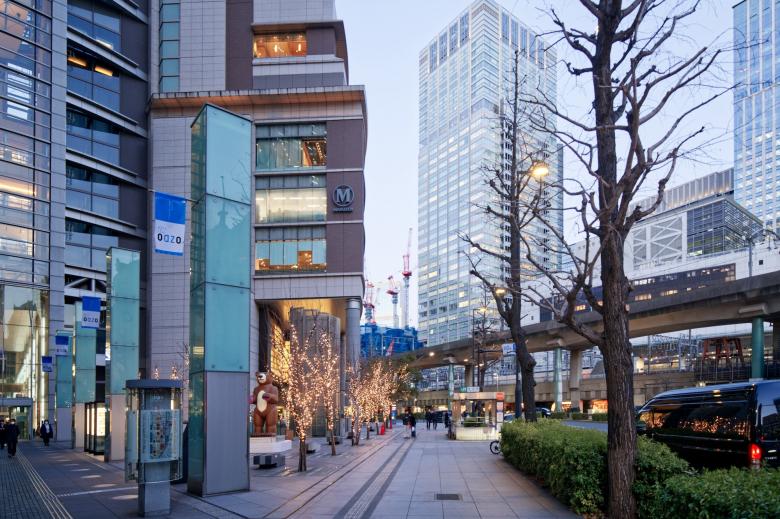
The walking tour ended at Marunouchi Oazo (at left in the below photo) but then continued at the Marunouchi Architectural Materials Preservation Warehouse inside the Marunouchi North Exit Building.
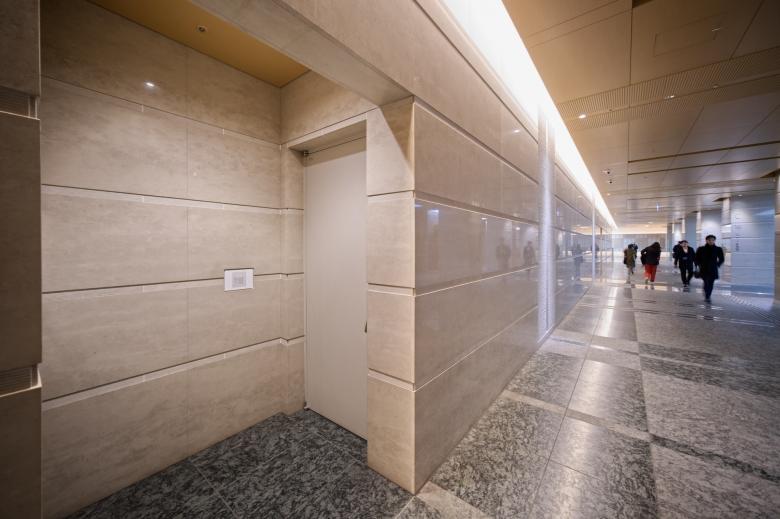
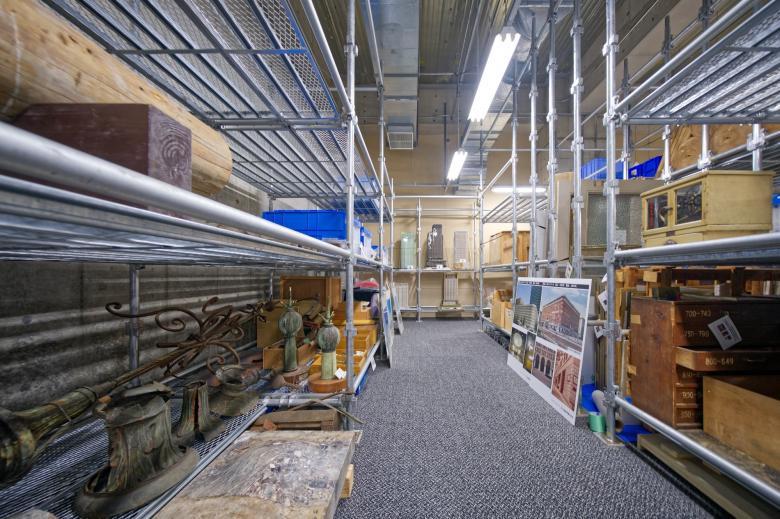
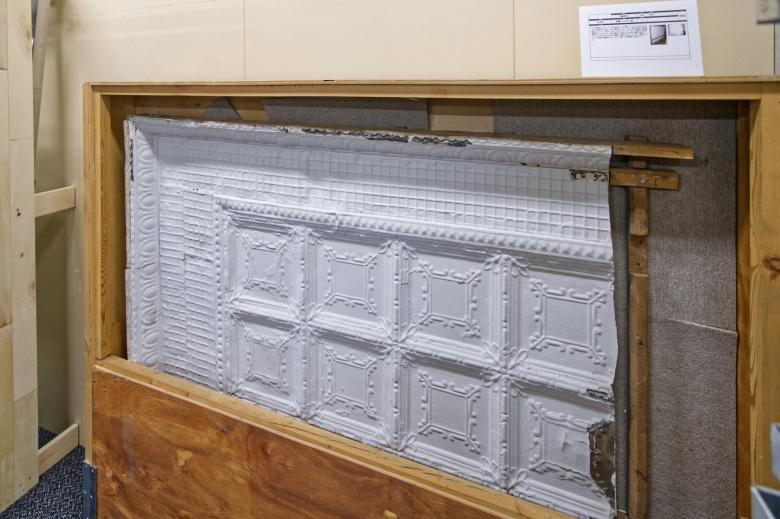
The materials inside the Marunouchi Architectural Materials Preservation Warehouse were previously stored in the basement of the Kokusai Building, which is undergoing demolition and reconstruction. The warehouse is set up as a preservation space where visitors can view the materials. This tour marked the first time the space was shown to the media. With the aim of preserving the value of historical architecture in Marunouchi, the warehouse aims to preserve the distinctive parts of old buildings while also passing on the history of each building and the construction techniques of their time. The warehouse will preserve components of historical value from future redevelopments as well.
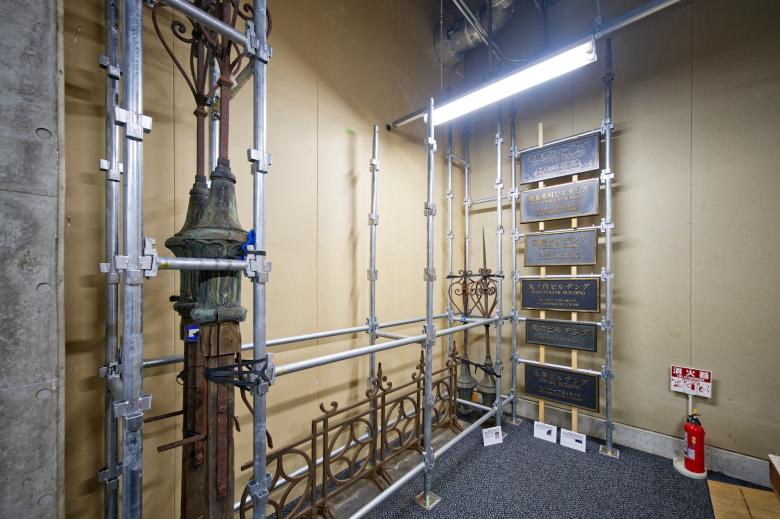
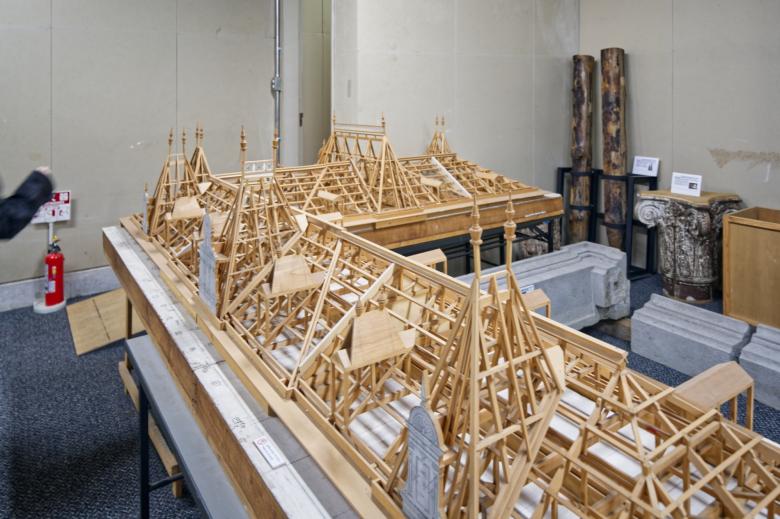
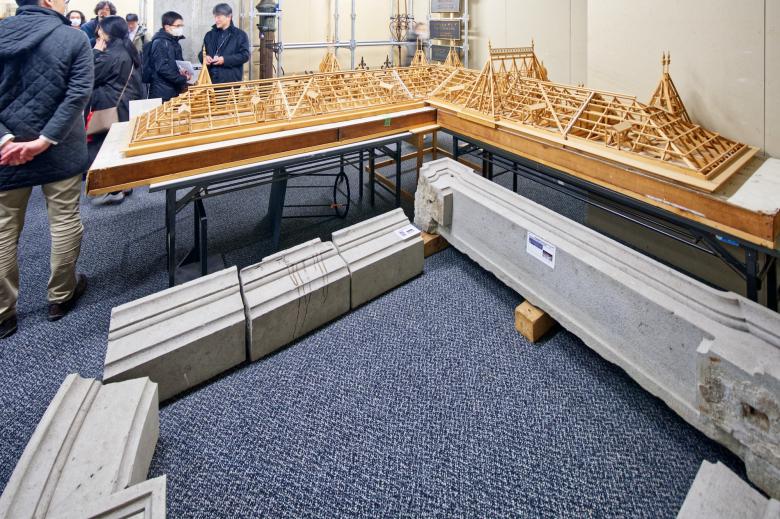
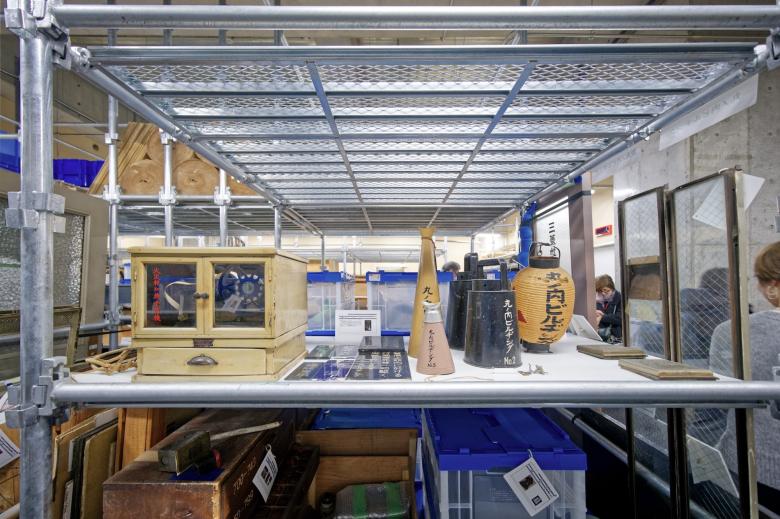
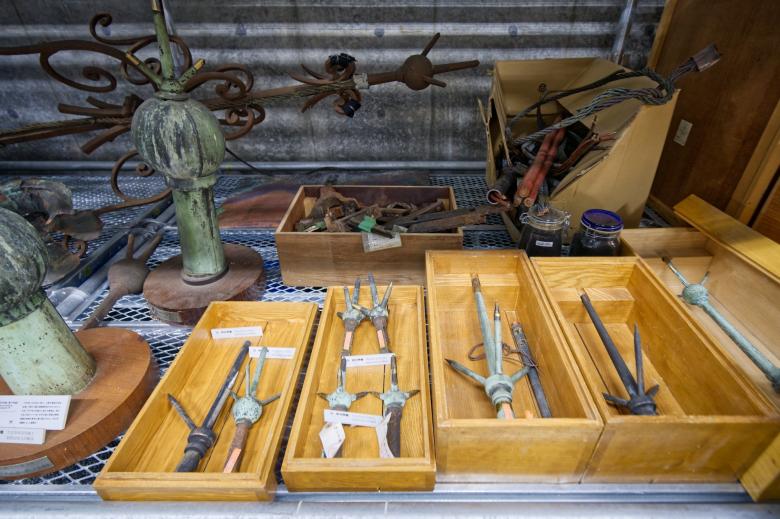
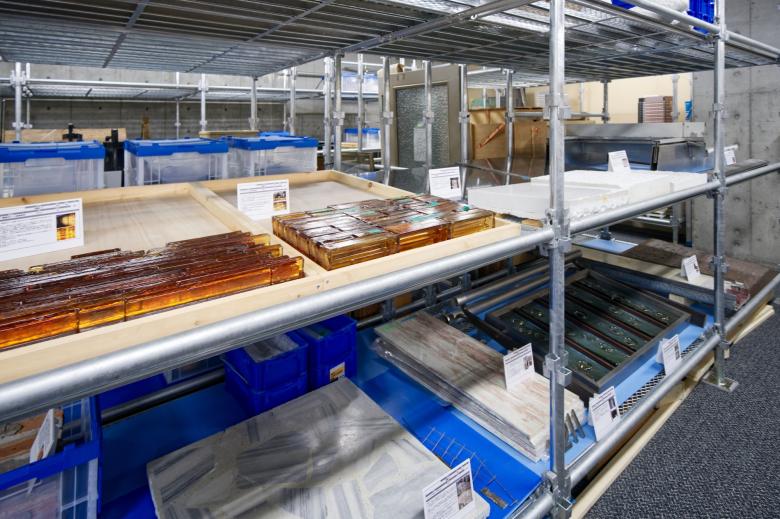
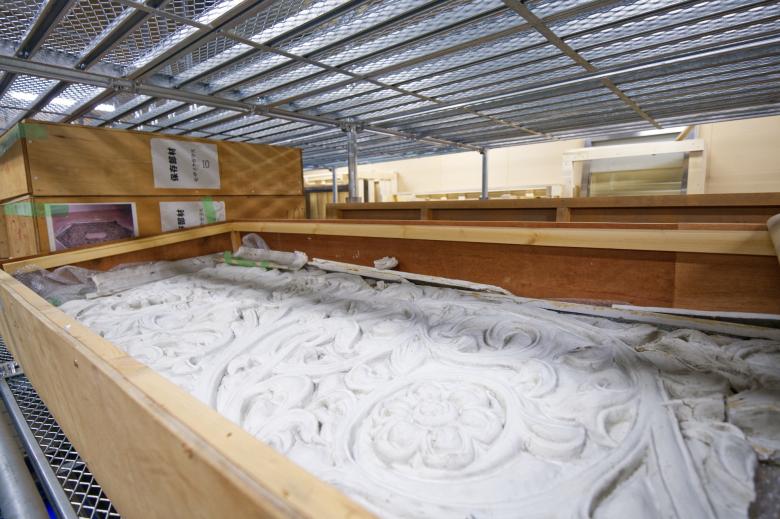

Mitsubishi Jisho Design's Architectural Heritage Design Office office aims to work not only on rebuilding through change in this era of economic prioritization, but also to preserve architecture, maintain continuity with the evolving landscapes that serve as stages and backdrops for people's memories and sentiments, and foster a sense of security and connections across generations.
Their facility is not normally open to the public and is only accessible during events such as the Tokyo Architecture Festival.