Selected Proposals Announced in UIA2026BCN Call for Participants
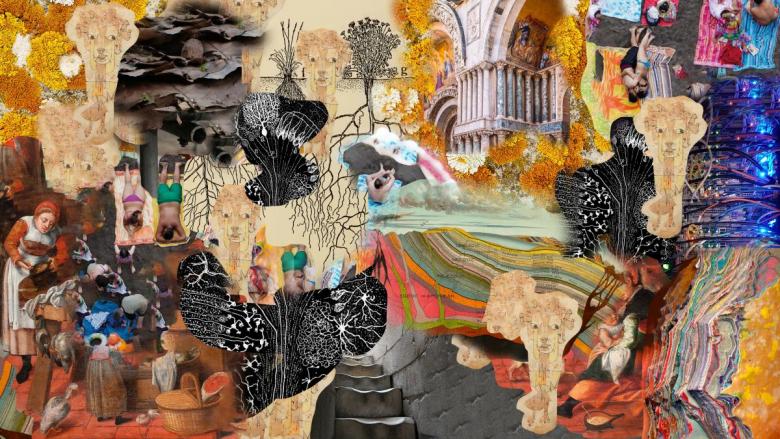
The UIA World Congress of Architects 2026 Barcelona has announced the 66 contributions selected through the Call for Participants—launched in March 2025—that stand out for their innovative perspectives, interdisciplinary approaches, and transformative ideas for addressing contemporary challenges.
Under the theme Becoming: Architectures for a Planet in Transition, the Open Call for Participants closed on June 2, 2025, with a record number of international submissions—1,547 entries, divided into three categories: Critical Design (552), Critical Essay (797), and Critical Image (198).
To manage the diversity and volume of proposals, a two-stage international evaluation process was implemented. First, specialized committees preselected the most relevant works according to thematic lines; then, prestigious juries evaluated the preselected works through interactive online deliberations.
In Critical Design, the committee composed of architects and the curatorial team preselected 121 proposals out of 552, and the international jury finally selected 31 projects.
Among the selected projects are proposals such as “La Nave: Rehabilitation of an old industrial warehouse” (Atienza Maure), the “Benjakitti Forest Park” in Bangkok (Arsomsilp Community and Environmental Architects and Turenscape), and “Waycha Mayu Urban Biological Corridor” (TAV), along with social initiatives such as “Shelter for Homeless Women: Architecture Serving Social Reintegration” (Vivas Arquitectos) and the “Ending Well” project (Courage Kpodo). The selection also includes innovative works in the field of circular construction and biogenic materials, such as “Regenerative Biogenic Façades for Extreme Climates” (Astrid Juul), and productive pedagogy, such as “A Botanic LAB: Rethinking Educational Pedagogy through Productive Infrastructures” (Máximo Bertoia).
The Critical Essay category received the highest number of submissions: 797 essay proposals of around 800 words, from which 30 speakers and 7 texts were selected, the latter for inclusion in the official printed catalog of the conference. The evaluation process was particularly elaborate, with a double-blind peer review in two phases—the first on essay proposals and the second on the complete texts of around 3,000 words—managed by a committee of 81 academics and 42 and professionals from around the world, from the UPC and ETSAM to the University of Pretoria, ETH Zurich, and Carnegie Mellon.
Among the selected essays, topics such as lithium extraction and ecological resistance in the Andean Altiplano, counter-cartographies of migrants in the Canary Islands, architecture beyond the human, the circular metabolism of the 19th century, and the systemic intelligence of the Cybersyn project stand out.
In Critical Image, 65 works were shortlisted from 198 entries, and the jury selected 28 visual works. The works selected in this category cover a wide range of formats: documentary photography, film, digital collage, speculative cartography, and hybrid media.
Among the selected projects are works such as “The Mineral Landscape Has a Light Blue Sky” (Marcos Zegers), “Fins ací (it ends here). Paiporta, Valencia, October 2024” (Milena Villalba), “Alternative Urbanism: Self-Organising Markets of Lagos” (Oshinowo Tosin), and “Kutch's Living Birdhouses: Community Sanctuaries for Coexistence” (Nipun Prabhakar).
Selected contributions will be included in the congress program as oral presentations, exhibitions, publications in the official catalog, and open-access digital proceedings. The UIA World Congress of Architects 2026 Barcelona, organized by the UIA, CSCAE, and COAC, with government support, will be held from June 28 to July 2, 2026, and is shaping up to be one of the most important international architectural events of the decade.