UIA World Congress of Architects 2026 Barcelona
Six Themes Across Three Days
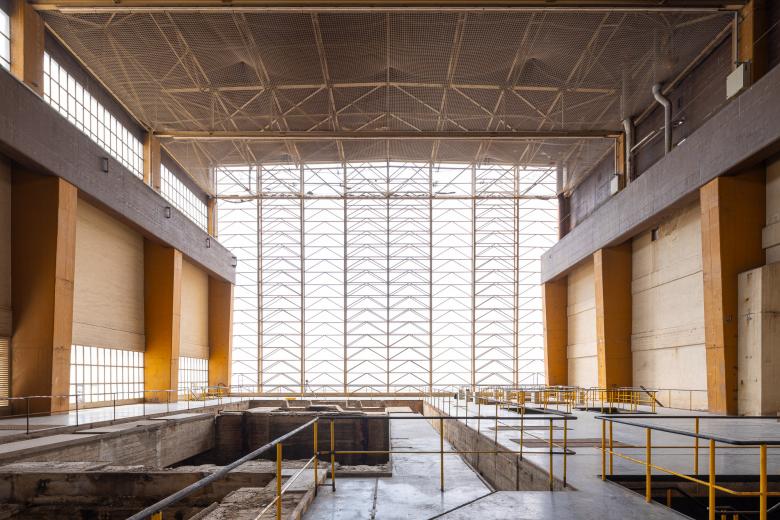
The centerpiece of the 2026 UIA World Congress of Architects, taking place in Barcelona in late June and early July, is the three-day conference that will find more than 250 speakers in over 100 sessions addressing the curatorial theme Becoming: Architectures for a Planet in Transition. Some details of the scheduled talks have been released.
Approximately 10,000 professionals, students, and institutional representatives are expected to descend upon Barcelona between July 28 and July 1 for the 2026 UIA World Congress of Architects. The three-day event—convened by the International Union of Architects (UIA) and organized by the Higher Council of the Orders of Architects of Spain (CSCAE) and the Architects’ Association of Catalonia (COAC)—coincides with the Catalan capital serving as the 2026 World Capital of Architecture.
To structure the many plenary talks, lectures and debates, open forums, workshops, research presentations, and other events taking place in numerous venues across Barcelona (the main ones are pictured here), the organizers worked with the curatorial team of Pau Bajet, Mariona Benedito, Maria Giramé, Tomeu Ramis, Pau Sarquella, and Carmen Torres, who won a 2024 competition for the UIA Congress with their curatorial theme Becoming: Architectures for a Planet in Transition.
Broadly speaking, Becoming explores “spatial practices that foster the appropriation and transformation of our inhabited environments—both human and more-than-human, individual and collective—by investigating the potential of time as a design tool.” The overarching theme is broken down into six thematic research lines that structure the plenary sessions (moderated by so-called “critical antagonists”), lectures, panel discussions, roundtables discussions, and workshops for students, many pulled from an open call that took place last year. Below is a day-by-day, theme-by-theme breakdown of Becoming, highlighting just a few of the many participants.
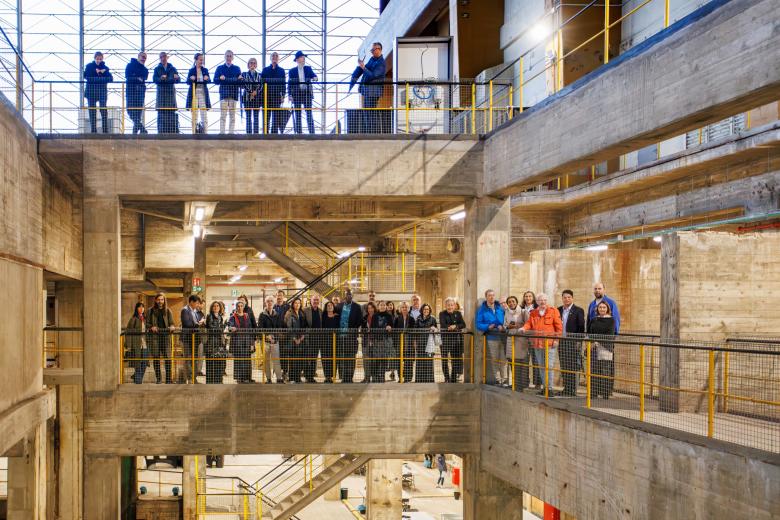
Monday, June 29: Becoming More-than-human & Becoming Circular
Under Becoming More-than-human, the morning session on Monday “will explore how design can foster new forms of coexistence between species, territories and ecological processes,” per a press release, “as well as the political role of architecture in addressing the environmental crisis.” Highlights include “Radical Ecologies: Architecture as Political Engagement,” a talk by Andrés Jaque that explores “how design reveals hidden ecological and social relations, negotiates power, and engages living systems,” and “Amid Landscape, matter, and atmosphere,” a talk by Junya Ishigami about how “space emerges through the interaction between structure, matter, atmospheric conditions, and time, dissolving boundaries between the built environment and its surroundings.” Other notable names in the morning session include Boonserm Premthada, 51N4E, Al Borde, Kate Orff, Charles Waldheim, Philippe Rahm, and Beatriz Colomina.
In the afternoon session, Becoming Circular focuses on reuse and building life cycles, with particular attention paid to “strategies for rehabilitating built heritage, recycling, proximity, energy efficiency and resource economy as tools to reduce carbon footprints.” Highlights include “Economies of Means: Architecture between Efficiency and Generosity,” a joint presentation by Lacaton & Vassal and H Arquitectes on “architecture as a system of environmental relationships [and] circularity as a dialogue between space, climate, and construction over time,” and “The Politics of Reuse: Housing, Policy, and Urban Strategy,” a talk by Charlotte Malterre-Barthes and House Europe! founder Olaf Grawert that “examines how regulation, valuation, and finance shape whether cities are transformed or replaced, and how policy can shift the default from demolition to reuse across scales.” Other speakers of note include
Lu Wenyu, Rotor, Flores & Prats, Jo Taillieu, Solano Benítez, Søren Pihlmann, and Baukunst.
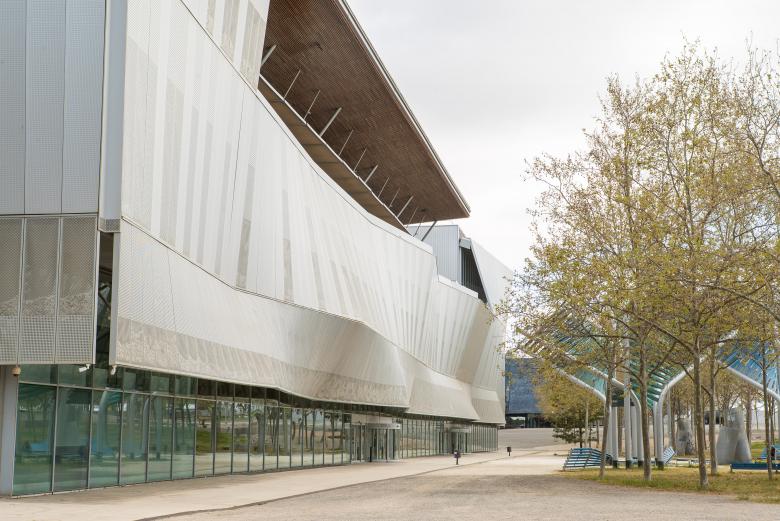
Tuesday, June 30: Becoming Embodied & Becoming Interdependent
The morning session on Tuesday, Becoming Embodied, will examine “how materials—especially those locally sourced or with low environmental impact—integrate environmental and social values, exploring structural potential, assembly systems and adaptability over time.” Highlights include “Locally Grounded: material, climatic and communities for resilience,” a presentation with Marina Tabassum and Palinda Kannangara exploring “two architectural practices shaped by locally grounded cultural and environmental conditions,” and “Technological Vernacular: Paradoxical Hybrids of Expression,” a presentation by Bruther on “the coexistence of advanced technologies and vernacular logics in contemporary architecture.” Other notables in the morning session include Roger Boltshauser, Xu Tiantian, Go Hasegawa, and BC architects & studies & materials.
In the afternoon session, Becoming Interdependent will reflect on spatial policies, housing, and public space and “propose rethinking forms of coexistence based on care, cooperation and solidarity as drivers of social empowerment.” Highlights include “Architectures of Resilience. Communities Between Rural and Urban Frontiers,” a lecture featuring Rural Urban Framework and Rahul Mehrotra rethinking urbanism in the Global South “by examining the coexistence of permanent and temporary forms within the city,” and “Urban Design and the Architecture of Coexistence,” a talk by Jan Gehl exploring “how urban design can cultivate encounter, trust, and mutual support in increasingly fragmented cities.” Other speakers of note include Yasmeen Lari, Anna Puigjaner, raumlabor, Teddy Cruz & Fonna Forman, Lacol, and Colectivo C733.
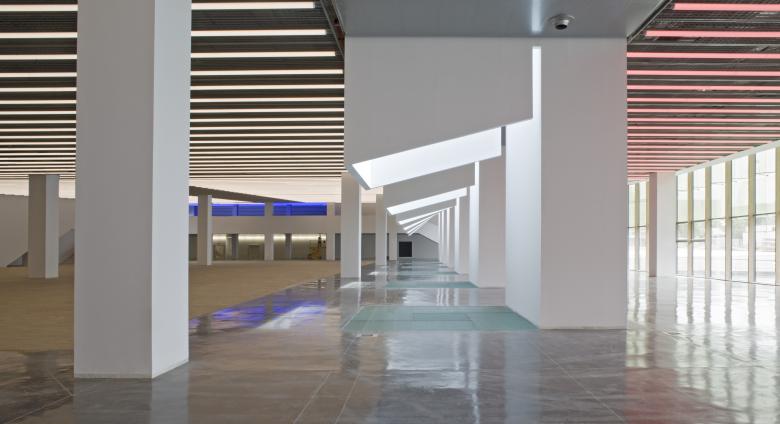
Wednesday, July 1: Becoming Hyper-Conscious & Becoming Attuned
Becoming Hyper-Conscious, the morning session on Wednesday, will investigate data, geopolitics, and legislation. “The sessions will invite participants to develop a critical awareness of these phenomena and to explore their implications and potential for contemporary architectural practice.” Highlighted talks include a lecture by Mario Carpo that will “trace the line from algorithmic thinking to artificial intelligence, situating computing within the history and theory of architecture,” and “Investigating Mass Violence: Architecture as Evidence,” a presentation by Forensic Architecture and the Centre for Spatial Technologies that will “explore the geopolitics of space and the potential of architecture as a tool for investigating and documenting territorial violence.” Other notable names include Brandlhuber+, Hiroyuki Ito, MILLIØNS
The Architecture Lobby, Rural Studio, Limbo Accra, and Cooking Sections.
In the afternoon session—the last session of the Congress and a summary of sorts to the other five topics—Becoming Attuned will focus on poetics, aesthetics, and culture. “It calls for a more sensitive, open-minded perspective, guided by desire and curiosity, which celebrates uncertainty, the everyday and the accidental, as well as physical and digital phenomena.” Highlights include “Ritual and the Choreography of Space,” a dialogue between Matilde Cassani, Tatiana Bilbao, and filmmakers Bêka & Lemoine that will ask “how design can attune itself to gestures, thresholds, and collective rhythms,” and conversations that will delve into the work of this year's Pritzker Architecture Prize laureate, Smiljan Radić, and Alexander Brodsky “based on shared concerns regarding fragility, imagination and the provisional, moving between ephemeral structures, salvaged everyday materials, and practices that combine atmosphere and memory as tools of architectural form.” Other notables include Atelier Bow-Bow, Go Hasegawa, OFFICE KGDVS, Pezo von Ellrichshausen, MOS, and Leopold Banchini.