Peter Zumthor-Designed David Geffen Galleries at LACMA Open
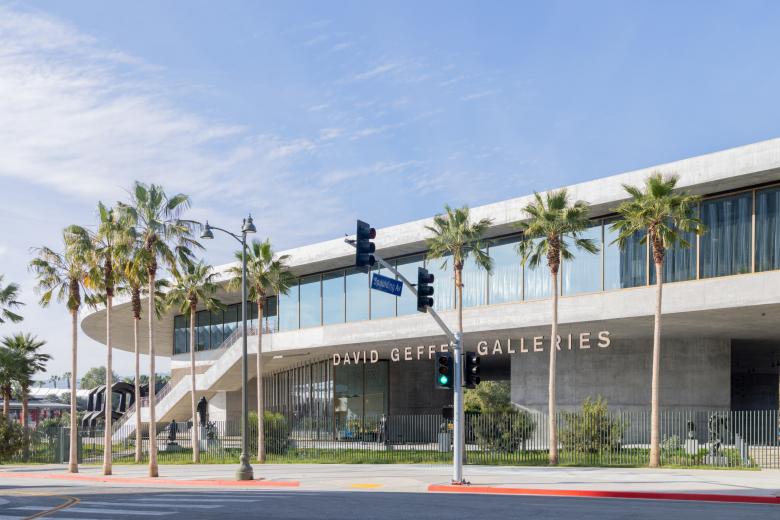
Twenty years in the making, the Los Angeles County Museum of Art's new David Geffen Galleries, designed by Atelier Peter Zumthor & Partners with Skidmore, Owings & Merrill, open to LACMA members on April 19 and the general public on May 4.
Twenty years ago, Michael Govan made the move from New York to Los Angeles, from overseeing the Dia Art Foundation to directing LACMA. In 2006, as the new CEO and Wallis Annenberg Director of LACMA, Govan moved into a 41-year-old campus on Wilshire Boulevard with a hodgepodge of buildings designed by William Pereira, Hardy Holzman Pfeiffer, and Bruce Goff, and a master plan that would see two Renzo Piano-designed buildings open on the west side of the campus in the near future. But Govan was partial to Rem Koolhaas and OMA's unrealized, competition-winning plan from 2001 that would have transformed LACMA by demolishing the majority of its buildings. He was also convinced Peter Zumthor, whom he'd worked with while at Dia, should be the architect to carry out a similar transformation on the east side of the campus, going so far as to write how he had called then 62-year-old architect “nearly the day I decided to accept the position of director … convinced that he had the skills, the experience, and the sensitivity to reconsider LACMA.”
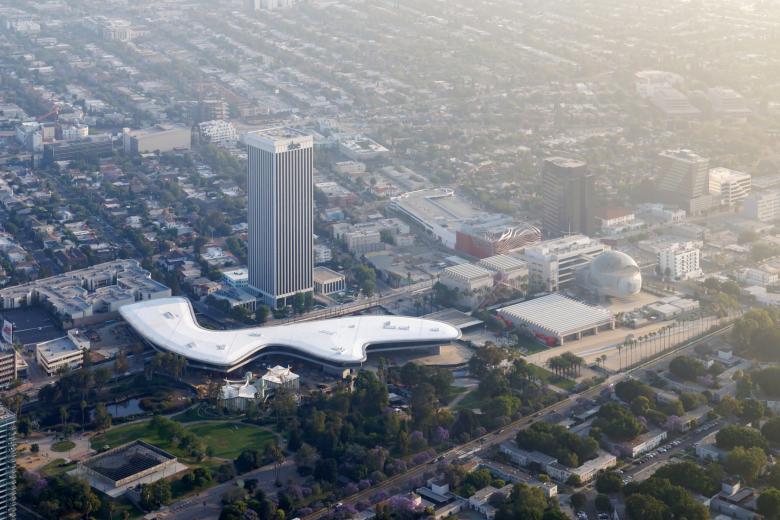
The rest, the saying goes, is history, but the process was far from easy an and uncontentious one. The official LACMA timeline indicates the institution began working with Zumthor on its $600 million transformation in 2009, the same year Zumthor won the Pritzker Architecture Prize and no doubt received myriad calls to his Haldelstein, Switzerland, atelier for other commissions—a house for a Hollywood actor being the most well known. It would take four long years before LACMA unveiled Zumthor's design: a single-floor oil slick of a building cantilevering over its inspiration, the adjacent La Brea Tar Pits. The institution overseeing the tar pits was critical of LACMA's encroachment, so Zumthor took an even more audacious path a year later, in 2014—carrying the undulating footprint of the building across Wilshire Boulevard, a move that anticipated the future opening of an adjacent Metro D Line station (it will open this May) and would ensure LACMA had an undeniable presence along the boulevard's Miracle Mile.
Refinements of Zumthor's design were revealed at a near yearly pace: the undulating form was simplified in 2015; polished renderings were revealed in 2016; the dark concrete gave way to sandy surfaces in 2017; more polished renderings were released in 2018; the clerestories were removed in 2019; and that same year the project gained approval from the Los Angeles County Board of Supervisors and an approval from the Los Angeles Public Works Committee to span Wilshire Boulevard. When even more polished renderings were revealed in April 2019, a 2023 opening was anticipated.
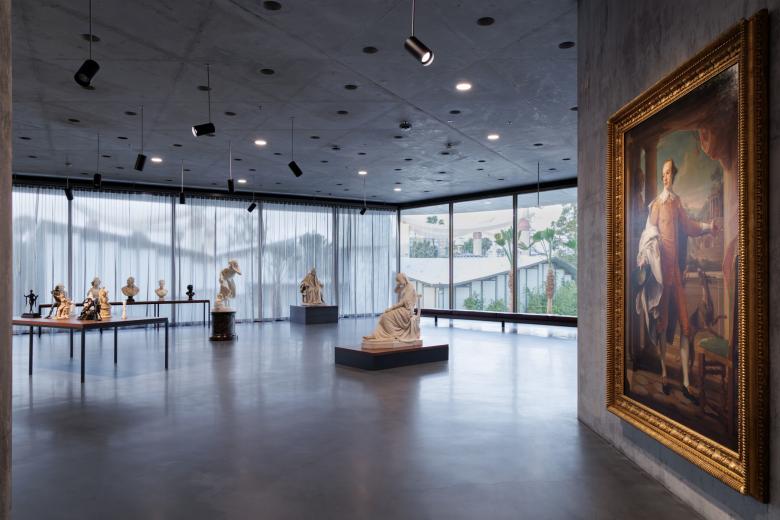
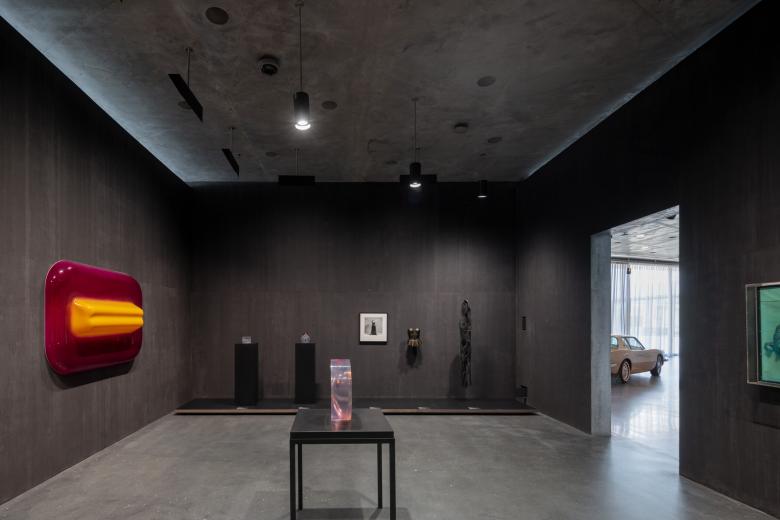
While Covid-19 impacted most museums around the world come March 2020, LACMA's timing was fortuitous and it began demolition of its Pereira and Hardy Holzman Pfeiffer buildings on schedule one month later. Nevertheless, that same month the too-little-too-late Citizens’ Brigade to Save LACMA unveiled finalists in an ideas competition aimed at providing alternatives to Zumthor's new building, drawing attention to the project's increased budget (ultimately $724 million) and the fact the new building would have less exhibition space than its predecessors—110,000 square feet on a single floor three football fields long versus 120,000 sf spread across multiple buildings. Later that year, new renderings finally revealed what the galleries inside the new building—taking the name David Geffen Galleries after the entertainment executive pledged $150 million toward the project—would look like: bright and sunny at the perimeter, dark and cavernous in the middle.
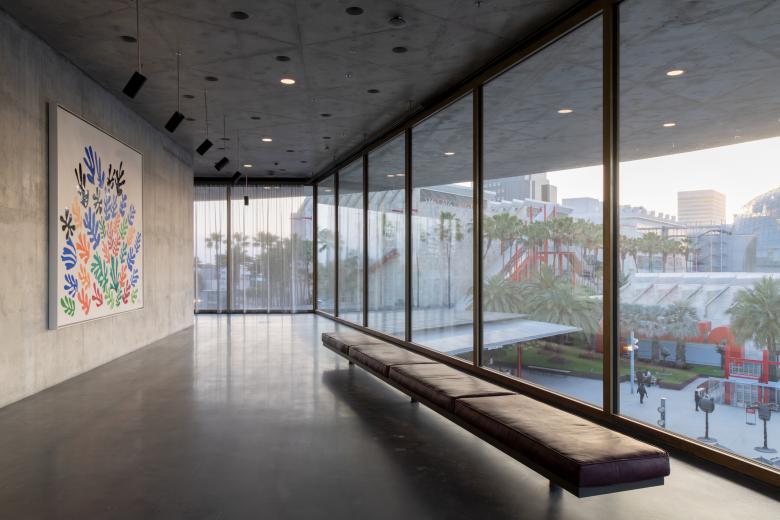
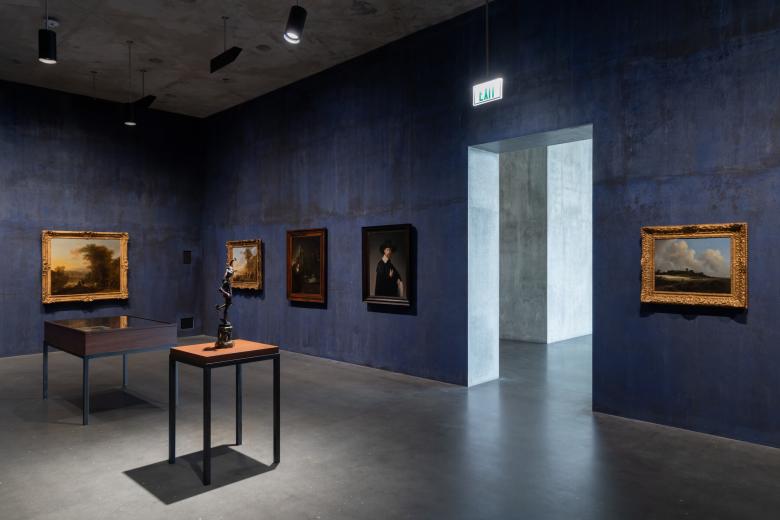
As the well-documented construction moved forward a few years later, architecture critic Christopher Hawthorne, writing for the New York Times, visited Zumthor at his atelier in Haldenstein, population 1,000, and revealed that simplifications during the design and construction process would result in literally no recognizable Zumthor details: “There are no Zumthor details any more,” he told Hawthorne. “There are no door details. We have the openings, but they’re just openings.” As if to lower the hopes of museum visitors, he described the galleries as “essential spaces, like factories or something.” Govan, for his part, countered, saying “there are many, several, Zumthoresque details,” including metal handrails at an exterior stair and a steel egress door. More recently, Zumthor told Sam Lubell at the Los Angeles Times that, unlike his carefully crafted projects in Europe decades ago, “the challenge in this museum is to get the right ‘American’ roughness,” specifically discussing the poured-in-place concrete. “And I think I pretty much succeeded.” (Anyone eager to know more about the concrete structure and Southern California seismic considerations should read the story at the Architect's Newspaper about the contributions of SOM as architect of record and structural engineer.)
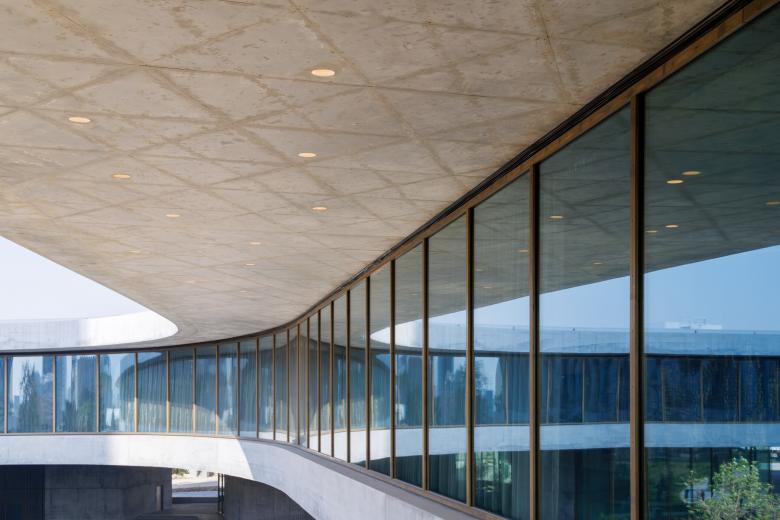
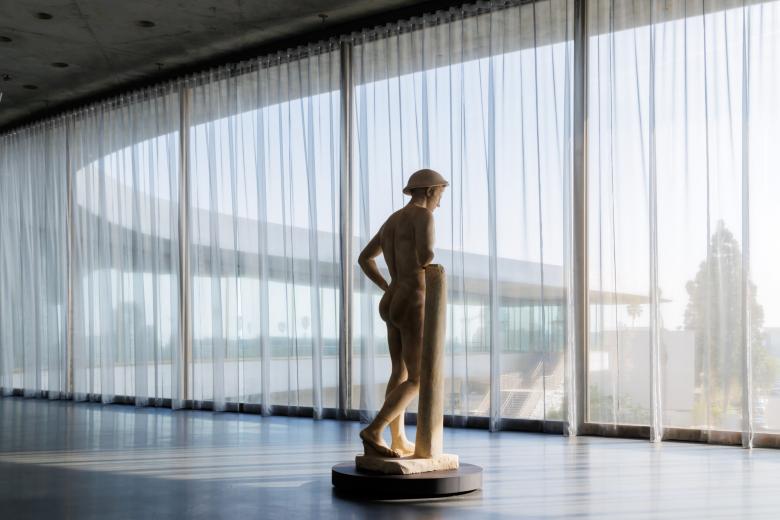
The David Geffen Galleries at LACMA open to members on Sunday, but reviews are already trickling in. Scooping them all was Michael Kimmelman at the New York Times, who described the 374,000-sf building as “by turns uplifting, lyrical and pugnacious.” He appreciates Zumthor's “labyrinthine arrangement of liminal spaces—like a village with squares, lanes and back alleys—that encourages serendipity and in which it’s easy and useful to get lost.” The wraparound windows “offer killer views over the city,” while the metallic curtains designed by Reiko Sudo “cast shadows across walls and floors that shift over the course of the day, making the galleries seem alive.” The galleries may have elicited numerous emotions in the critic, but “where the new museum meets the street, it’s less seductive.”
Over at the Guardian, Oliver Wainwright calls the new building “less a museum than a mighty piece of infrastructure, a 110,000 sq ft warehouse-cum-bridge, jacked up nine metres in the air and looming above the street with a brooding, muscular heft.” Wainwright criticizes the carbon footprint of the reinforced-concrete building and the barrenness of its plaza—“[it] feels like loitering beneath a highway overpass”—but “once you have made the ascent upstairs,” he writes, “things improve. Drifting around the galleries, which vary in size, mood and colour, is a delight.” Apparently, initial impressions are consistently divided over Zumthor's building: bad on the ground, good in the lofted galleries. Time will tell if LACMA members, other museum goers, and passersby along Wilshire Boulevard agree.