Interview with José Carlos Nunes de Oliveira
'In Architecture, the Journey Is More Important Than the Destination'
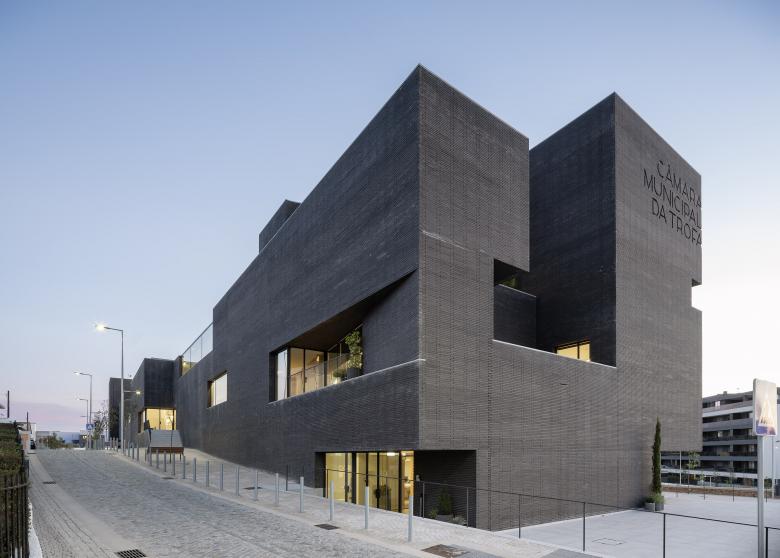
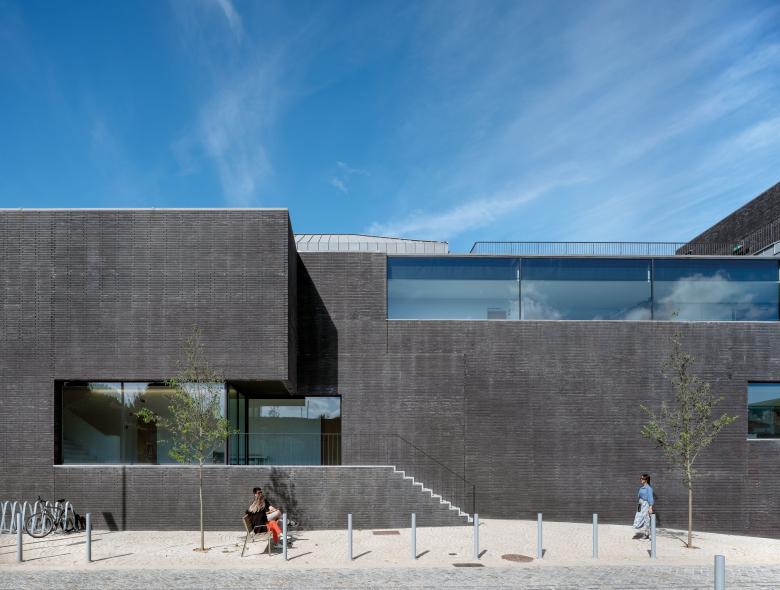
Earlier this year, World-Architects readers voted Trofa Town Hall, designed by NOARQ | José Carlos Nunes de Oliveira, as Building of the Year 2025. We corresponded with José Carlos Nunes de Oliveira via Zoom and email to learn more his background, his Porto-based practice, his design process, and see how Trofa Town Hall relates to other projects in the firm’s portfolio. Our interview has been lightly edited for length and clarity.
John Hill (JH): I was impressed by your responses to our Building of the Week questionnaire for Trofa Town Hall. They were very honest and thoughtful—markedly different from the many copy-paste responses I receive. It made me curious about your background. Can you speak about your upbringing, education, and work experience leading up to the founding of NOARQ?
José Carlos Nunes de Oliveira (JCNO): I believe that what I am and what I do are essentially the same. Perhaps the reason cannot be fully explained. Perhaps I could never escape my nature—the desire to make houses. I have done this memory exercise several times, and I think the reasons for being an architect are not found in formal education. Perhaps some lie in family upbringing. Perhaps even in DNA. In other words, who we are cannot be completely explained by what we are taught, but by how we process the information available to us. What determines that how is innate; it is given from birth and cannot be explained. My brother had access to the same information as me—how did he process it? He never built a house. He didn’t draw. He played every instrument in the house. He wanted to be a musician—and he is. I, on the other hand, hid from musical instruments and drew.
My mother was an artist, a painter. She drew beautifully. I loved being near her, smelling the oil paints and turpentine. When my parents founded their interior decoration company, I was seven years old. From that point until adulthood, outside school hours, I spent time with my parents in the workshops of fascinating people: carpenters, with the smell of wood mixed with varnish; florists who sculpted flowers from paper and wax; seamstresses; antique furniture and decorative object dealers; wholesalers of ceramics, silverware, and crystal; textile studios. I spent my life among household objects: rugs, lighting, utensils, decorative items… In the rest of my free time, I enjoyed being alone in the dim light of my father’s library, surrounded by books and vinyl records.
Drawing had been the one thing I did well from an early age. My drawings were often praised and sometimes featured in the local newspaper. Nevertheless, in the seventh year of school, a visual arts teacher gave me a failing grade that left a deep mark. That failure made me reject drawing and turn to science. During my secondary school years, however, I spent my time drawing in textbooks, notebooks, and even on desks during science classes. The headmistress noticed my disengagement and called my parents to school. She asked me to abandon science and prepare to apply to university courses where drawing was a core tool.
I applied to architecture school, and each year I became a better student. During the final two years, I studied in a studio with other classmates. We worked through the nights—no weekends. The studio was our meeting point. Between university projects, we also developed small personal ones. When the course ended, the friends’ studio continued. Without interruption, we began taking on our first commissions. These were our first buildings. We thought we could start our practice this way. They were naïve years. Within a few months, we were financially ruined. We tried working for a few months with older, more experienced architects. Until I entered a period of anxiety. My expectations had failed. In architecture, everything takes time. I enrolled in a doctoral program. A few months later, in desperation, I approached Álvaro Siza for work. I stayed with him, and from one restlessness to another, eventually founded NOARQ.
JH: Your CV indicates you founded NOARQ in 2001, but also that you were part of Álvaro Siza's team from 2000 to 2021. How did running your own practice and collaborating with Siza work? And how has firsthand experience with Siza, as well as Eduardo Souto de Moura, influenced your own practice?
JCNO: I began working with Siza when I was 27. Three years later, I had a family and my first child. Unexpectedly, a second child arrived. It was not the right moment to leave Siza’s office and dedicate myself entirely to founding NOARQ. I didn’t feel financially secure, nor technically mature enough. On the other hand, the design challenges in Siza’s office were exciting. When I asked him for work, my naïve plan was to work for two years with the master and then move to New York.
Reality, however, intervened. I had started a PhD and had two children, but I also began to understand that time in architecture moves slowly. After four years working with Siza, I hadn’t had the chance to go through all the phases of a project—especially the most important: overseeing the construction of a Siza project that I had developed myself. I had to finish a project first; only then would I be ready to plant the seed of NOARQ.
Then one year I started work on a residential development, which included the renovation of a Palladian villa and the construction of seven new houses in Vicenza, Italy. The experience was wonderful. That same year, I was commissioned to renovate a 19th-century “Brazilian House” and expand it into a rural hotel. I made the decision: I abandoned my doctoral thesis and asked Siza to allow me to work part-time—five to six hours a day in his office, dedicating the rest of my time to my own office.
Time went on. I began managing new projects and construction work in Siza’s office, while in my own office, small residential projects kept coming. At NOARQ, I began to structure a personal working method, an architectural idea, a company organization, and a small team of young people. At the same time, understanding my lack of time, Siza provided me with collaborators to assist with project tasks. I produced less and less myself, taking on more of a coordinator role.
In 2017, I was invited to participate in a pre-selection competition for the Trofa Town Hall project. Once again, I had to make a decision, this time with great regret: I asked Siza if I could leave his office. I committed to overseeing the projects he had in progress in the Azores and Sintra. Until 2021, I would go week by week, or every two weeks, to his office to organize the construction oversight procedures.
Working with Souto Moura, through Siza, was an extraordinary experience. It would have been impossible not to be inspired by the strength of these two personalities. I have no idols. I do not tend to mystify people, but it would be strange not to admire them—not to recognize their excellence, intelligence, and their intellectual, artistic, technical, and above all, ethical dimensions. I was never interested in the aesthetic choices of either of them. I never felt dependent, but I also never had an Oedipus complex forcing me to reject their choices for my own projects. It was above all their rigor, depth, intensity, and integrity in their devotion to architecture that excited me and still provokes profound admiration.
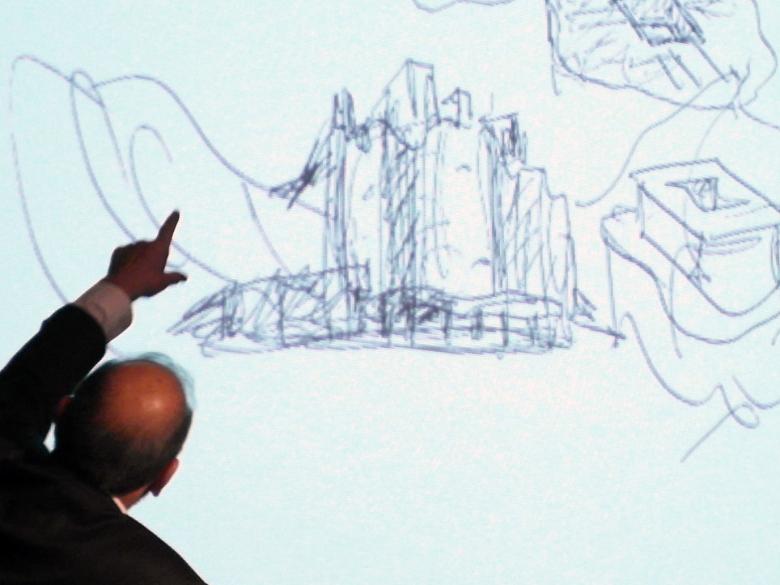
But not only that: the constant experimentation through drawing is something I absorbed from both. Drawing has never been an effort for me, but after working with Siza and Souto Moura, sketching became a compulsive need—to investigate and seek conviction; the models, so many models; the details of each project, so many details. With both of them, I learned the pursuit of truth in every urban and architectural proposal, and in the detail, without artifice. I observed their Vitruvian respect for place; the understanding of the site, its geography, topography; its climate; especially the light. I witnessed the same care as Perret, Mies, and Breuer for construction technologies, the work of craftsmen, and other subtler aspects of sensitivity—proportions, the scale of everything.
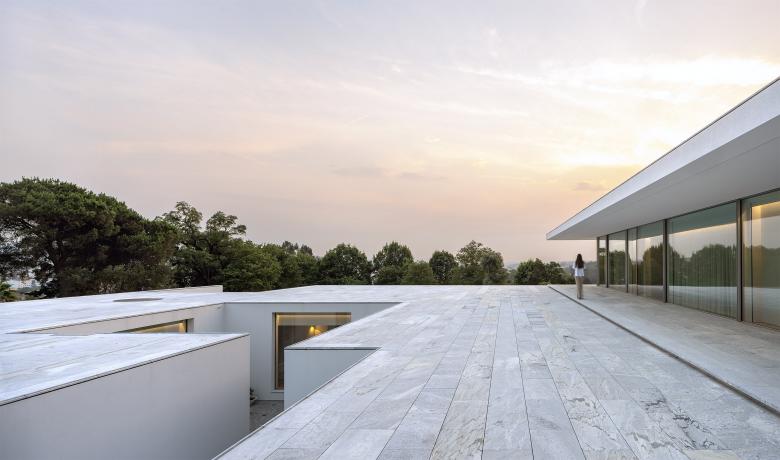
JH: Most of the projects in your portfolio—built, unbuilt, and in-progress—are houses. Is it typical in Portugal, as it is in the United States, for instance, for architects to begin their careers designing houses and then advance to larger commissions in other typologies? Put another way, how do the houses relate to Trofa Town Hall and other public commissions?
JCNO: Yes. Houses have been and continue to be very important in my career. Houses are important in the careers of all great architects. Through houses, we recognize architectural ideas. Over the past forty years in Portugal, renovations, extensions, or new house constructions have mostly been commissioned from young architects, particularly in the outskirts of cities. In larger cities, like Porto, the focus is on apartment renovations; building single-family homes is practically impossible.
I have roots in the outskirts of Porto, where there is still space for single-family housing. Perhaps for this reason, even while living and working in Porto, I received commissions to design houses—first in the outskirts, and later in other municipalities in northern Portugal.
Designing houses is rejuvenating. I continue to design houses. I enjoy designing houses. Today, I have house projects in distant regions of Portugal (Funchal—Madeira Island, Palmela, Lourinhã, and Sintra). The two houses in Sintra are for different clients, but I am designing them with the 92-year-old Siza, who, fortunately, invited me to collaborate with him on them.
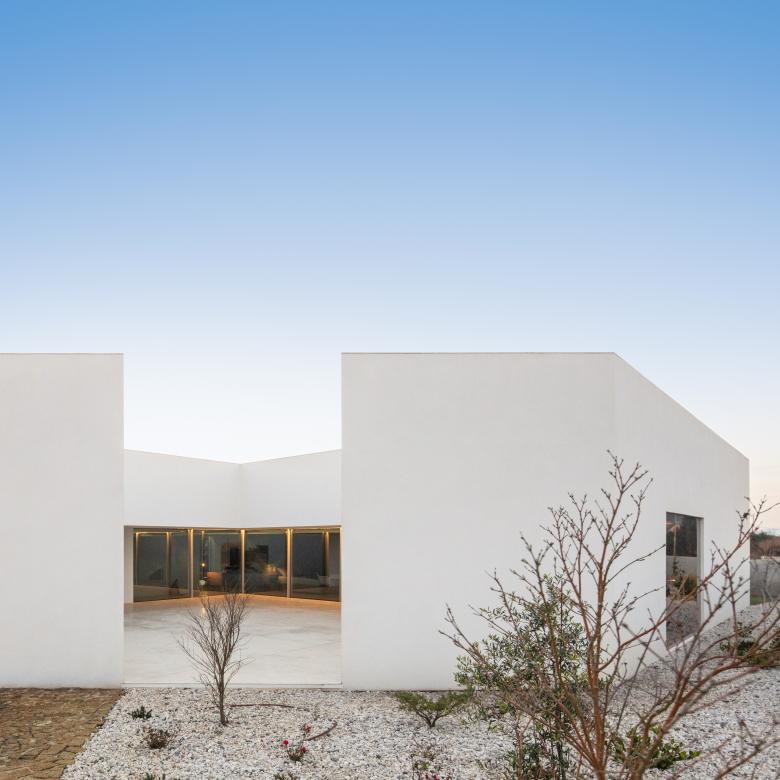
Houses are the gym of architects. They certainly are mine. An athlete does not face the Olympics without routines—small exercises repeated consistently. And repetition is never mere repetition, as Siza says. Designing a house is research; it is understanding every detail deeply. It is through houses that I have trained my entire life. Houses condense, in a small area, all the problems of architecture—an entire architectural idea. In houses, I have faced and continue to face the problem of space, the economy of space, the economy of construction; energy efficiency and ecology; resolving human functions and installing basic equipment; construction and its details; materials and their reaction to weather and the erosion of time. There, one also finds phenomenological, anthropological, and symbolic space. The timeless instruments of architecture—drawing, scale, and proportion—are all called upon to solve the house.
The daily exercise of repeatedly confronting these problems—as Heidegger wrote: thinking, dwelling, building—strengthens me technically and intellectually to face larger and more complex challenges. Houses are the sine qua non of architectural practice and experience.
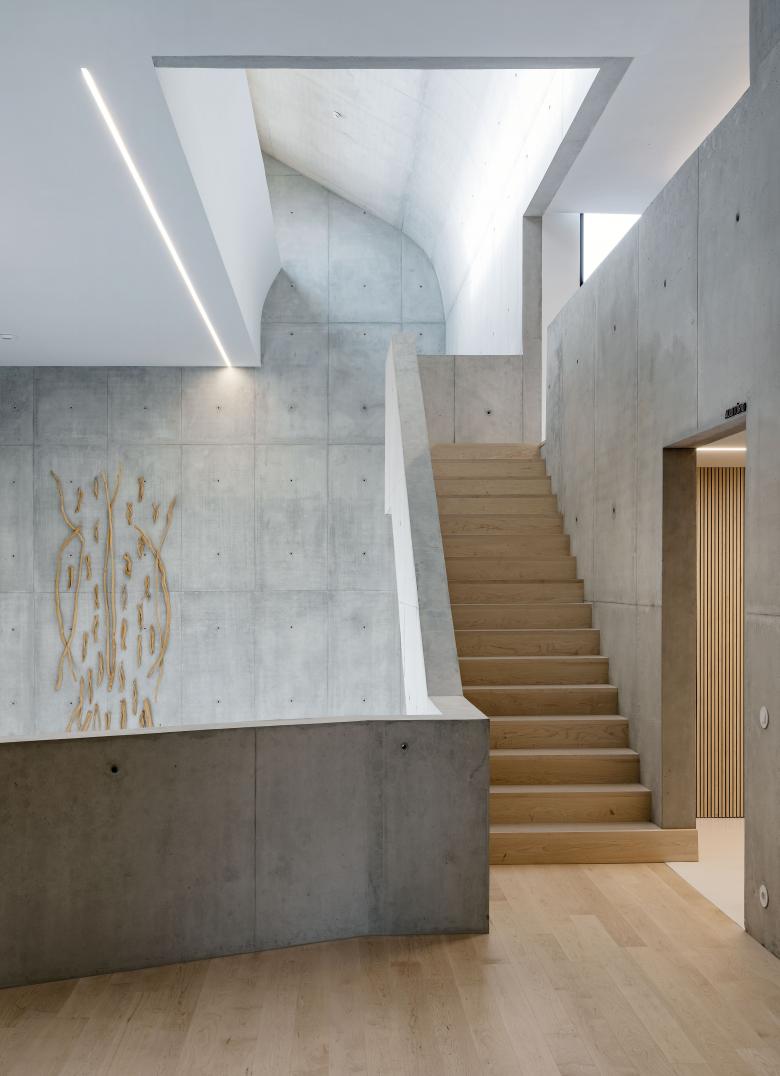
My vocabulary, my texts, my thinking developed through houses are poured into the Trofa Town Hall project. The movements of the sculpture, the three-dimensionality, the shape of openings, the details of doors and windows, the materials, and the reduction of layers and linguistic resources… all stem from what I have learned in houses.
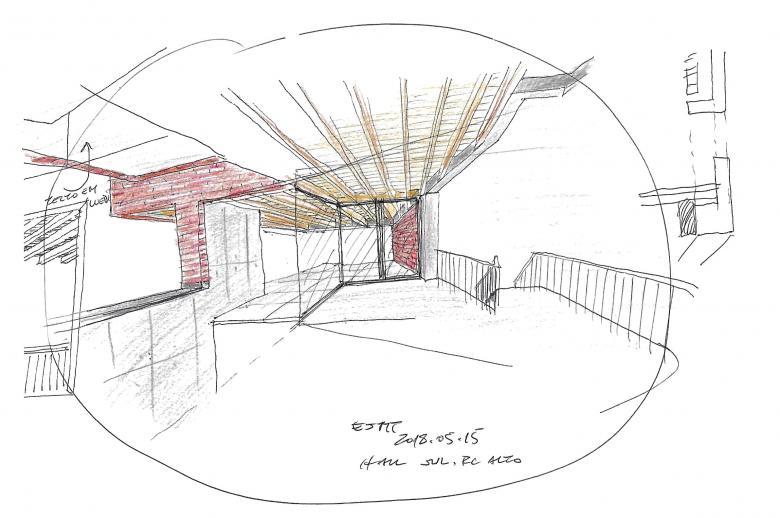
John Hill: In the Building of the Week questionnaire for Trofa Town Hall, you described your process as “developed by hand, stage by stage.” Can you speak more about your design process, both generally and specifically with Trofa Town Hall?
JCNO: In a good project, you can feel its density, even when it is restrained. Its construction requires intensity and depth. It begins with the territory and ends—if I may say so—with the furniture. Each phase of the design process involves different decisions. None of the phases are optional. Each stage adds richness of information. Time is a fundamental dimension in a project. As in nature, without time, nothing matures.
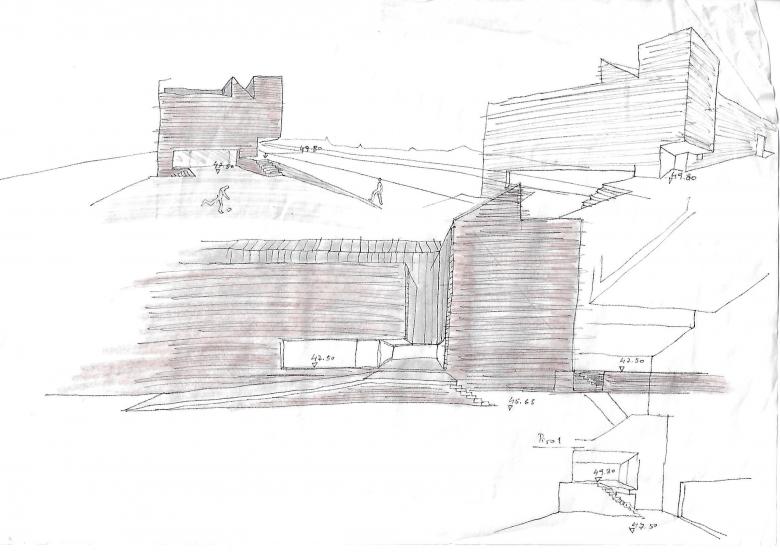
Drawing is the research tool at every stage. The exploration is committed to the problem. I never know what to do at the start—I always begin from doubt. Since I do not start from pre-existing models, the development method is speculative, a process of trial and error in search of synthesis. First, I formulate hypotheses, I gather information—sometimes into a shapeless amalgam—and gradually proceed to refinement.
Abundance must be eliminated. Excess, whether as value or by chance, is not acceptable. The gratuitous, artifice, redundancies, and accidental ambiguities must be carefully removed. The gesture, to appear natural, delicate, and noble, requires repetition, effort, and sweat in solitude. The process is arduous, like that of a ballerina. Once revealed, the movement must be as smooth as silk. It cannot appear forced or smell of exertion.
This was the approach for the Trofa Town Hall project. It was an enormous scale for me at the time. We were given just enough time to develop it. Perhaps it remains, to this day, the most academic, the most intense, and the most debated project in every phase—even down to the furniture. Understandably, it became a turning-point project in the office. At that time, we were designing houses, and I was still working part-time with Siza. It became a key project for a paradigm shift and a model for all subsequent projects.
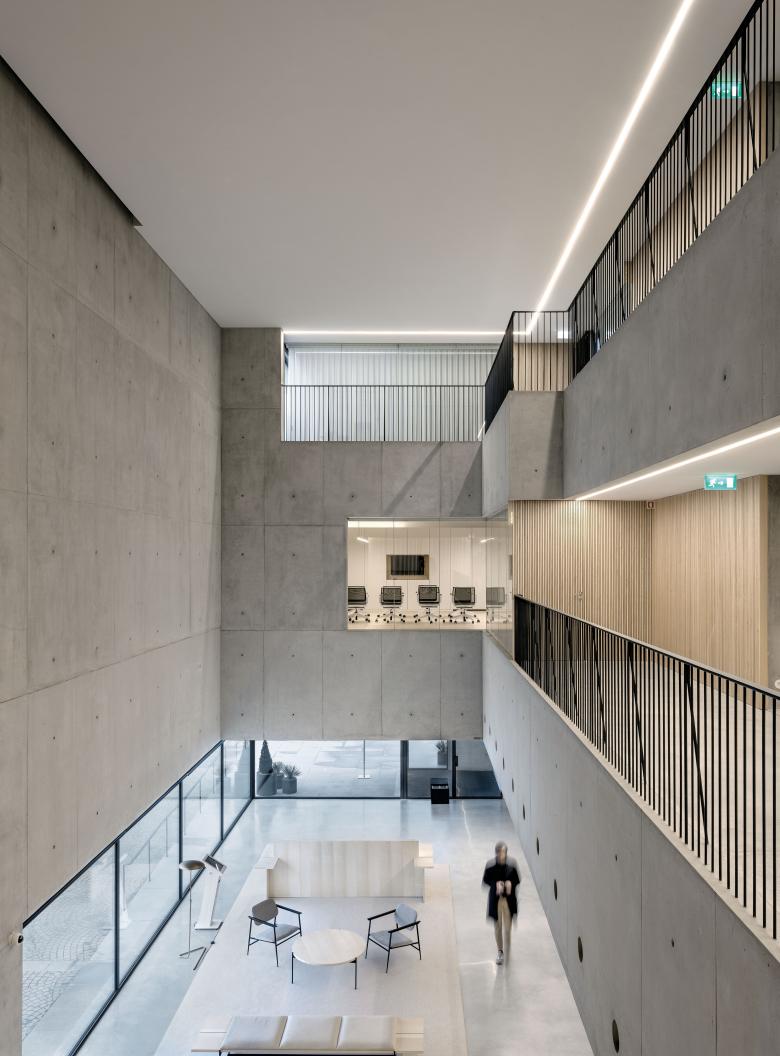
JH: Trofa Town Hall is now a few years old and has been the subject of its own monograph. Has the project influenced your work since, be it directly (i.e., leading to other commissions) or in less tangible ways? If so, how?
JCNO: I am becoming increasingly skeptical about the power of communication. I believe we are all a little tired of excess. At the same time, we feel guilty because we contribute to that excess. Trofa Town Hall was widely shared on the web, published in prestigious international journals, received two monographs, was nominated for several significant awards, and recognized with a few distinctions… yet none of this is truly impactful! The massification of information prevents it from being properly absorbed by the audience. I am convinced that my project amounted to little more than a few bits of data, for a few days, among trillions of other bits, relevant or irrelevant.
Moreover, these phenomena of information dissemination are directed at a very specific audience: architects, architecture enthusiasts, or lifestyle aficionados—and little beyond that. The promotion of countless images of architecture, whether intellectually substantial or not, often reveals no architectural idea, and sometimes is of very poor quality. It generates hysteria and casts a shadow over the entire architectural production. Despite great efforts by editors, today the public who could commission architecture either does not access—or is unaware of, or does not engage with—the platforms, journals, and books on architecture.
To cut through the cliché: we need more content and less image.
That is why, regardless of how flawed architectural education may be today, for better or worse, the institutions that continue to shape the history of architecture are the academies. Academies have the capacity to project personalities. They are a powerful ecosystem. In short, no single “striking success” defines anyone’s career. It is the consistency of the path. The results of that consistency in design emerge slowly.
Of course, Trofa Town Hall influenced my work, but it is not measurable. What matters is the process. In architecture, the journey is more important than the destination. We never really know if we have reached the destination—or at some point, we may no longer even know how to identify it. As I mentioned, it was very important to me. It was important for strengthening the team, for our self-esteem. Soon after, and simultaneously, we won the international competition for the Vigo elevator (the Halo), then the Porto Metro Bridge competition, and later a student residence at the University of Porto… So, I don’t know… I believe it is the sum of all achievements, especially the public and large-scale ones, that year after year provide resilience to personalities and their legacy.