A Deliverista Hub Grows in Manhattan
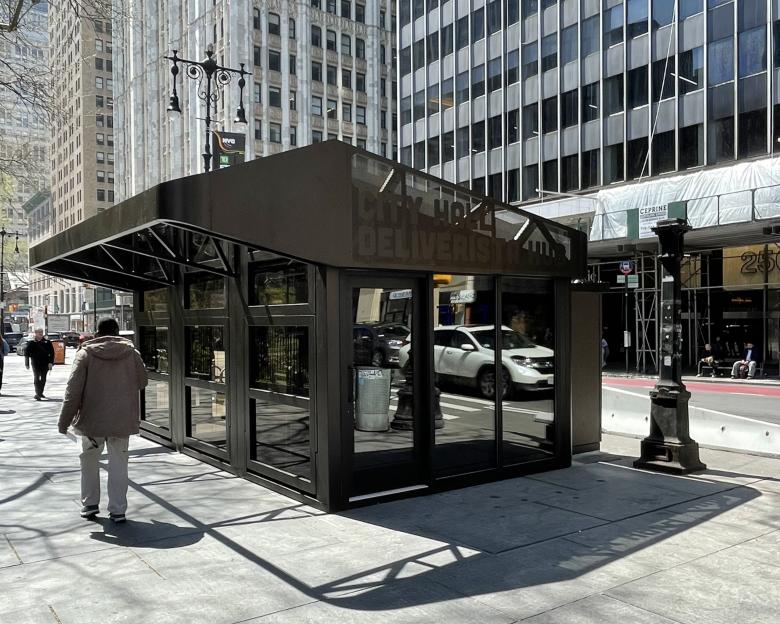
Last week saw the unveiling of the City Hall Park Deliverista Hub, billed as the first worker-designed rest and e-bike charging hub for delivery workers in the United States. The structure was designed by FANTÁSTICA, the street furniture brand founded by urban designer J. Manuel Mansylla, aka “manman.” World-Architects met manman at the Deliverista Hub to learn more about his company and how the hub will serve some of New York City's many app-based delivery workers.
According to the office of Mayor Zohran Mamdani, there are approximately 80,000 app-based delivery workers across New York City. Most of them ride e-bikes, which are expensive, require maintenance and charging, and are increasingly regulated due to their growing numbers and safety concerns over battery fires. Providing places for delivery workers to safely charge batteries, repair their bikes, take shelter from the elements, and otherwise rest is a no-brainer, but it took 3-½ years from the announcement of a federal grant from Senator Chuck Schumer in October 2022 to the structure's unveiling last week. When Mamdani took office on the first day of 2026, the Deliverista Hub became one of his many priorities, and with the help of the many city agencies and other players who have been involved with the project over its duration—most notably the Worker's Justice Project's Los Deliveristas Unidos, which organizes and advocates for app-based delivery workers in New York City—the City Hall Park Deliverista Hub was fast-tracked and unveiled on April 7, a few days shy of Mamdani's 100th day in office.
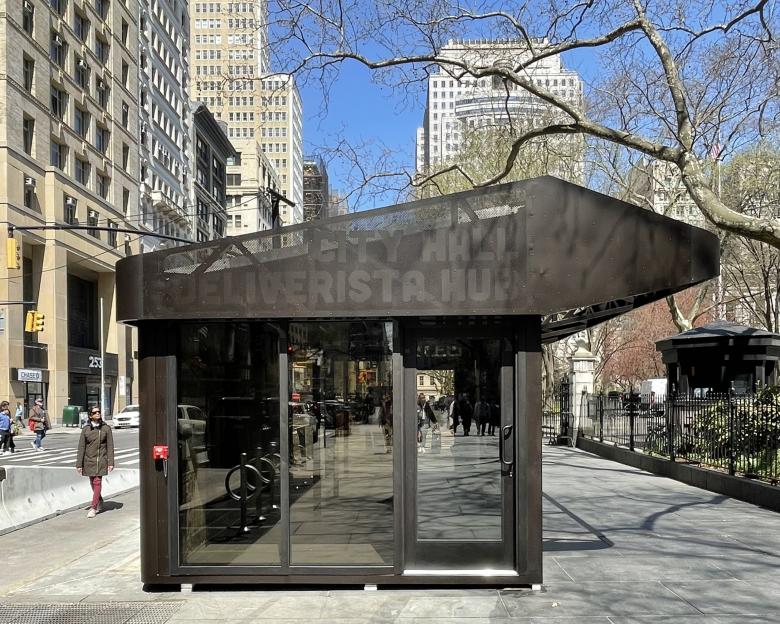
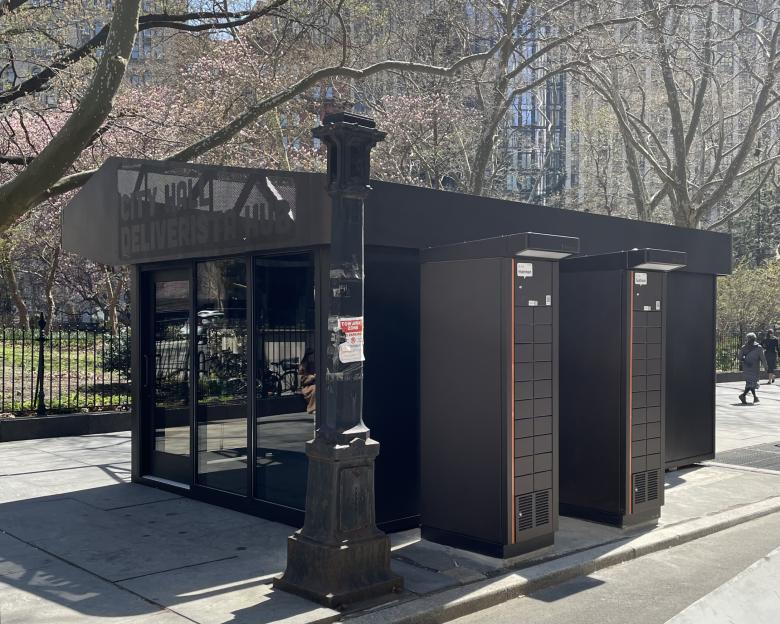
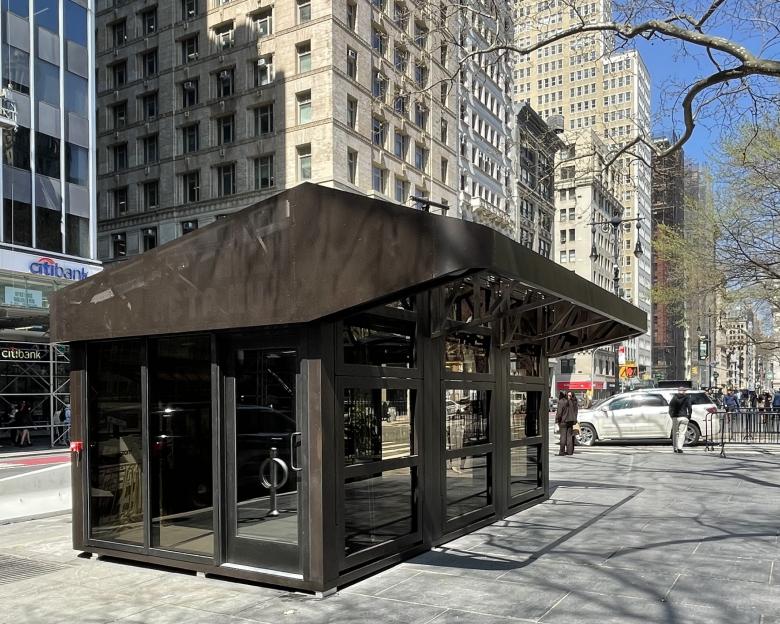
I met manman at the Deliverista Hub a few days after what could be called its soft opening. It was a sunny spring day that saw quite a few delivery workers zipping down Broadway on their e-bikes and many passersby stopping to take a closer peek at the new structure. Although the glass-walled hub is not yet fully functional, the parts are in place: banks of battery chargers, glass storefronts and doors, a sloping roof, and bi-fold doors that allow the hub to open itself up toward the park. For manman and his team it was important to design something that was beautiful but also durable: “Creating things that are rugged enough but not compromising the design is something that we pay a lot of attention to,” he told me. That thinking was born more than fifteen years earlier, when FANTÁSTICA was working with business improvement districts in Brooklyn to create pedestrian plazas that were inviting but also safe and sturdy. Those early experiences also helped manman understand the complexities of navigating the many city agencies that are involved in any public-space interventions, many of them public-private partnerships—experiences he applied to the Deliverista Hub.
One look at FANTÁSTICA's website reveals a focus on providing spaces for pedestrians and bicyclists, and in many cases taking space away from automobiles. Manman helped turn a parking lot at Pearl Street in Dumbo, Brooklyn, into a plaza in 2008, during the Bloomberg administration. It was a quick, interim solution, but it was a success and pushed the city to turn traffic lanes and other automobile infrastructure into plazas elsewhere, as in Times Square and Herald Square. Subsequently, working with the Brooklyn Downtown Partnership, manman developed parklets—parking spaces turned into seating areas and other pedestrian amenities. In our chat, manman acknowledged Rebar, which implemented the first parklets in San Francisco in 2005, but he wanted to make them more standardized, “the IKEA version of parklets,” he said. In line with that thinking, he “created something that could be installed by [the city], that could be maintained by them, and that could be repaired by them without the need for me.”
The parklets were in 2012, well before the coronavirus pandemic led thousands of restaurants to take over parking spaces for outdoor dining. Naturally, FANTÁSTICA devised its own solution. “Everybody was doing their ugly ducklings and their wooden sheds with two by fours and stuff,” he told me. “We came out of Times Square Alliance's Design Lab and created a modular prefab solution for outdoor dining that had water barriers in the base.” That design's merits can be seen by comparing his outdoor dining design with New York City's guidelines for roadway cafes. A similar modular solution was also developed for OONEE (described at bottom), the variously sized shelters with secure bike parking.
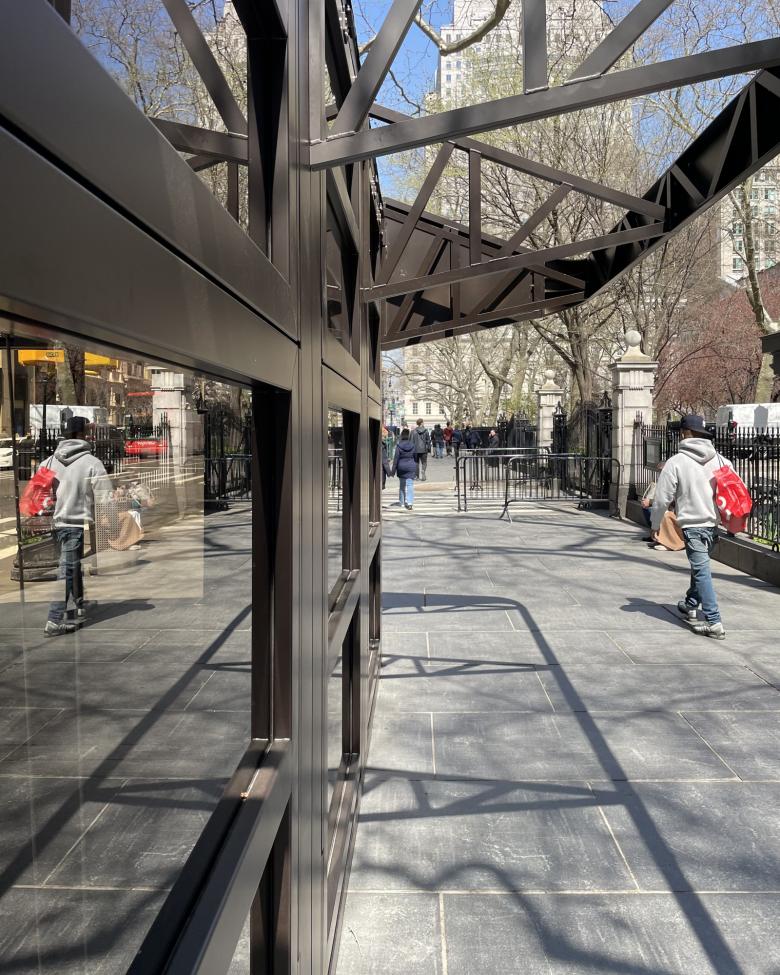
Integral to the functioning of the City Hall Park Deliverista Hub is its siting on the footprint of an unused newsstand, a prefab structure that was meant to look old but was not landmark protected. With the old newsstand removed, the site offered a power hookup and a concessions agreement—but not a water hookup, meaning a much-needed restroom would have to be added in the future. Manman described the project like a “gas station for micromobility,” one that would be staffed like a gas station. So, in addition to offering a place to charge batteries, workers can “get out of the elements, find a friendly face, and get a free bike tune-up.” Like the modular parklets, bike pods, and outdoor dining shelters, Deliverista Hub was designed to be replicable. “We designed it as a modular prefab system that has an extraordinary amount of customization power,” he said, “which was tested by a two year long process of permitting and approvals.” Those approvals will make wider implementation easier, but just as important will be the Worker's Justice Project, which is willing to take on their operation and maintenance and could partner with companies, like OONEE, so the city does not need to take it all on themselves.
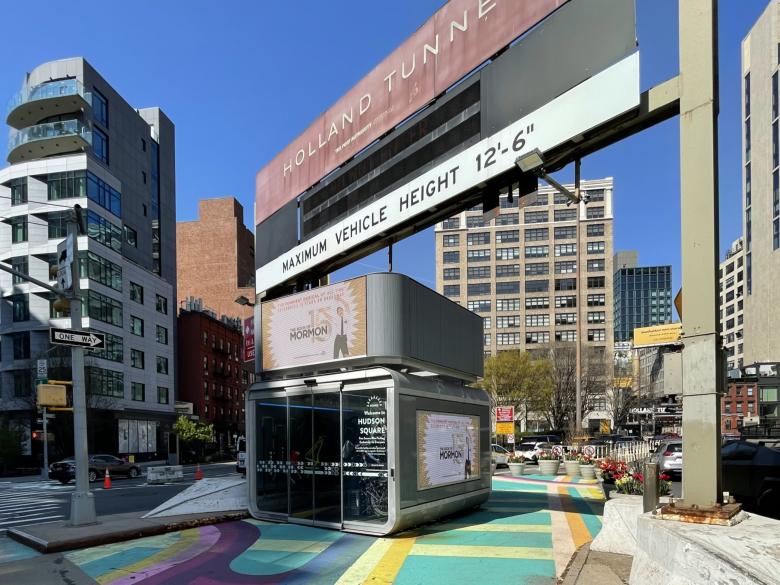
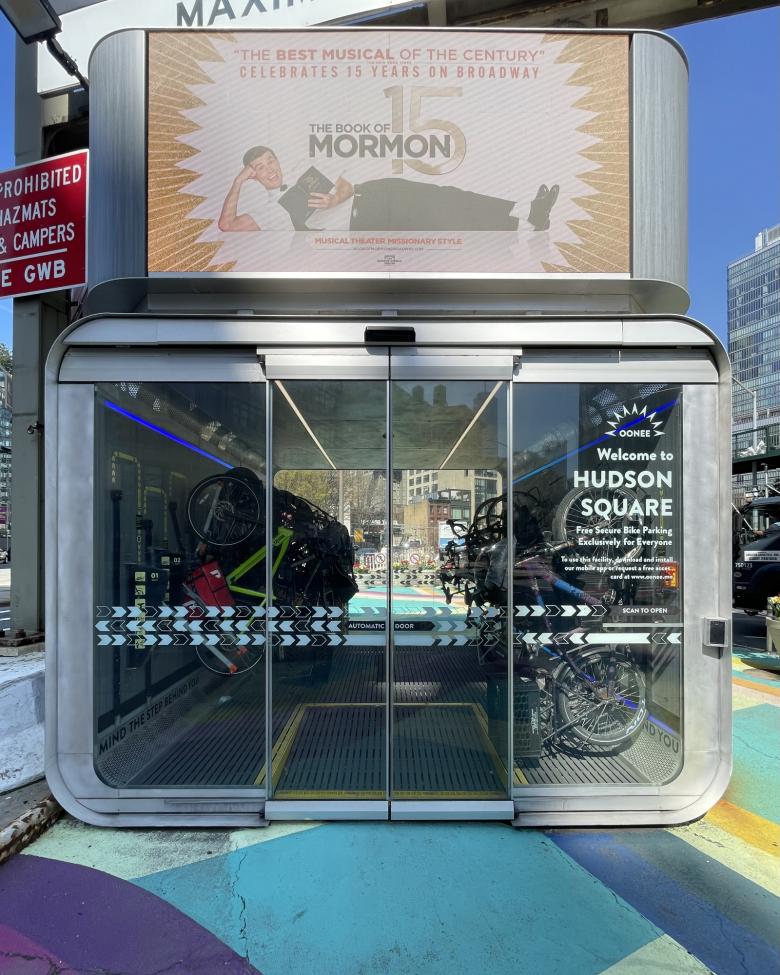
After my chat with manman at the Deliverista Hub, I walked from City Hall Park up to Hudson Square to check out one of the free, secure bike parking pods that have been installed in parts of the city but also across the Hudson in Jersey City. OONEE, FANTÁSTICA's sister company that manman co-founded with Shabazz Stuart, addresses the many bike thefts in and around NYC and the difficulties bike owners have in parking their bikes at their home and/or office. Sitting between car lanes entering the Holland Tunnel, the OONEE Smart Capsule in Hudson Square is admittedly small, but it hints at the potential of the structure, which can be expanded to fit up to 80 bikes in other locations. And with more than stations in Jersey City alone, OONEE also hints at a potential future for the Deliverista Hub—a future when it grows beyond the “seed” planted at City Hall Park.