Energy-Positive Construction
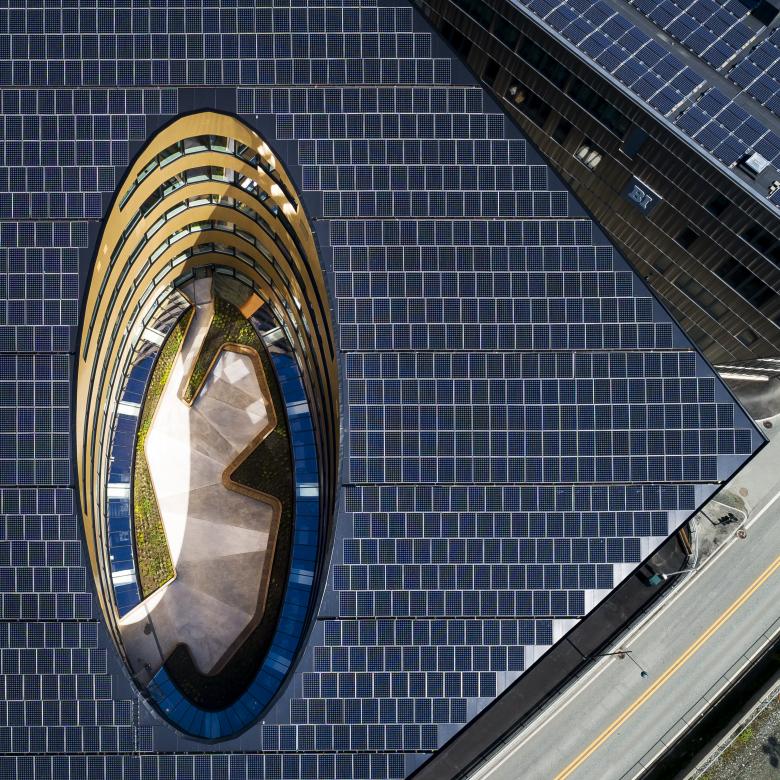
The Powerhouses developed by Norwegian architecture firm Snøhetta generate more energy over their lifetime than they consume. This is made possible by surprisingly simple low-tech solutions and high-performance solar systems, as well as robust design and strict waste prevention measures.
Achieving net zero in construction by 2050 will not be sufficient. To limit global warming to 1.5°C (2.7°F), humanity can emit no more than 250 billion tonnes of CO₂.1 But at the current rate, this remaining carbon budget could be depleted within a few years—potentially before the end of this decade.2 Without a decisive shift, global temperatures are projected to rise by 3°C (5.4°F). In Switzerland, a climate change hotspot, average temperatures have already increased by 2.9°C (5.2°F), according to ETH Zurich climate scientist Reto Knutti.3 The Swiss initiative Countdown 2030 is therefore calling for climate-neutral construction by 2030.
The Powerhouses by Snøhetta illustrate how this goal can be put into practice. In Porsgrunn (2020), Trondheim (2019), and Sandvika near Oslo (2014), the firm has realized office buildings that produce more green energy over their entire lifecycle than they consume. Their life-cycle assessments includes energy used for raw material extraction, component manufacturing and installation, transport, and eventual dismantling. The Drøbak Montessori School (2018) and the ongoing expansion of the Moholt student housing complex in Trondheim (2022–) are also climate-positive.
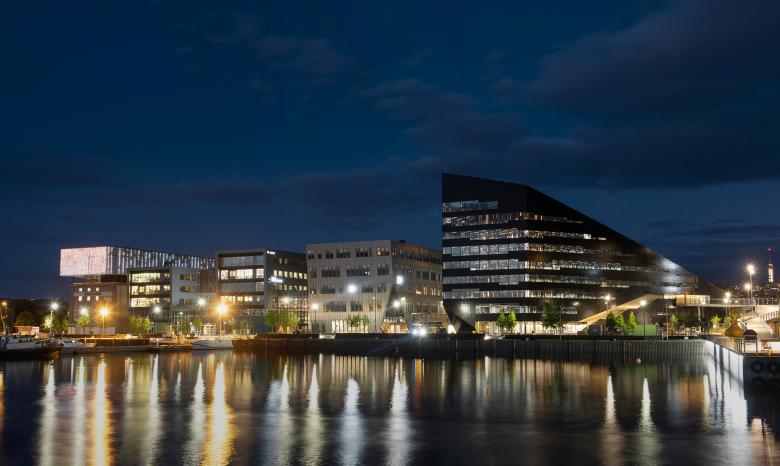
Powerhouse Telemark, developed by the real estate firm R8 Property in Porsgrunn, and Powerhouse Brattørkaia, developed by Entra ASA in Trondheim, rely on extensive photovoltaic installations. This posed a challenge for Powerhouse Brattørkaia, since its location in Trondheim makes it the world’s northernmost net-zero building. The city lies at 63 degrees latitude, where the sun’s position fluctuates dramatically with the seasons: continuous brightness on the longest summer days and only 4-1/2 hours of daylight at the winter solstice. To maximize solar exposure, Snøhetta tilted the approximately 3,000-square-meter (32,230-square-foot) solar roof toward the south and gave it a pentagonal shape. The solar panels generate approximately 500,000 kilowatt-hours of electricity annually—more than double the energy needs of the 18,000-m2 (193,750-sf) office building and enough to power neighboring buildings and the city’s fleet of electric buses. In fact, the building even surpasses the Powerhouse in Porsgrunn, located further south, whose solar system on the 24-degree-sloped roof and south facade generate up to 256,000 kilowatt-hours of electricity annually—equivalent to the annual consumption of twenty average Norwegian households.
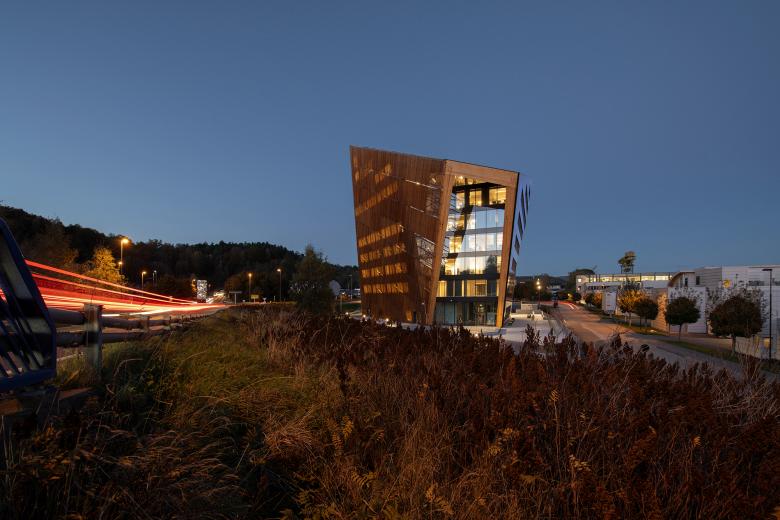
However, operating effectively as solar power plants alone is not enough to meet Snøhetta’s ambitious energy goals. At Powerhouse Telemark, energy consumption was reduced by 70 percent compared to a conventional new office building. For heating and cooling, it integrates geothermal probes drilled 350 meters deep. To maximize daylight and minimize the need for artificial lighting, the building has glazed slits in the roof through which additional light enters the top three floors. The interior features light-colored materials to enhance reflectance and daylight distribution. Wooden louvers on the facade act as sunshades that prevent the rooms from overheating in the summer, but they are arranged so that the low winter sun can still penetrate the building and warm it. Additionally, the Trondheim Powerhouse recovers heat from the ventilation system, and greywater and seawater are used for heating and cooling. In both buildings, components made of special CO2-reduced concrete serve as thermal mass—absorbing heat slowly and releasing it gradually.
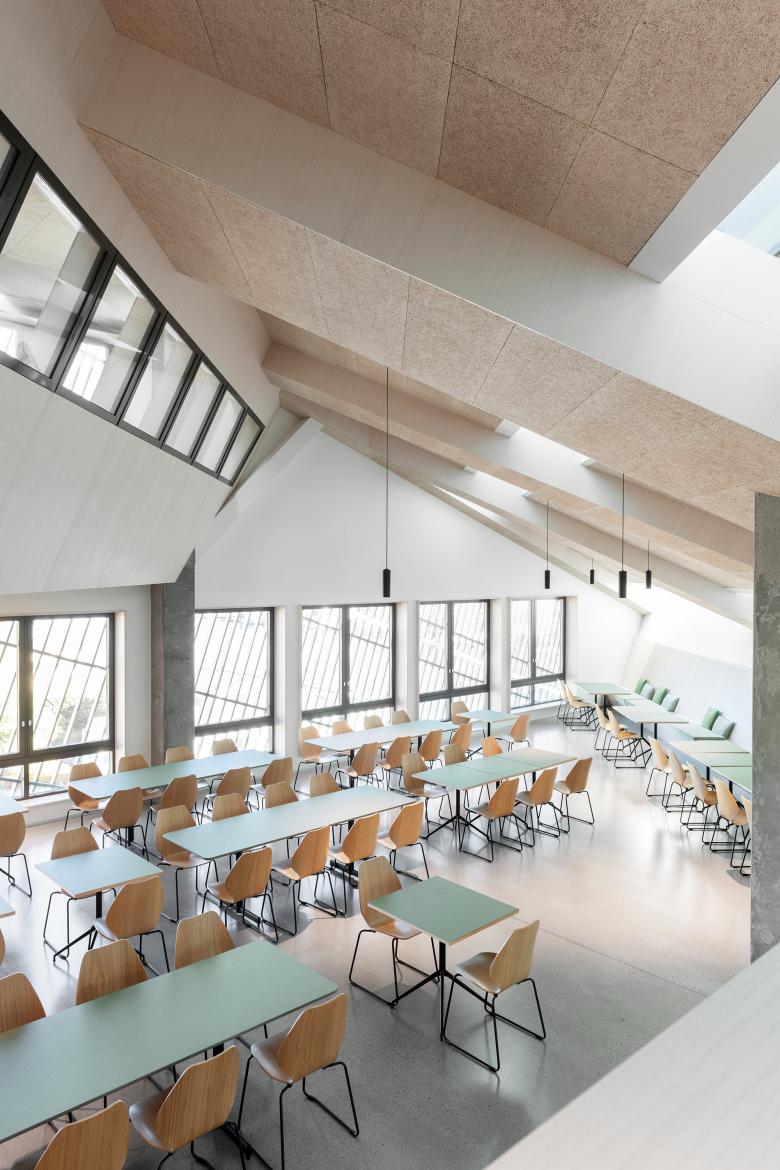
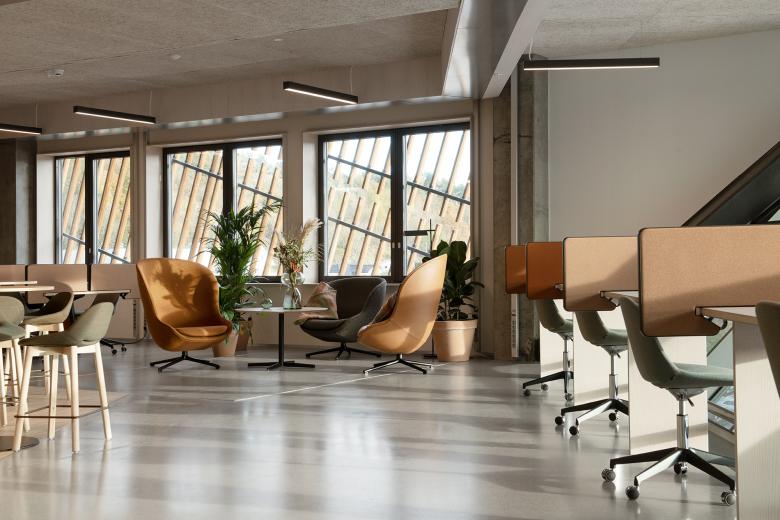
A key factor in achieving a good overall energy balance is minimizing waste and reusing building components and furnishings. For Powerhouse Telemark, Snøhetta selected uniform office partitions and flooring, and designed identical kitchenettes and restrooms. Surfaces were specified for durability and longevity. The objective was to ensure that when new tenants move in they make as few changes as possible—resulting in far less waste than in a typical office building. Snøhetta even designed the signage themselves.
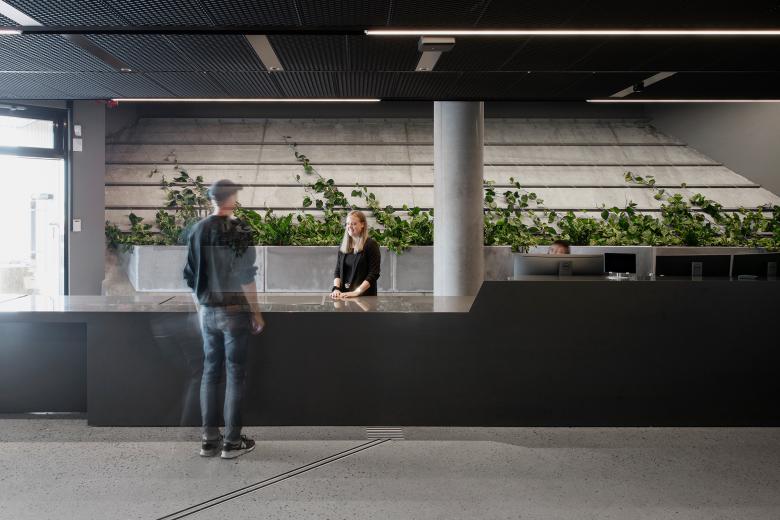
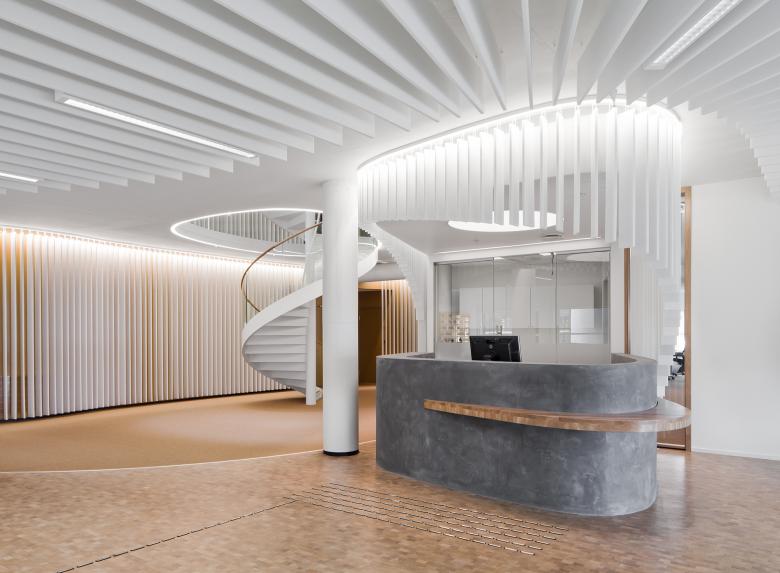
In the staff restaurant and conference areas, Scandinavian design classics were refurbished rather than replaced. The local craft association Grenland husflidslag reupholstered old Corona chairs by Danish furniture maker Erik Jørgensen using surplus yarn from the Gudbrandsdalens Uldvarefabrikk wool mill. The furnishings are complemented by restored City chairs by Norwegian industrial designer Øivind Iversen. In the lobby, the reception desk is made with recycled tiles from the local porcelain factory Porsgrunds Porselænsfabrik.
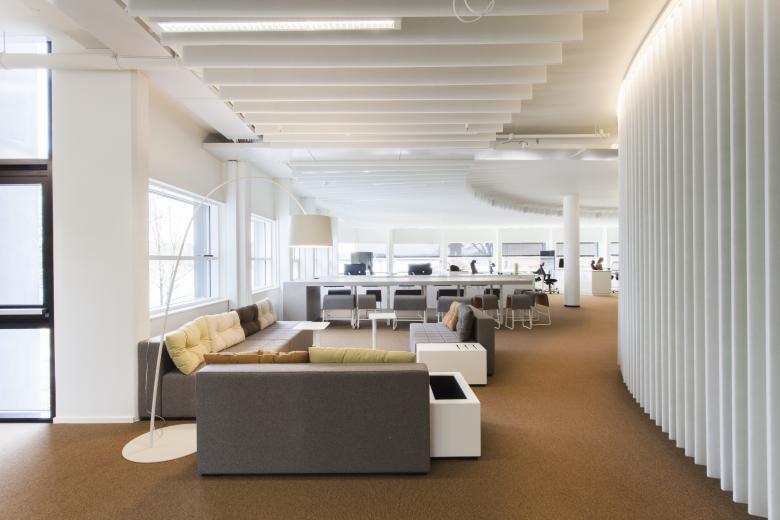
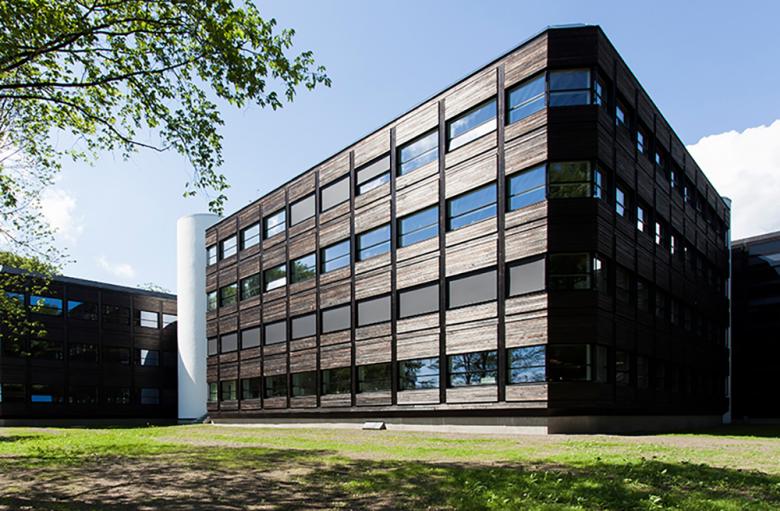
Powerhouse Kjørbo is not a new building: Snøhetta converted two interconnected 1980s office blocks in Sandvika into energy-positive buildings. Additional insulation and new windows prevent heat loss, while sensors now control the building's lighting, ventilation, heating, and cooling. New sunshades prevent the rooms from overheating in the summer without hindering passive solar gains in the winter. Together, these changes reduce energy consumption by 90 percent. Heating is now barely necessary: just a few radiators in the building’s core are sufficient to keep the building warm even on cold winter days.
A newly installed solar power system generates up to 200,000 kilowatt-hours of electricity annually. It is supplemented by a heat pump and a geothermal system. Over a 60-year lifecycle, this means that more energy is generated than is consumed in construction, renovation, operation, and eventual demolition.
Snøhetta also took care to minimize waste as much as possible with an eye toward the project’s environmental footprint. For example, the glass facade panels removed during renovation have been reused inside. The current facade consists of charred wood, a traditional technique that limited the energy required for the renovation work and preserves the familiar dark color of the two buildings. Additionally, wood treated in this manner is highly resistant to rot and pests.
Snøhetta’s Powerhouses feed excess energy into the power grid, where it is used elsewhere. However, looking ahead, the architectural team hopes for technical solutions that will allow large amounts of energy to be stored on-site, within the buildings. This makes sense because the power grids in many countries, including Germany and Switzerland, are not designed to accommodate high levels of decentralized solar input without substantial expansion of distribution infrastructure.
- Palle Petersen, Sarah Barth, “«Das ist kein Argument gegen das Bauen mit Holz, sondern eine Frage der Buchhaltung.»” (“‘This isn’t an argument against building with wood, but a matter of accounting.’”), Hochparterre, November 19, 2024.
- Ibid.
- Christian von Burg, “Die Schweiz: Ein Hotspot des Klimawandels” (“Switzerland: A Climate Change Hotspot”), SRF, November 4, 2025.
This article was first published as “Energiepositiv bauen” on German-Architects. English translation was edited by John Hill.