'Vitra: The Anatomy of a Design Company' by Deyan Sudjic
The Story of Vitra in 410 Pages
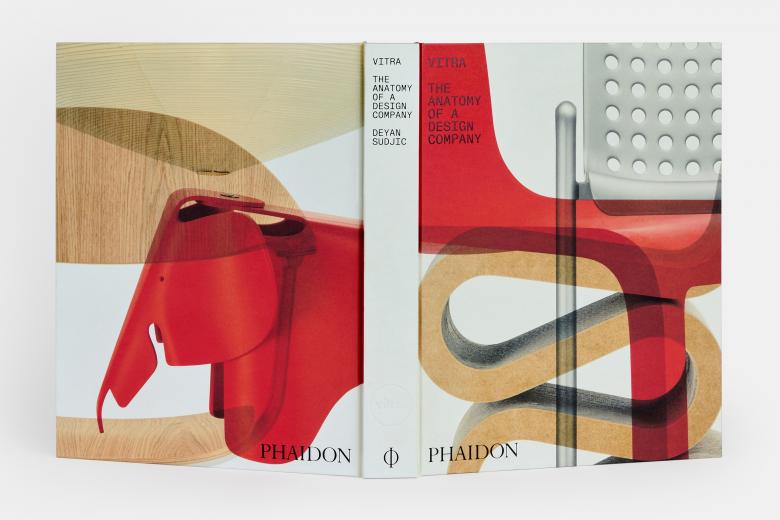
Front and back covers of Vitra: The Anatomy of a Design Company (Photo: Phaidon)
Vitra is a Swiss family-owned furniture company that is known best for the production of iconic modern chairs, as well as for office furniture, its eponymous design museum, and the architectural gems dotting its campus in Weil am Rhein, Gemany. This week's announcement that Vitra will reopen the Herzog & de Meuron-designed VitraHaus on May 9, following a year-and-a-half-long renovation, prompted us to take a look inside Vitra: The Anatomy of a Design Company, the recently released coffee table book written by Deyan Sudjic.
Last year marked the 75th anniversary of Vitra, the furniture company established by Willi and Erika Fehlbaum in 1950, thirteen years after Willi took over the shopfitting company Graeter in Basel. With production facilities inaugurated that year in Weil am Rhein, Germany, just across the border from Basel, the 1950s saw Vitra begin the production of modern furniture designed by Charles and Ray Eames, George Nelson, and other notable designers—a trend that continues to this day. In 1977, Willi and Erika handed off the company to their sons Rolf and Raymond, who developed a masterplan for the Vitra Campus in the 1980s and turned it into a world-famous architectural destination, with buildings designed by Tadao Ando, Frank Gehry, and Zaha Hadid, and others in the decades since. The most recent generational shift began in 2012, when Raymond and Rolf transferred the company's management to Nora Fehlbaum. The story of Vitra's evolution over three generations is told in a new book by Deyan Sudjic, published late last year by Phaidon. Here, we take a look inside Vitra: The Anatomy of a Design Company.
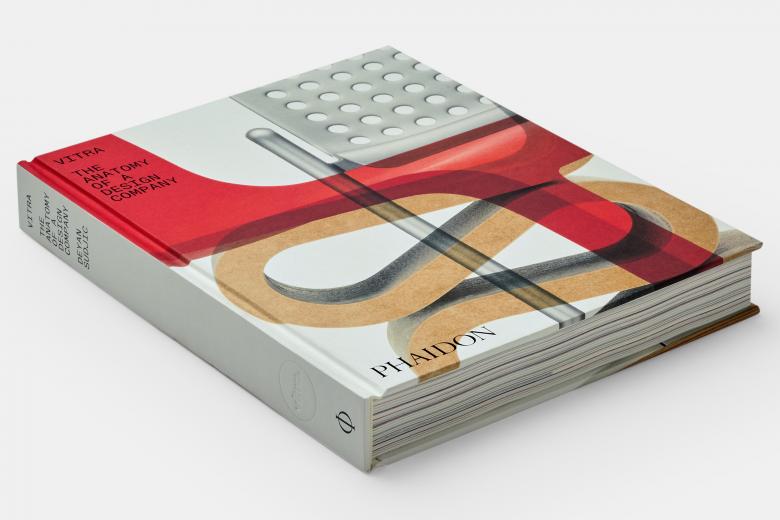
Although the 410-page hardcover book is large, at 270 x 215 mm (8-1/2 x 10-5/8"), it is surprisingly light, thanks to the use of lightweight papers. (Photo: Phaidon)
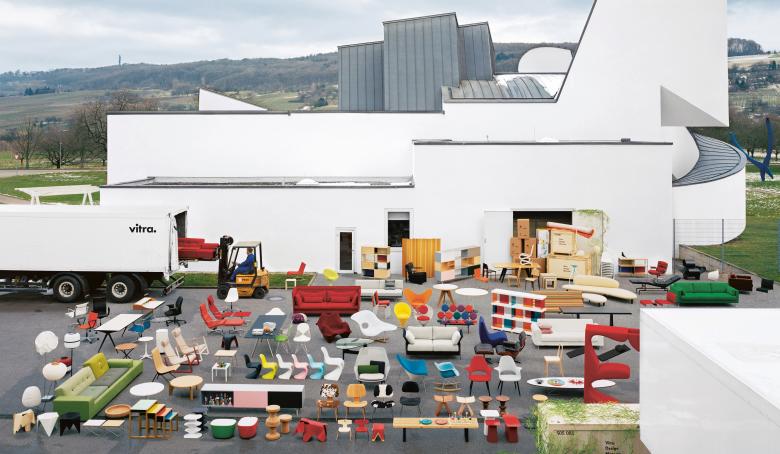
One of the most famous images of the Vitra Campus, found early in the book, is this 2007 photograph showing the complete Vitra product range on display outside the Vitra Design Museum, which was designed by Frank Gehry and built in 1989. (Photo: Tobias Madörin, courtesy of Vitra)
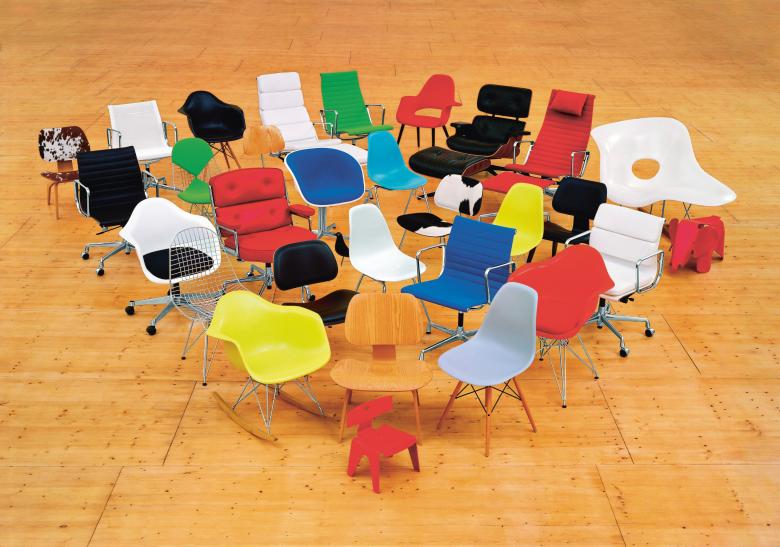
Following the first chapter, “The Three Phases of Vitra”—which, not surprisingly, are aligned with the three generations of Fehlbaums that have led the company—the second chapters examines “The Eameses, Nelson, Girard and Their Heritage.” Keeping the full range of Charles and Ray Eames’s designs in production has been a particularly important strategy for Vitra. (Photo: Maurice Scheltens, courtesy of Vitra)
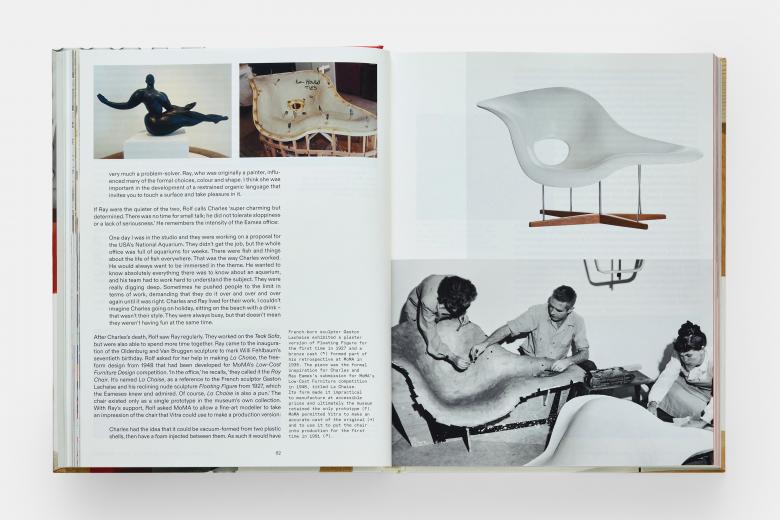
Sudjic's chapters feature numerous archival images as well as quotes pulled from a previously unpublished oral history that Karen Stein and Marianne Goebl conducted with Rolf Fehlbaum, chair of Vitra between 1977 and 2012. (Photo: Phaidon)
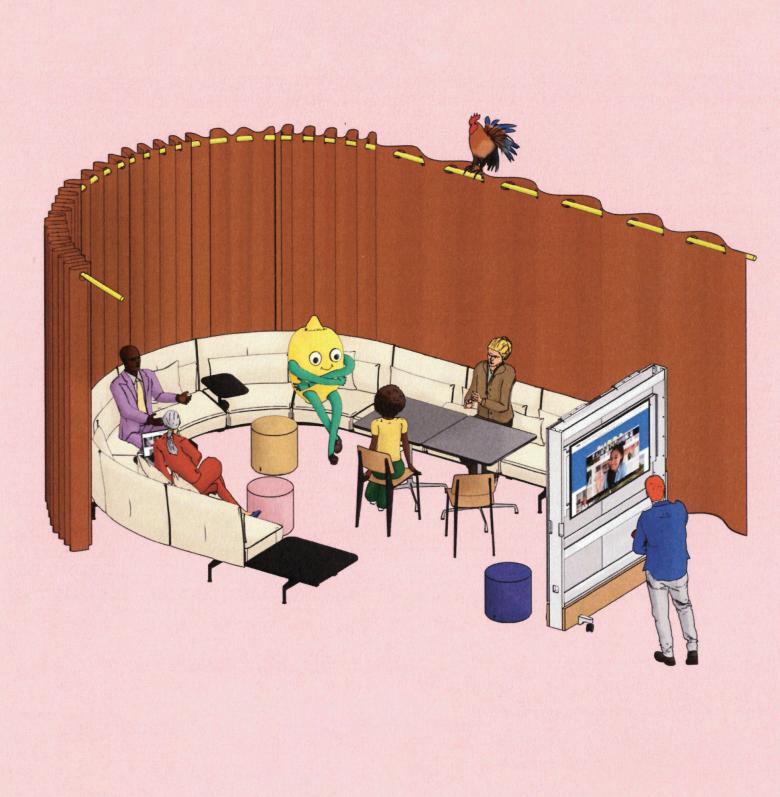
Vitra jumped into office furniture in 1976 with the launch of the Vitramat desk chair. Over time the company expanded to desks and work systems for open-plan environments, such as Barber & Osgerby’s Soft Work system (2018), pictured here, which conceptualized softening the workplace. (Image courtesy of Vitra)
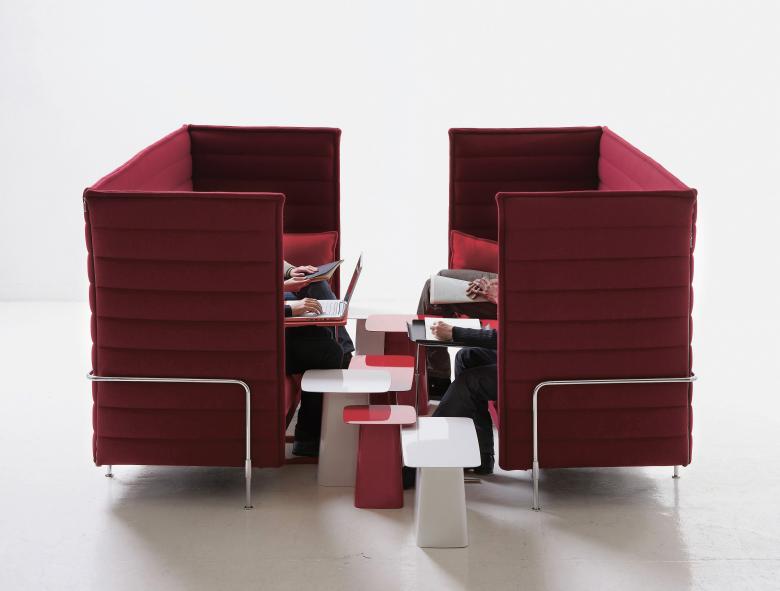
An iconic workplace design produced by Vitra is Alcove (2006) by Erwan and Ronan Bouroullec, a high-backed version of a sofa designed to provide a degree of privacy in offices without walls. (Photo courtesy of Vitra)
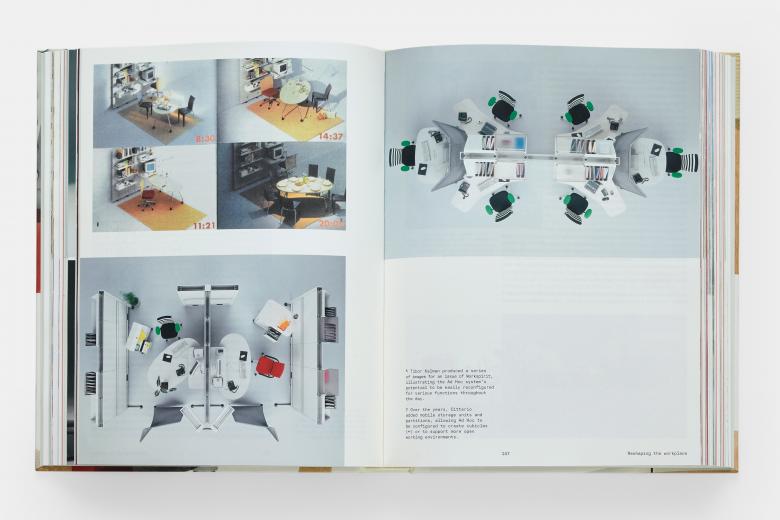
Vitra's 50-year involvement in office furnishings is covered in the “Reshaping the Workplace” chapter. (Photo: Phaidon)
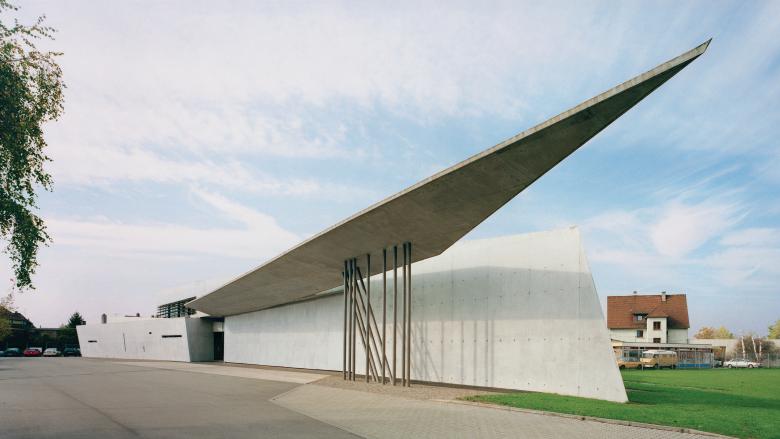
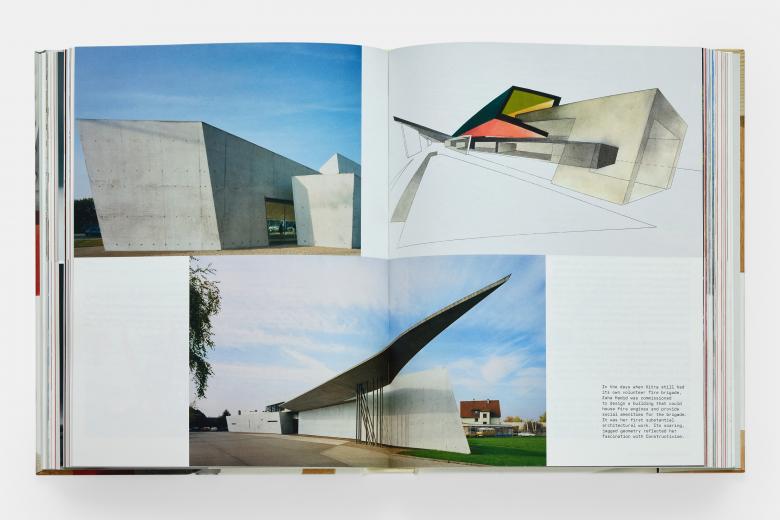
Under Rolf Fehlbaum, who took the reins of the company in 1977, and spurred by a fire that damaged half of the Vitra's buildings in Weil am Rhein, the Vitra Campus took shape via contributions from a number of established and up-and-coming architects. The Vitra Fire Station, Zaha Hadid's first completed building, was built in 1993, when Vitra still had its own volunteer fire brigade. (Photo: Olivo Barbieri, courtesy of Vitra)
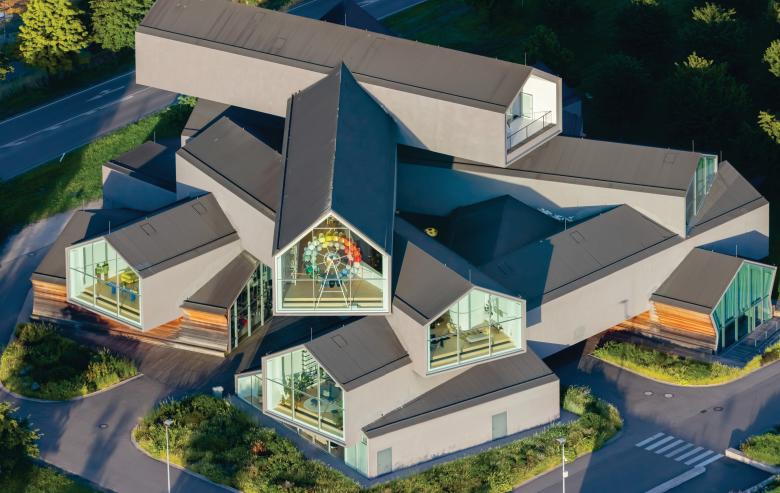
Completed in 2010, VitraHaus was the first major building completed on the public side of the Vitra Campus since Tadao Ando's Conference Pavilion in 1993. Designed by Basel's Herzog & de Meuron, the building's five house-like volumes display Vitra's domestic furniture and accessories, and the building also houses a café. (Photo: Iwan Baan)
The evolution of the Vitra Campus is presented in the fittingly titled “Why Architecture Matters” chapter, which is followed by nearly 70 pages with aerial and on-the-ground photographs by Iwan Baan. (Photo: Phaidon)
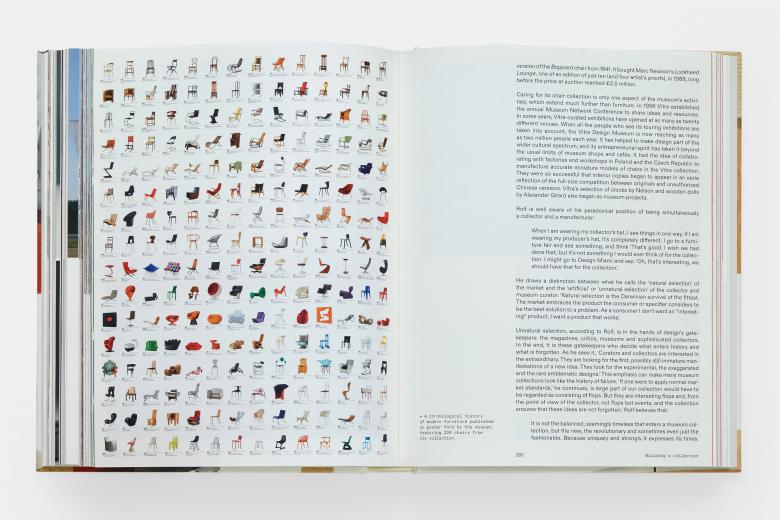
Even with its lined of office furnishings, its world-class design museum, and its collection of contemporary architecture, Vitra will always be best known for chairs. (Photo: Phaidon)
Vitra: The Anatomy of a Design Company
Deyan Sudjic
With contributions by Karen Stein and Iwan Baan
270mm x 215mm
410 Pàgines
Hardcover
ISBN 9781837290000
Phaidon
Data de compra: