Julia Watson's 'Lo—TEK Water: A Field Guide for TEKnology'
Thinking About Water This Earth Day
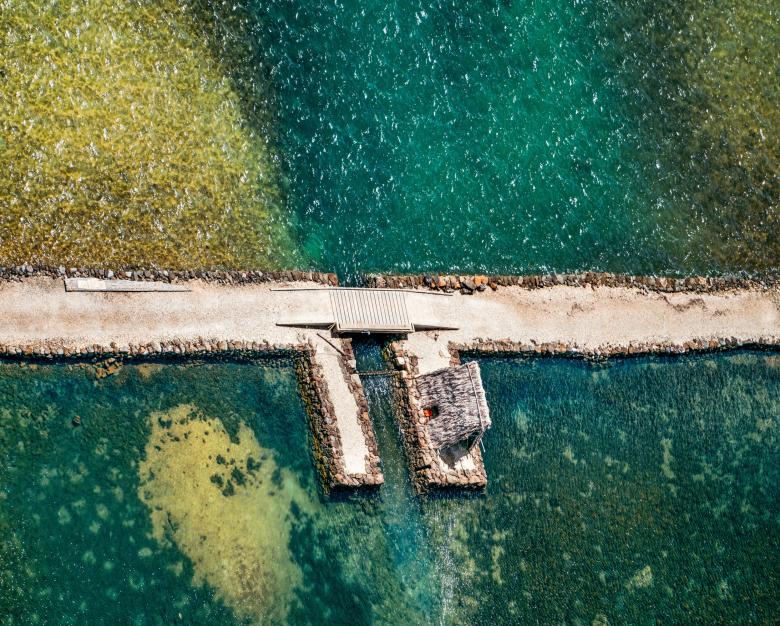
While the theme for Earth Day 2026 is “Our Power, Our Planet,” our thoughts are focused on water, sparked by reading some of the case studies in Lo—TEK Water: A Field Guide for TEKnology, the latest book by designer, author, and advocate Julia Watson.
“How inappropriate to call this planet Earth, when it is quite clearly water.”
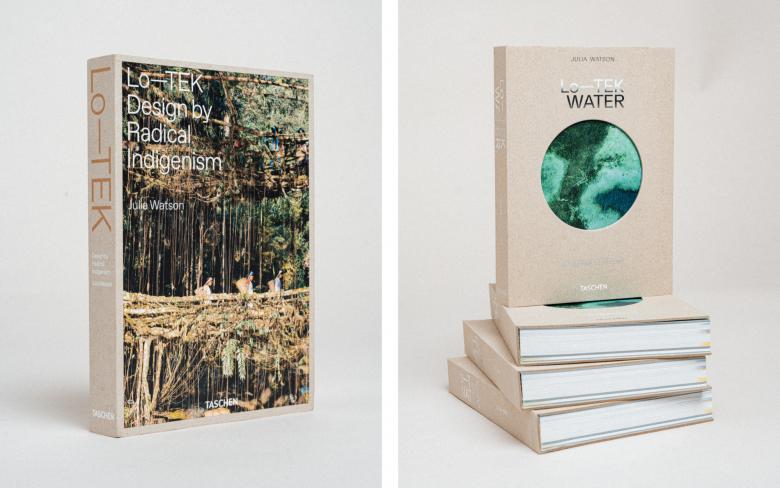
This quote from science-fiction writer and futurist Arthur C. Clarke suitably begins Julia Watson's new book, Lo—TEK Water: A Field Guide for TEKnology, published in December by TASCHEN, but it could just as easily be applied to its predecessor, Lo—TEK: Design by Radical Indigenism. After all, many of the case studies in that popular 2019 book are water-based: rice terraces in Bali and the Philippines, underground aqueducts in India and Iran, and floating islands in Iraq and Peru, to name just a few. The focus of both books is coded in their subtitles: the TEK of TEKnology refers to Traditional Ecological Knowledge, specifically the knowledge of indigenous cultures around the world. Simply put, with modern technology leading to the extinction of species and threats to civilization via rising seas, droughts, and floods, among other ecological perils, TEKnology offers a way forward that finds humans working with nature rather than against, via mutual rather than antagonistic relationships. Below we take a look at a few of the dozens of projects that comprise Lo—TEK Water.
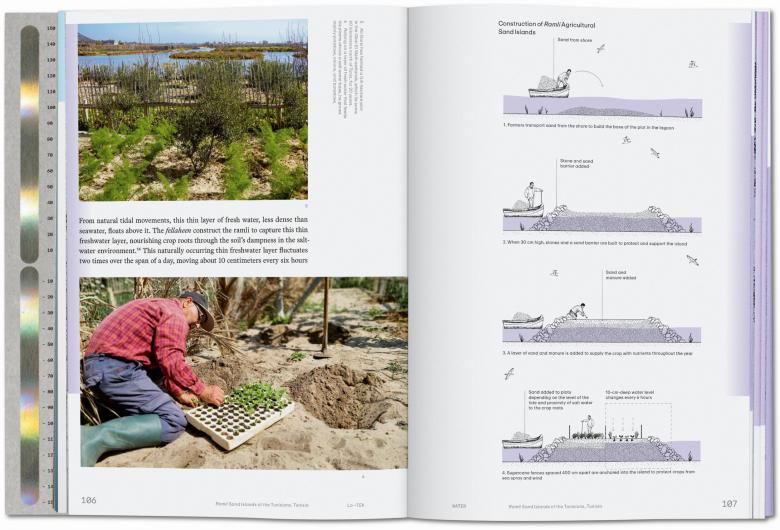
The indigenous projects that make up most of the book are structured into three types of water: salty, brackish, and fresh. Falling into the brackish chapter are the Ramli Sand Islands of the Tunisians, a natural irrigation system that is driven by tidal movements in the lagoons adjacent to the Gulf of Tunis. Sand is excavated from the shoreline to create the reefs, which are reinforced by stones and coated with manure for the cultivation of a variety of crops: potatoes, onions, beans, watermelons, tomatoes, peppers, and fennel. The case study features step-by-step drawings (above, by Linda Müller) that illustrate the islands' construction and how earth and water interact. Note the metallic shapes on the left and the purple gradient on the right; the former serves as a scale for the height above and below the water line, as depicted in the latter. (Similar to the first Lo—TEK, which features a scale in meters above sea level, the book's Swiss binding ensures the scale is visible on each spread.)
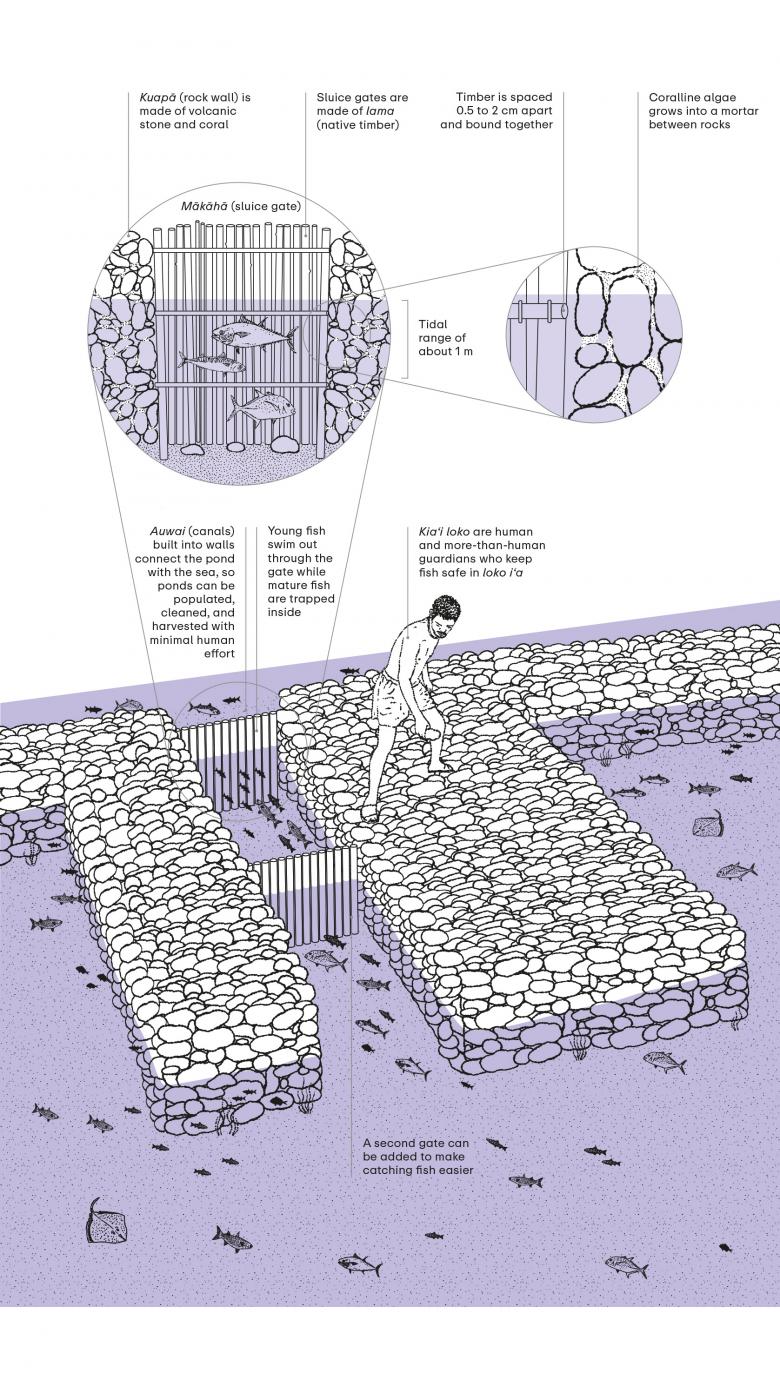
Another illustration by Müller (below) describes how the Loko i‘a Fishponds of the Native Hawaiians are built and work. Also visible in the photograph at the top of this article, some varieties of the coastal, brackish-water fishponds have been made using volcanic stones carried down to the shore, incorporating sluice gates that allow young fish to move freely back and forth, between ocean and pond, while mature fish are trapped inside. Like much of Lo—TEK Water, in addition to detailing the construction and function of the hydro-based TEKnologies, Watson and her collaborators describe the spiritual connections humans have had with water—connections that allowed nature to thrive over the course of centuries but were destroyed or threatened with colonization.
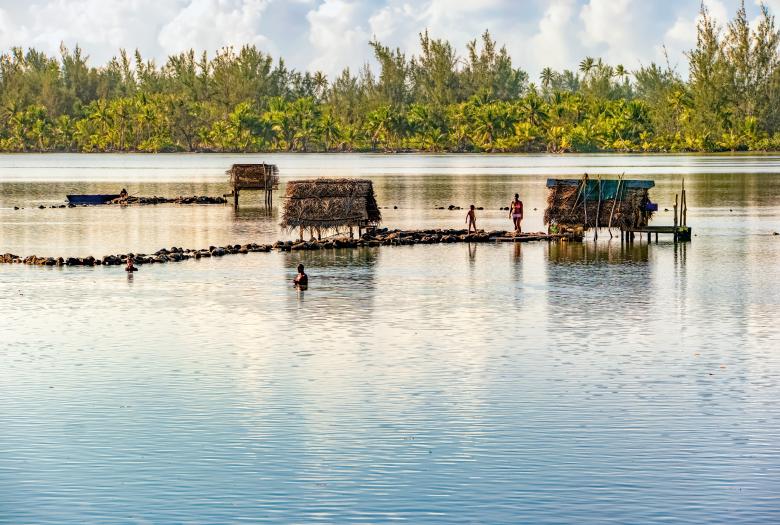
This tour of primarily brackish-water case studies continues with the Horo i‘a Fish Weirs of the Mā‘ohi in French Polynesia (above), stone-built weirs that are designed to harness tidal movement and capture fish as they enter or exit the lake. The weirs take on V, W, and A shapes when seen from above; these tapered forms funnel fish toward small openings and then channel them via labyrinthine walls toward wells, where they are collected by fishermen with nets. The stilted houses above the volcanic-stone walls allow the fishermen to monitor the weirs. To avoid overharvesting, the height of the walls are set below the water level at high tide, when fish can swim freely back to sea.
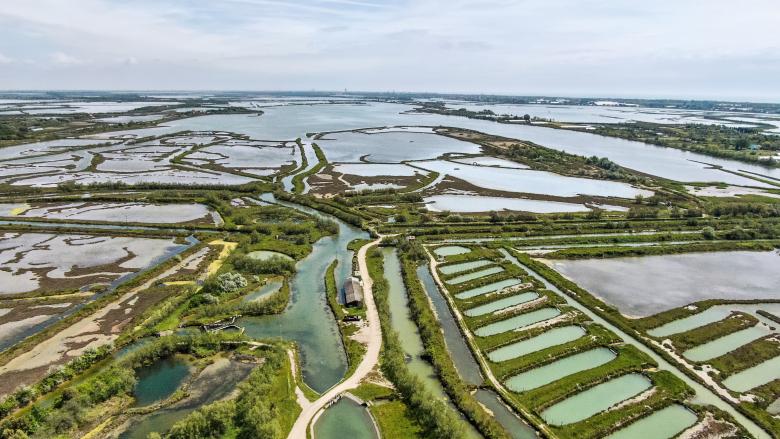
A book about indigenous water practices would be incomplete without a trip to the Venetian Lagoon. Watson does just that with the Valli da Pesca Dikes, Ponds, and Canals of the Venetians (below), which date back to the 11th century. Yet another case study in cultivating and harvesting fish in brackish waters, the scale of the valli system is impressive: 100 square kilometers, or 20% of the lagoon's surface. While the diversity of the fish reared in the canals, embankments, reed beds, and ponds has been reduced to just a few, the valli's embankments serve many supportive roles today, including filtering and purifying water, retaining sediment, absorbing carbon, and reducing wave impact.
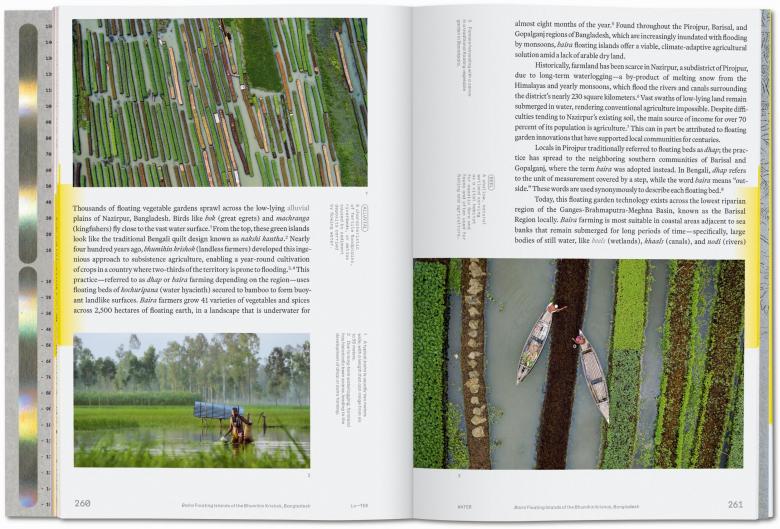
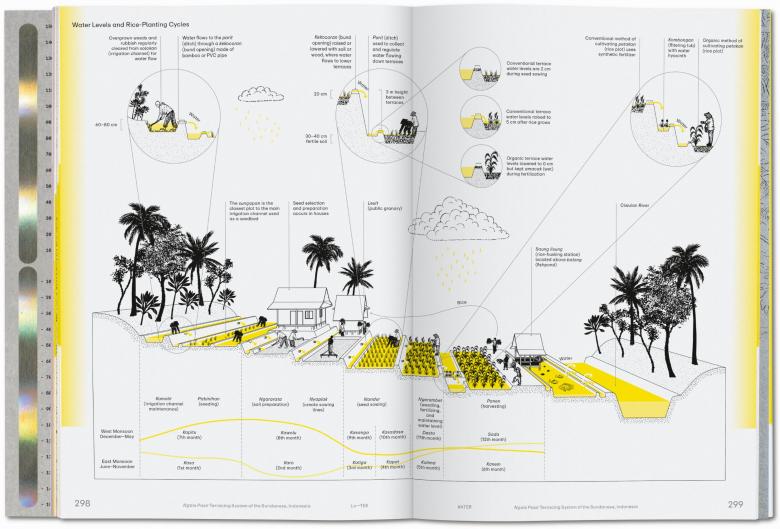
A couple of the freshwater case studies in the book are the Baira Floating Islands of the Bhumihin Krishok (above) and the Ngais Pasir Terracing System of the Sudanese (below). The first are ingenious linear vegetable gardens that sprawl across the low-lying alluvial plains of Nazirpur, Bangladesh, while the rice terraces of the second sit more than 600 meters above sea level in West Java, Indonesia. Unlike the earlier fish-oriented systems in brackish waters, vegetables and grains are the logical choice for freshwater locales. These spreads illustrate how Watson and book designers Piera Wolf and Stephanie Specht packed a lot of information into the fairly compact book via descriptions, footnotes, photographs, captions, water level notations, and Müller's illustrations. The last are particularly helpful, given the layers of information provided, the clarity of the labelling, and the carefully considered layouts.
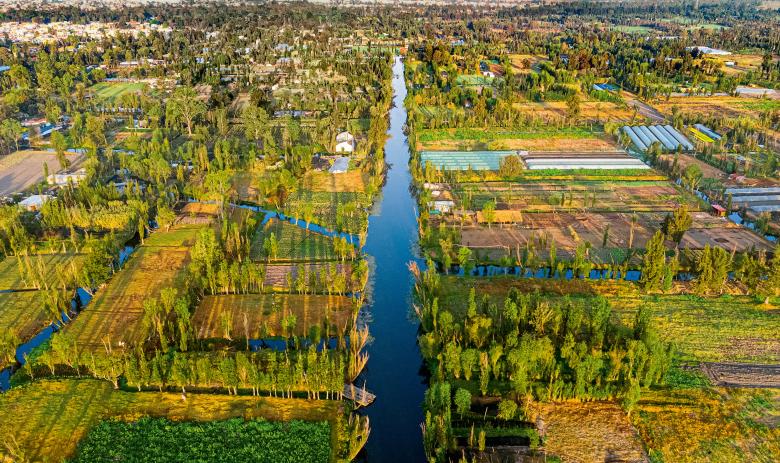
Like many case studies in the book, the Chinampa Islands of the Nahua Xochimilca in Mexico City (above) are centuries old—almost 1000 years, to be precise, predating the Mexican capital and a reminder of the Aztecs' massive lake system. The Xochimilca Canals and the chinampa (raised fields) they are formed around are still in use, with approximately 5,000 acres devoted to growing flowers and tourism via gondola rides. The area is a UNESCO World Heritage Site that features a 684-acre ecological park designed by Mario Schjetnan's Grupo de Diseño Urbano and built in the 1990s.
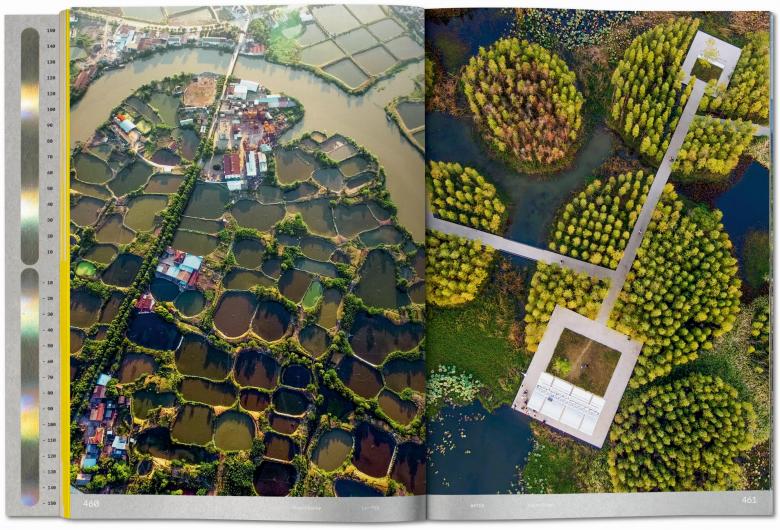
Contemporary projects are included in Lo—TEK Water, but they come after roughly 400 pages of indigenous projects and are therefore discussed just briefly. They follow a 40-page visual essay that pairs indigenous and contemporary projects, as with the Sangjiyutang Dikes, Ponds, and Canals of the Han and Nanchang Fish Tail Park (below), both in China. The latter is one of two projects in the book by Turenscape, the influential practice of the late landscape architect Kongjian Yu. With projects predicated on reversing century-old impervious floor management infrastructure, Turenscape's “sponge city” projects can be seen as one ideal of Watson's Lo—TEK approach, in the way they address contemporary issues by using traditional knowledge that is based on interacting with and understanding nature.

Lo—TEK Water: A Field Guide for TEKnology
Julia Watson
Designed by Piera Wolf and Stephanie Specht, illustrated by Lina Müller
6.7 x 9.6 in.
558 Pages
Hardcover
ISBN 9783836594448
TASCHEN
Purchase this book
Related articles
-
-
The Three-Body Problem: Trapped in a Wave Sandwich
Eduard Kögel, Scenic Architecture Office | 13.04.2026 -
-