Michael Heizer at Gagosian
Cuts in the Gallery Floor
All photographs by John Hill/World-Architects
Artist Michael Heizer is known for monumental artworks such as Double Negative, two massive trenches in a mesa near Overton, Nevada, and City, the magnum opus he started building north of Las Vegas in 1970 and opened to the public in 2022. The remoteness of such pieces make the installation of Negative Sculpture at Gagosian a few steps from the High Line a treat worth seeing in person.
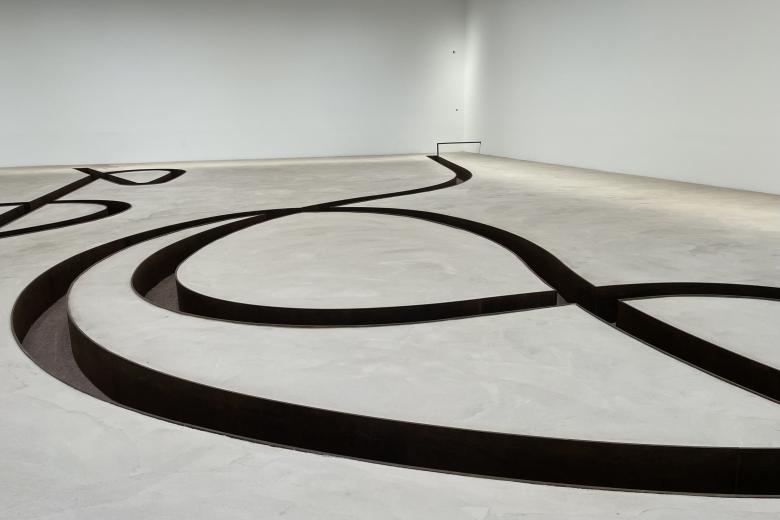
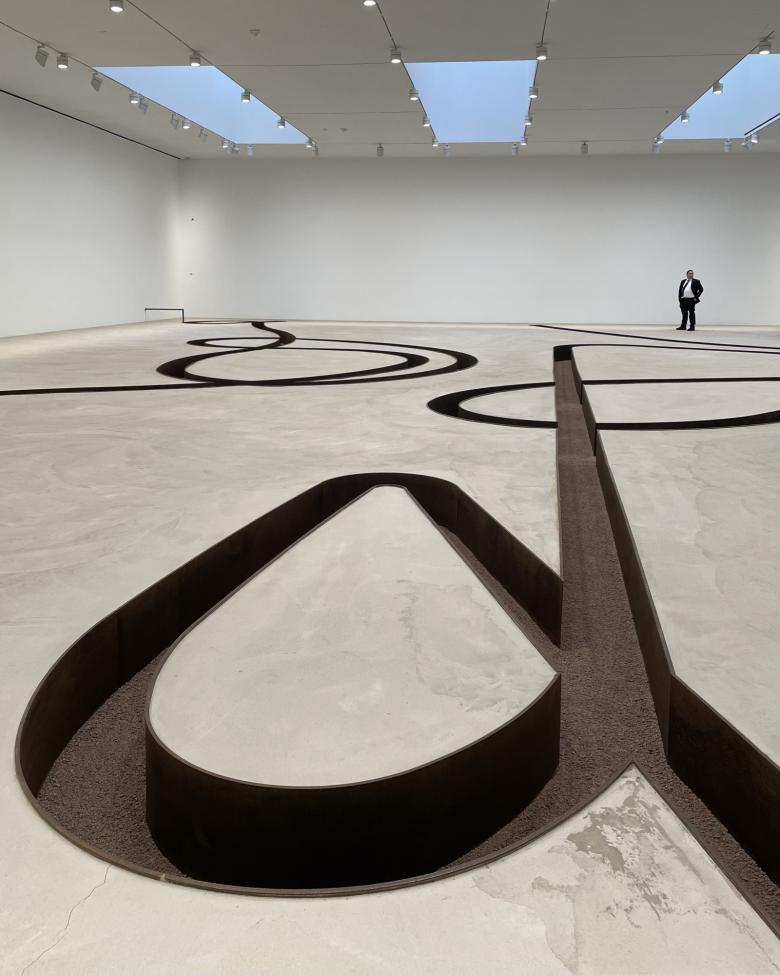
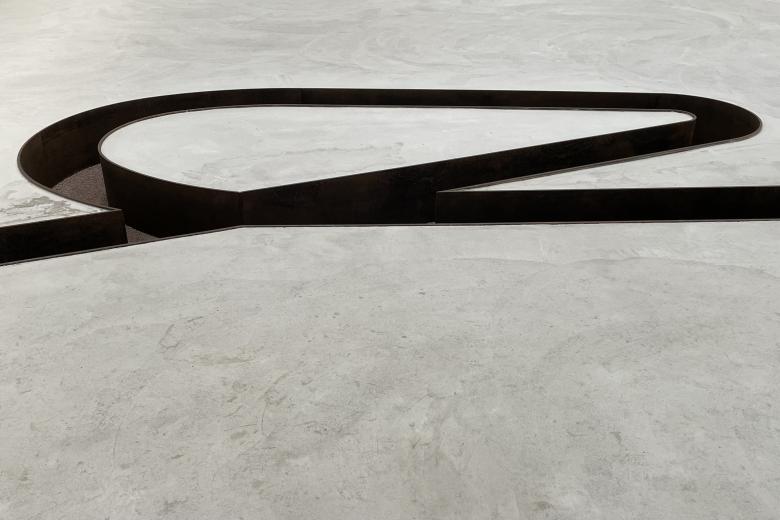
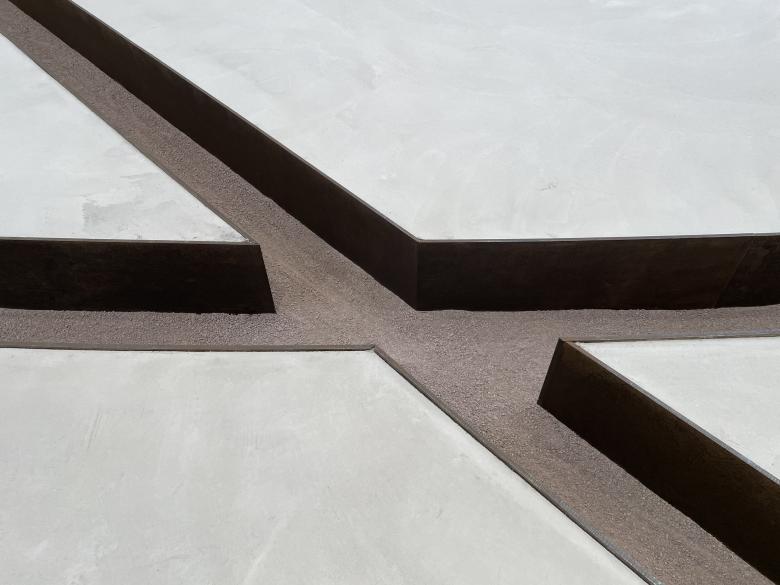
Visitors walking into Gagosian on West 21st Street in Chelsea need to ascend a short ramp to access the gallery and experience Michael Heizer's Negative Sculpture. Less object-like than traditional sculptures, the piece is made entirely of curving lines cut into the gallery floor. Yet, as the ramp hints, the artwork, instead of being set into the floor itself, is actually built atop it—a new, albeit temporary layer of concrete and steel between the gallery's floor and a grid of skylights. World-Architects visited Gagosian recently to see Negative Sculpture—on display until March 28—and snap some photographs; they are presented below with captions, alongside a few other Heizer works we have seen in person.
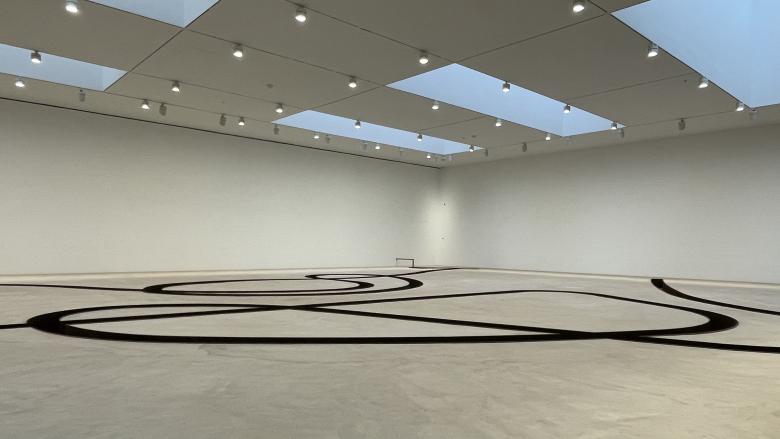
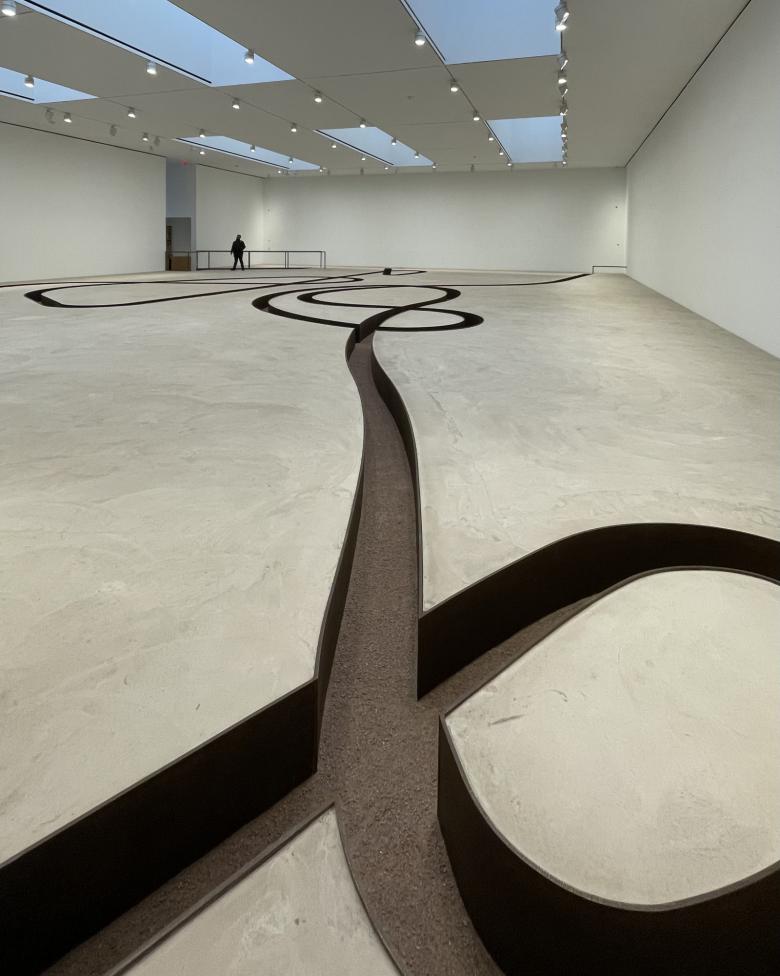
The exhibition is actually comprised of two negative sculptures by Heizer: Convoluted Line A and Convoluted Line B, both dated 2024.
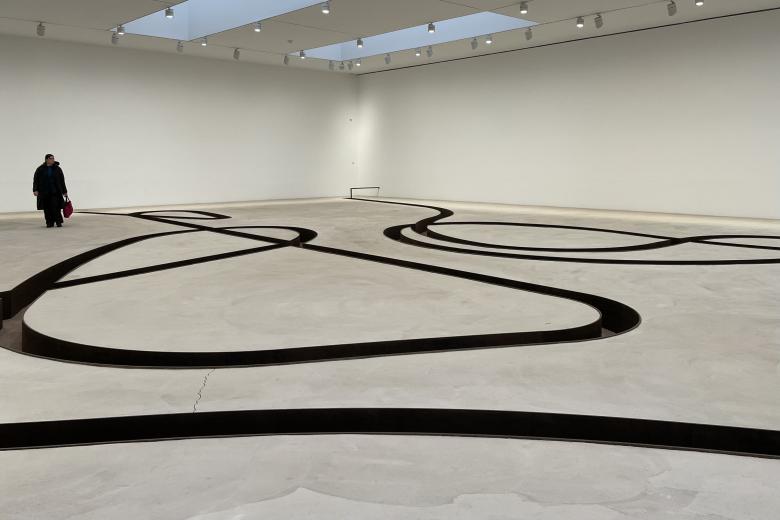
The separation between the two sculptures is roughly in the middle of the floor. Visitors can walk around and between the sculptures, but cannot walk across the cuts.
“The sculptures represent the pinnacle of an artistic lineage,” per Gagosian, “that reaches back to Heizer’s earliest outdoor sculptures made in the 1960s in the Nevada and California deserts.”
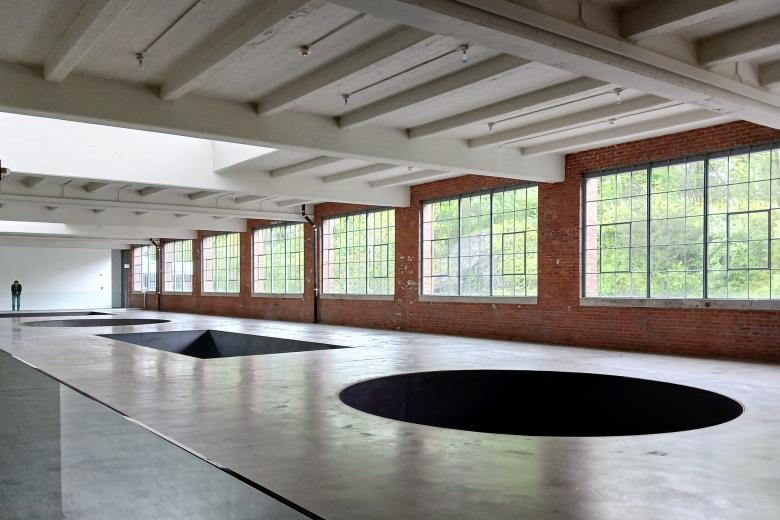
The Gagosian text hints at how Heizer's early works, like other artists in the so-called Land Art movement, moved beyond the traditional gallery environment. Nevertheless, versions of his art have found their way into galleries, as in North, East, South, West, whose deep voids were first created in 1967 but then recreated at Dia Beacon in 2002, where it is on permanent display.
Convoluted Line A is 87 feet 6 inches × 30 feet (26.7 × 9.1 m) and Convoluted Line B is 87 feet 7 inches × 35 feet 5 inches (26.7 × 10.8 m).
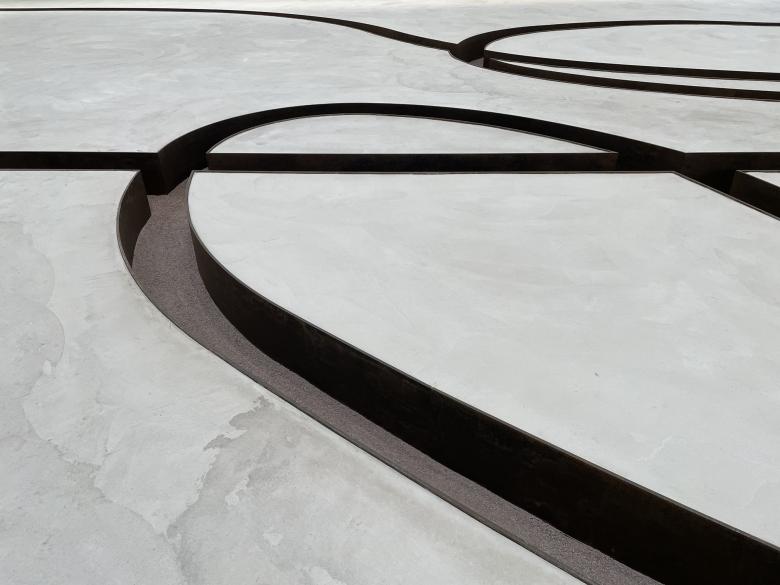
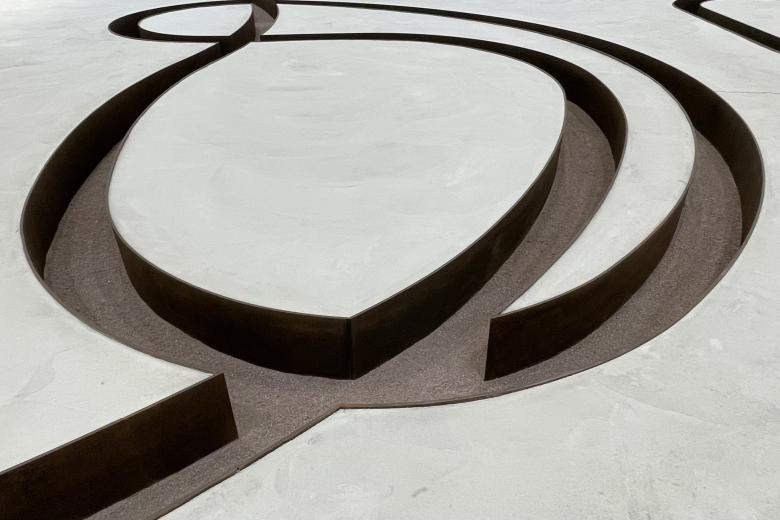
The Corten steel walls that define the cuts were originally laid out at Heizer's production yard in Nevada, but their size is perfectly suited to Gagosian's gallery, with the lines curving toward the corners of the rectangular room.
Heizer's earliest negative earthworks were simply voids dug into the earth, meaning they eventually deteriorated from the elements. Negative Sculpture (2024) recalls subsequent works that used Corten steel for more permanence.
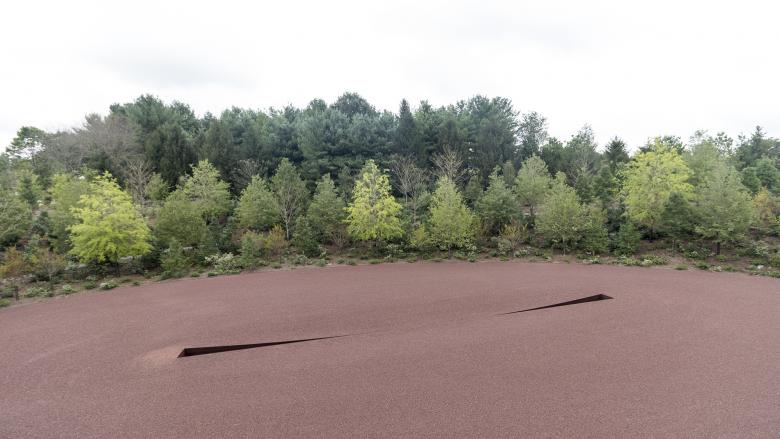
One such work is Compression Line, which Heizer installed at Glenstone in Potomac, Maryland, in 2016. The pinch in the middle resulted from the earth pushing against the rectangular Corten steel structure.
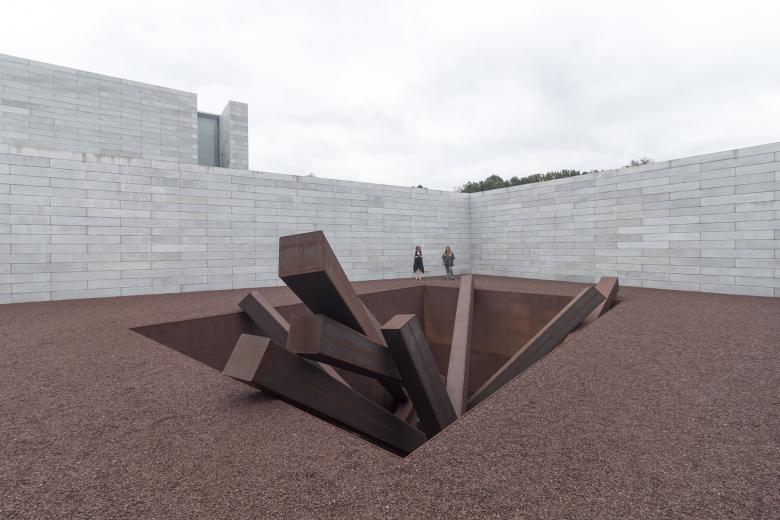
Also installed at Glenstone in 2016 is Collapse, a rectangular pit 36 feet × 24 feet × 16 feet (11 × 7.3 × 4.9 m) filled with a chaotic assemblage of Corten steel beams.
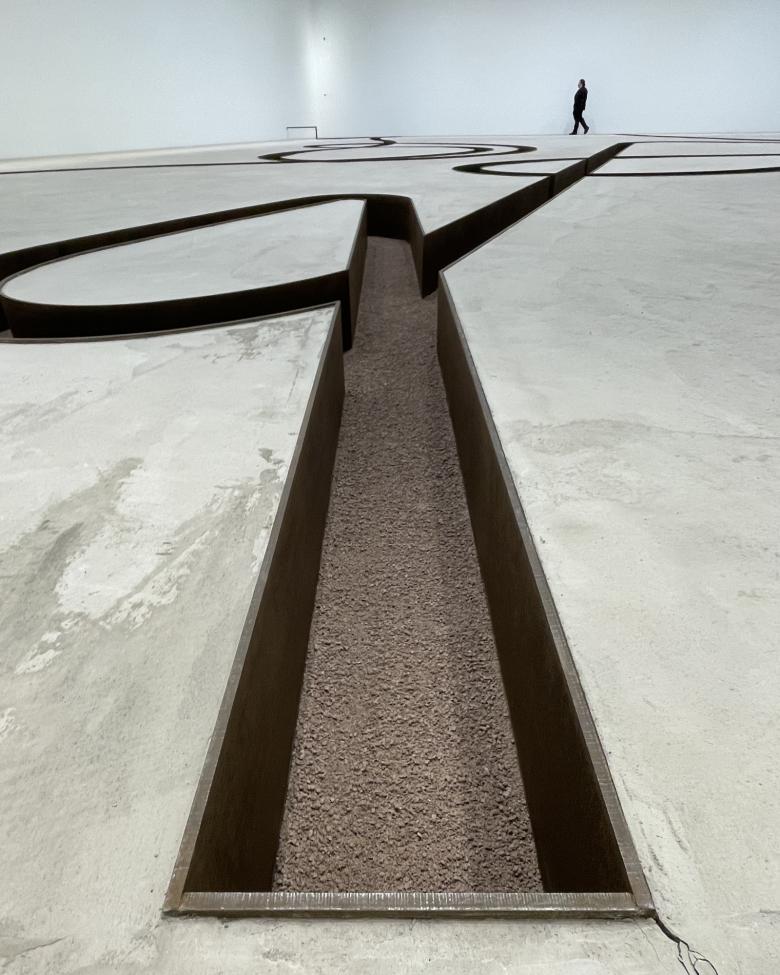
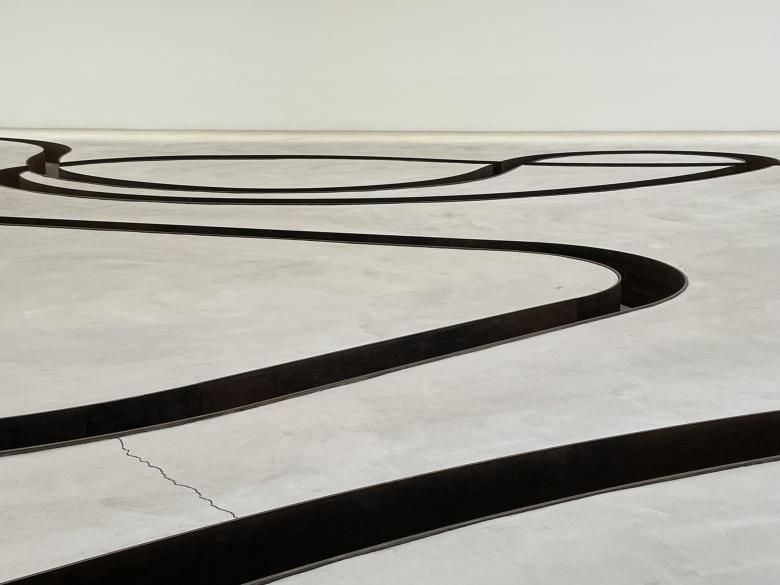
The minimalism of the Negative Sculpture means the concrete floor is free of expansion joints. Nevertheless, cracks have found their way into the raised surface, visible at a few corners but also other places, like the pinch point here.
Although the spaghetti-like curves of Negative Sculpture vary in radius and orientation, resulting in some curious intersections, the width of the cut remains constant throughout.
According to the gallery, “The elegant curves of the new works on view at Gagosian culminate Heizer’s investigation into the physical limitations of rigid steel and its resulting aesthetic potential.”
Heizer's approach to negative sculptures begs the question: Is the art the concrete surface or the steel cut, the solid or the void? The answer is more both/and than either/or.