Faculty of Tourism at the University of Málaga
A Modern Cloister in Málaga
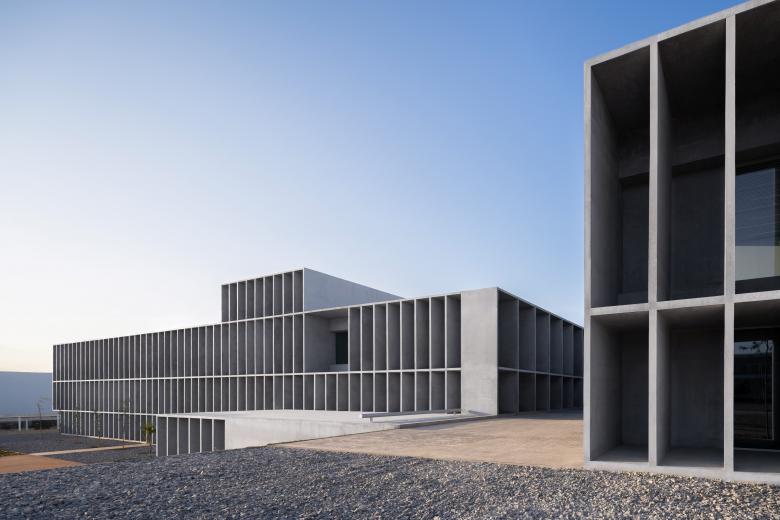
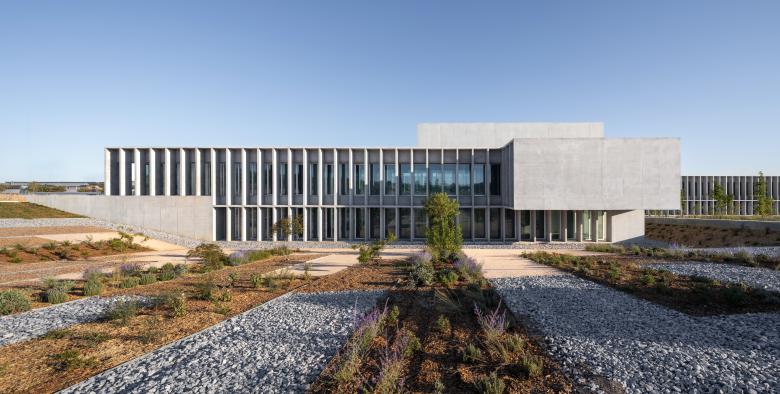
The University of Málaga’s Faculty of Tourism, designed by Vaillo + Architects, is located on the outskirts of the Spanish city—a low-rise complex organized around courtyards and a central atrium. The building features an austere design of exposed concrete, integrating structure, climate, and landscape into a unified system that reinterprets the Mediterranean tradition of the cloister and adapts it to its surroundings.
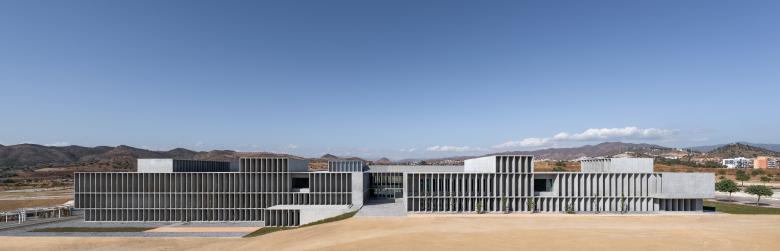
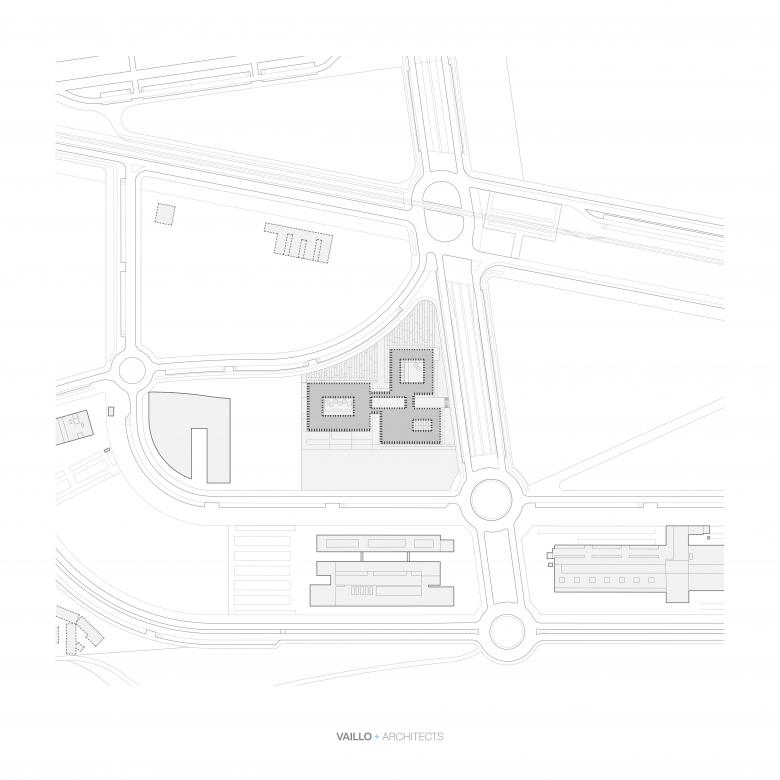
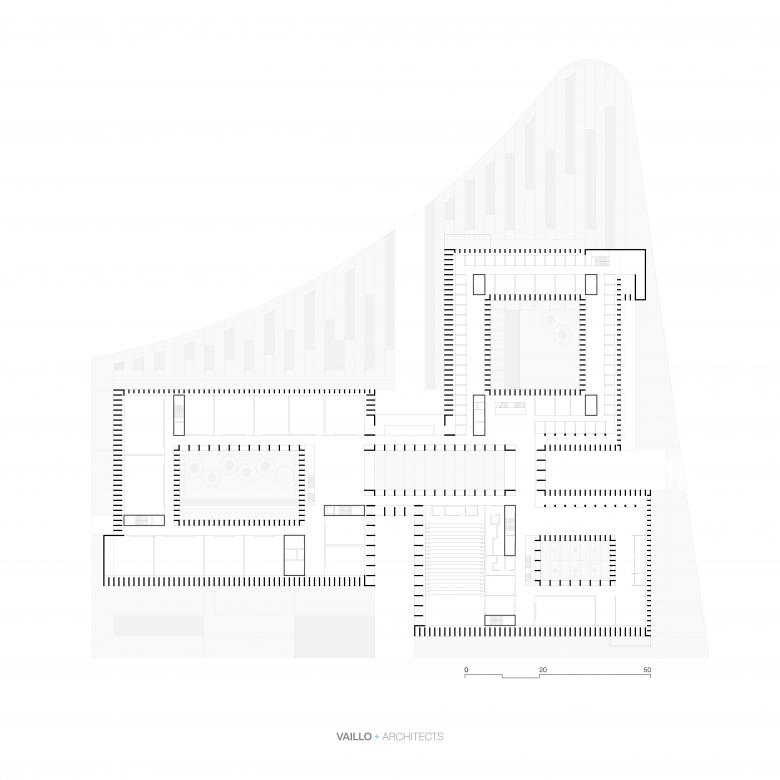
The building is situated in a suburban setting with gentle topography, subject to strict height restrictions due to overhead utility lines. This constraint led to an extensive use of the site and a strategy for adapting to the terrain based on stepped platforms and landscaped slopes following the site’s natural topography. The complex is organized into three main volumes arranged around a central atrium, which serves as a space for interaction, circulation, and functional coordination.
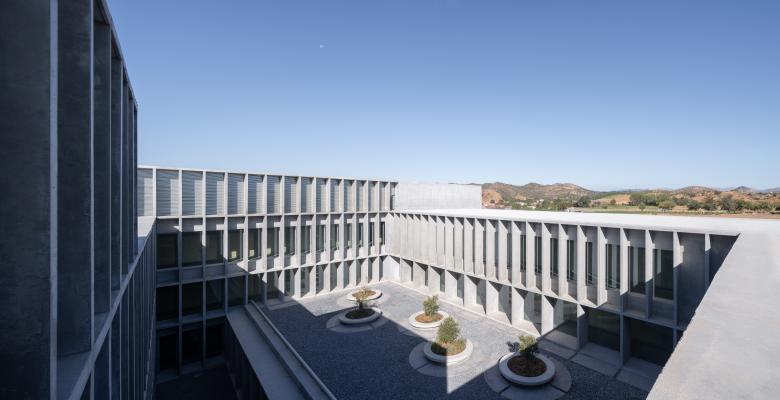
In terms of style, the project follows the tradition of educational architecture based on the arrangement of buildings around courtyards. Each building is structured around a courtyard—a cloister—that organizes interior activity and promotes natural lighting and cross-ventilation. This layout evokes Mediterranean architecture, where open, transitional, and landscaped spaces play a central role in the building’s experience.
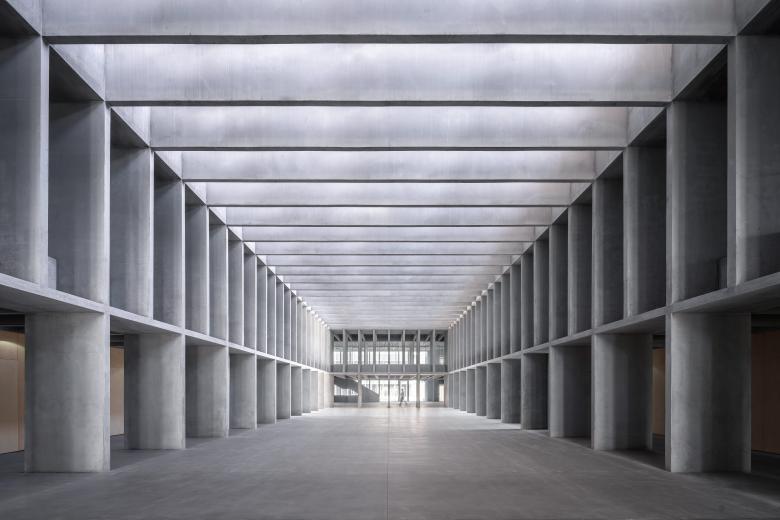
The central atrium forms the heart of the complex, serving as a hub for entrances and connections between the various facilities. Designed as a spacious, open-plan area, it accommodates a variety of uses and encourages interaction among students, faculty, and visitors, reinforcing the building’s public and institutional character.
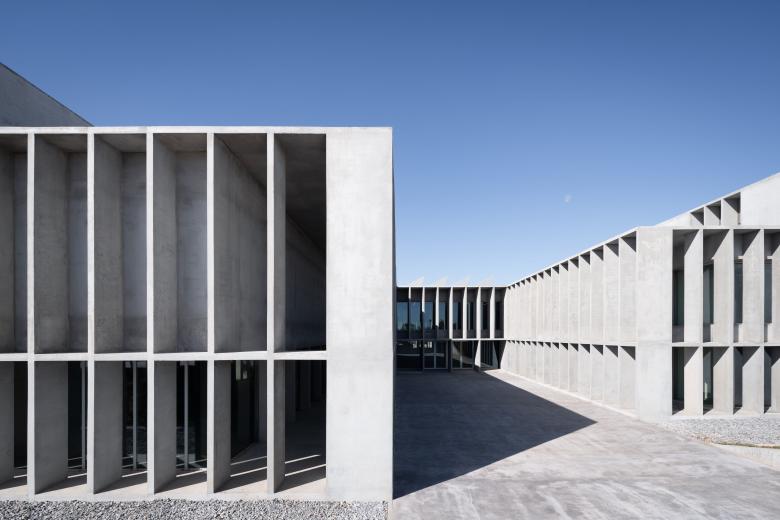
The functional layout divides the program into three clearly defined areas: classrooms and laboratories connected to the Culinary Center; departmental spaces designated for offices and research; and a set of common areas that includes an auditorium, a cafeteria, a library, and the dean’s office. This clear programmatic hierarchy is supported by a structure capable of accommodating future changes, ensuring the building’s adaptability over time.
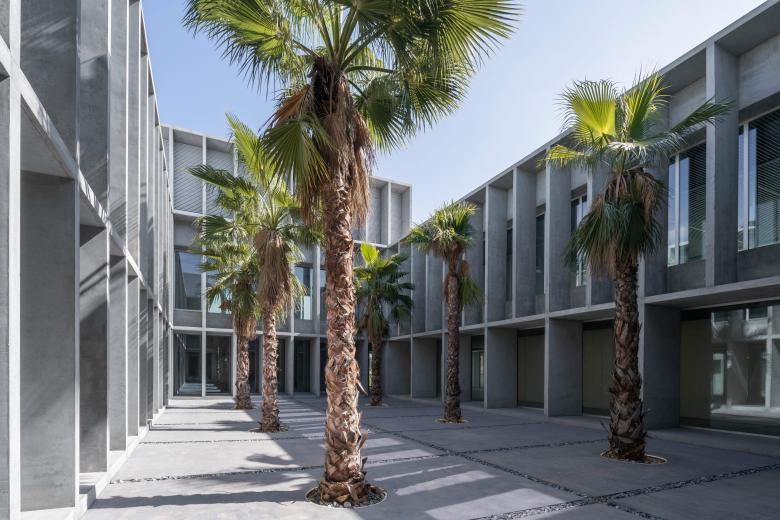
The structure becomes the project’s primary architectural and expressive element. Constructed of exposed reinforced concrete, both inside and out, it features extremely slender sections—barely 15 cm thick—that give the building a striking and precise appearance. On the facade, the structure takes on an almost tectonic quality, functioning as a large lattice that filters solar radiation and defines the rhythm of the complex.
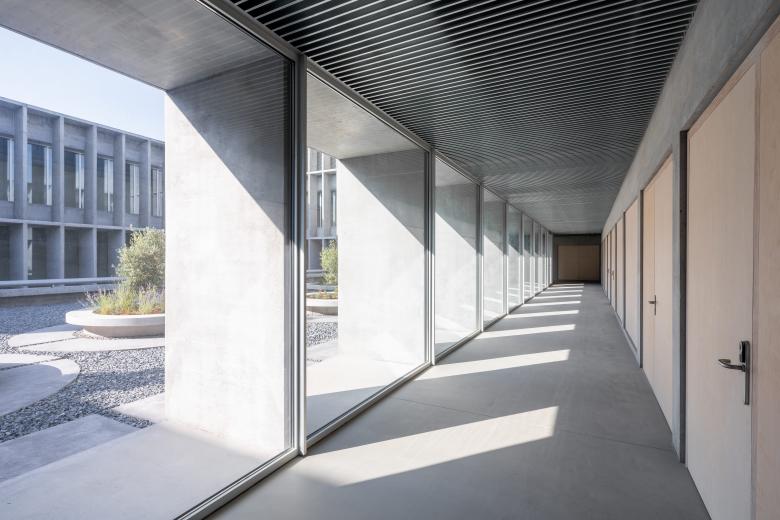
The perimeter structural design, featuring walls of varying depths and deep-flanged beams, frees the interior from unnecessary supports and allows for large spans. This approach ensures a high degree of spatial flexibility, facilitating multiple interior configurations capable of accommodating changes in use and program without altering the building’s structural logic.
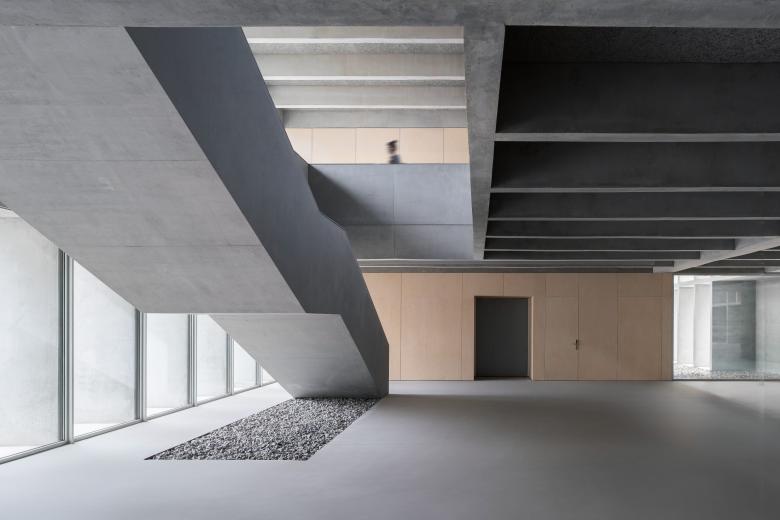
The materiality reflects a commitment to radicalism and coherence. The palette is stripped down to the essentials, using locally sourced materials: local aggregates and cement for the concrete—which give it its dark, uniform hue—complemented solely by plywood and glass for the building envelope and joinery. This economy of materials reinforces the unified character of the whole and highlights the prominence of the structure.
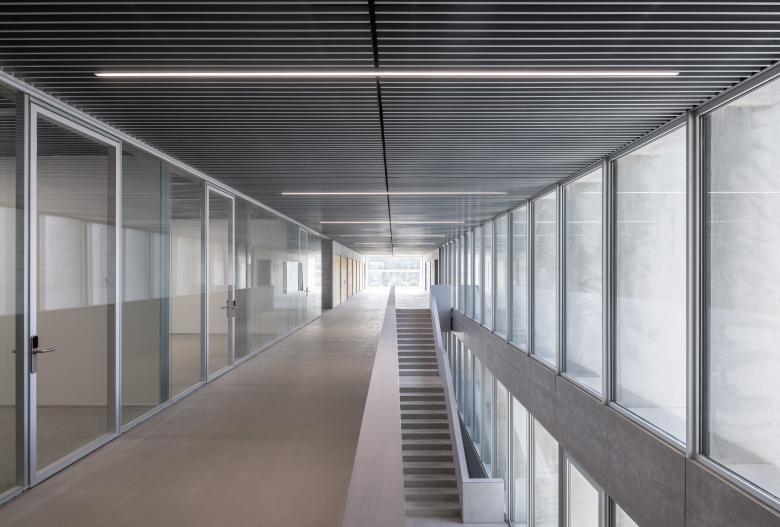
From an environmental perspective, the project relies on passive strategies to improve energy performance. The structural facades act as sun-shading devices, adjusting their density and depth according to orientation. The courtyards and atrium function as thermal buffers, promoting cross-ventilation and contributing to the natural regulation of indoor conditions.
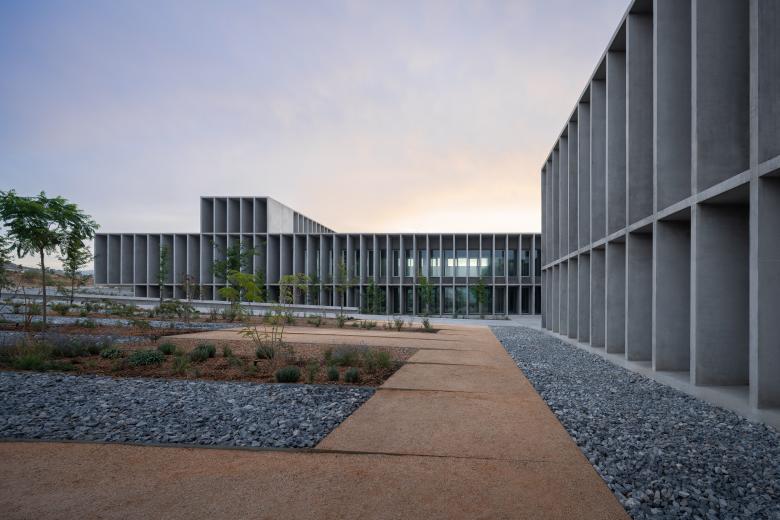
The landscaping and design of the outdoor spaces follow principles of minimal intervention and low water consumption. The landscaping employs xeriscaping (gardens with low water requirements), featuring native plant species and permeable paving that address the scarcity of water resources in the area, integrating the building into the landscape without unnecessary embellishments.
Text is by Antonio La Gioia.
Location: Málaga, Spain
Client: University of Málaga
Architect: Vaillo + Architects (Antonio Vaillo i Daniel, Yago Vaillo Usón)
Associate Architect: Joaquín López Baldán
Project Director: Javier Oyanarte
Structures: Eduardo Ozcoidi, Josep Agustí, Calter Ingeniería
MEP: Estin Adviser
Contractor: Acciona Construcción
Construction Management / Quantity Surveying: Rafel Vera, Alfredo Robles
Built area: 22,904 m²