The 2026 Pritzker Architecture Prize
The Outs and Ins of Smiljan Radić Clarke's Buildings
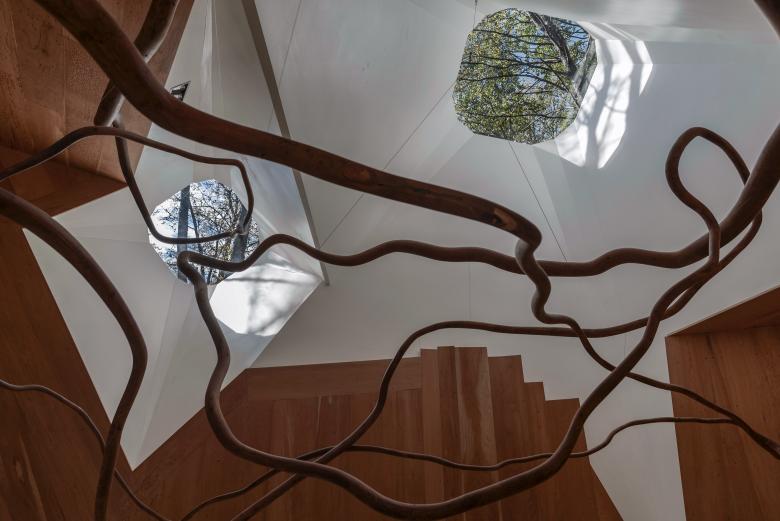
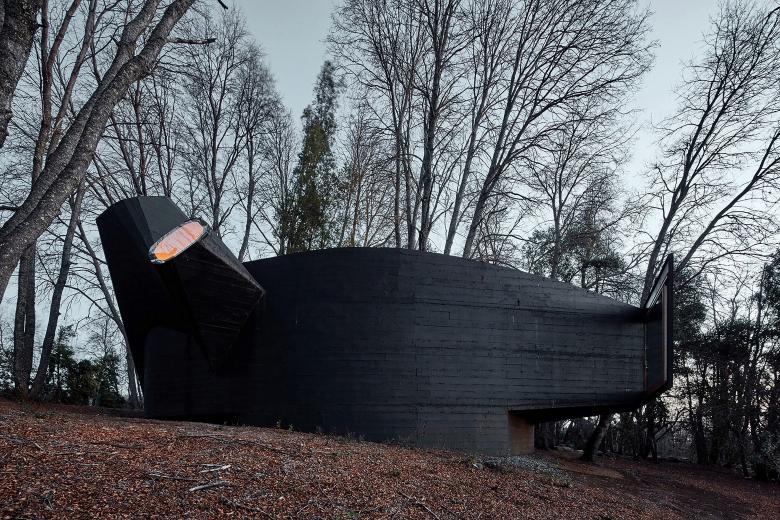
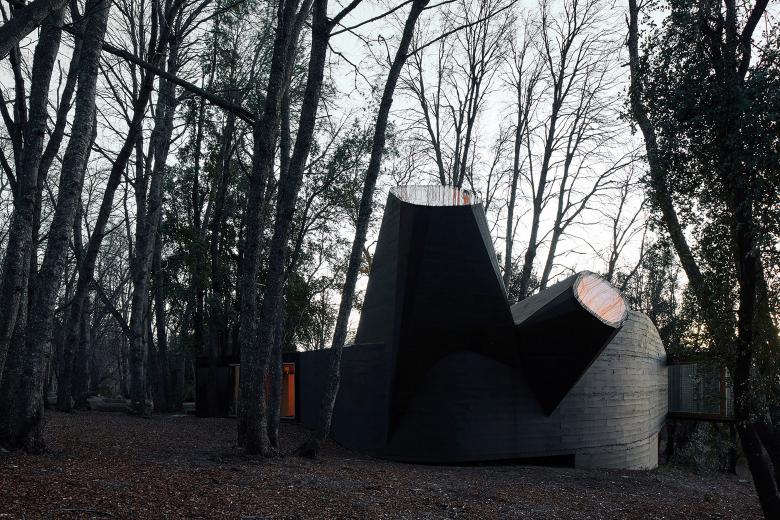
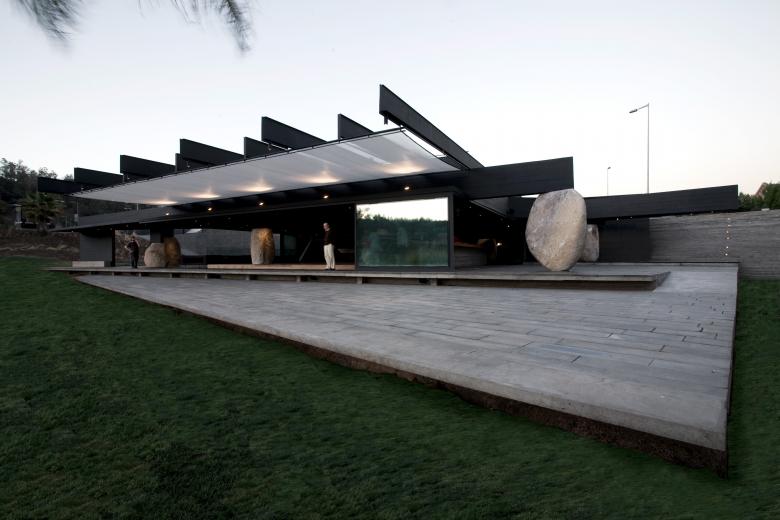
House for the Poem of the Right Angle in Vilches, Chile, 2013 (Photo: Gonzalo Puga. All photographs are courtesy of The Pritzker Architecture Prize.)
Chilean architect Smiljan Radić Clarke has been named the 55th laureate of the Pritzker Architecture Prize. Here we take a photographic tour of seven of Radić's buildings, looking at them from the outside before heading inside to discover the often unexpected qualities of space and light that lie within.
The Pritzker Architecture Prize—considered the Nobel Prize of architecture—is no stranger to controversy. It wasn't that long ago that the prize jury denied a petition to give Denise Scott Brown a “retroactive Pritzker,” in 2013, 22 years after her partner in life and work Robert Venturi received the Pritzker. This year's controversy arose when it was revealed last month that Tom Pritzker, chairman of the foundation that oversees the annual prize, had close ties to Jeffrey Epstein even after his 2008 plea deal over sex crimes.
Tom Pritzker is the son of Hyatt Corporation founder Jay Pritzker and his wife Cindy, who together founded the Pritzker Architecture Prize in 1979 “to honor a living architect or architects whose built work demonstrates a combination of talent, vision, and commitment.” The announcement of the $100,000 prize was delayed a couple weeks from its usual early March timing, but that delay prompted musings over the award's continued relevance (or lack thereof), its funding from the Hyatt Foundation, the impartiality of the jury, and if Tom Pritzer's actions from decades ago would overshadow the work of an architect the jury wished to celebrate.
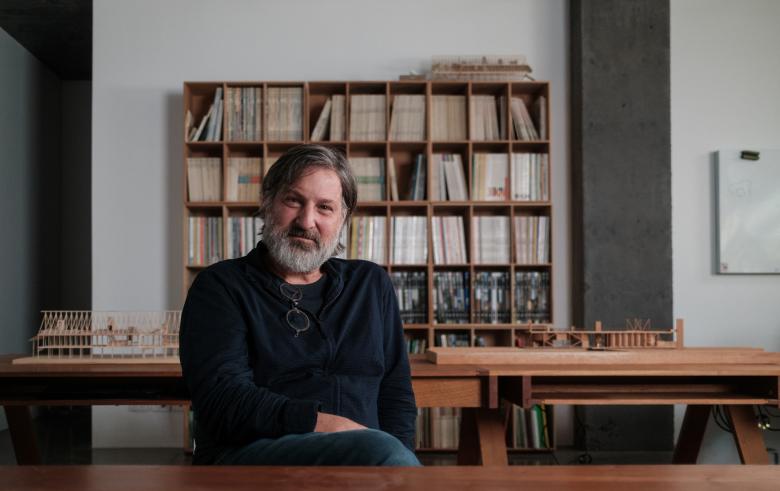
Smiljan Radić Clarke (Photo courtesy of The Pritzker Architecture Prize)
Not surprisingly, the announcement of the 2026 laureate of the Pritzker Architecture Prize on Thursday makes no mention of Tom Pritzker. If anything, the jury's selection of Chilean architect Smiljan Radić Clarke comes across as apolitical—beyond the probable coincidence that jury chair Alejandro Aravena (also the 2016 Pritzker laureate) is, like Radić, based in Santiago. Radić's architecture is focused entirely on the building itself and the environment it sits within: it is site-specific and never repetitive; highly tactile yet also fleeting; and massive but also delicate. Like laureates Peter Zumthor and Glenn Murcutt, Radić is an architect's architect whose portfolio is hyper-local, grounded in a locale he is familiar with. That said, although most of Radić's projects are found in Chile, current projects find him working in Albania, Spain, Switzerland, and the United Kingdom.
“In every work, he is able to answer with radical originality, making the unobvious obvious," comments jury chair Aravena. (Radić, it should be noted, is no stranger to serving on juries: he is currently serving as chair of the 2026 EUmies Awards.) “He reverts back to the most irreducible basic foundations of architecture,” Aravena continues, "exploring at the same time, limits that have not yet been touched. Developed in a context of unforgiving circumstances, from the edge of the world, with a practice of just a few collaborators, he is capable of bringing us to the innermost core of the built environment and the human condition.”
Scroll down for a photographic tour through seven of Smiljan Radić Clarke's buildings completed between 2006 and 2023.
Serpentine Gallery Pavilion
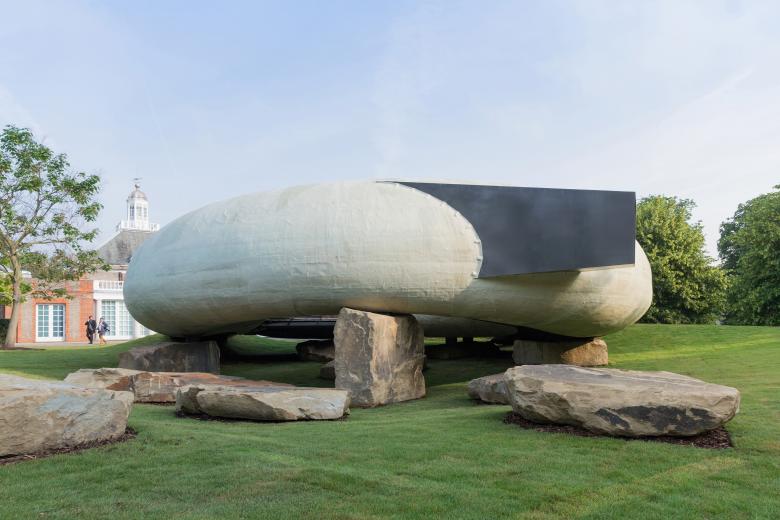
Perhaps Radić's most well known building is the Serpentine Gallery Pavilion that was built in London's Kensington Gardens in 2014. (Photo: Iwan Baan)
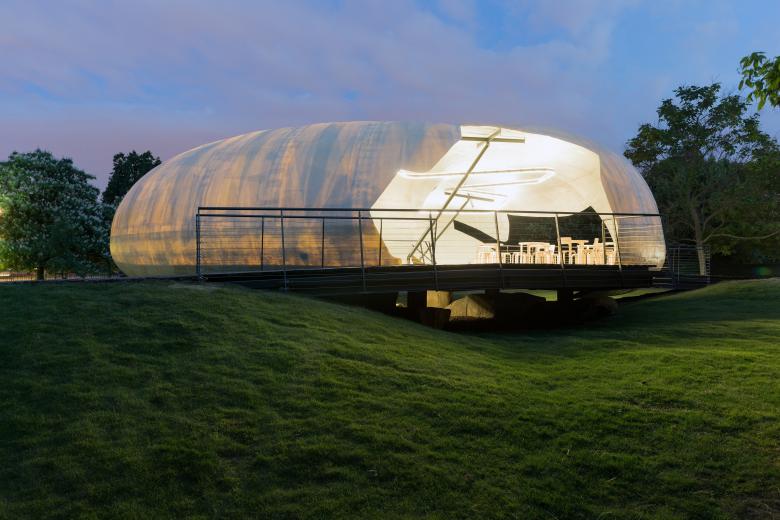
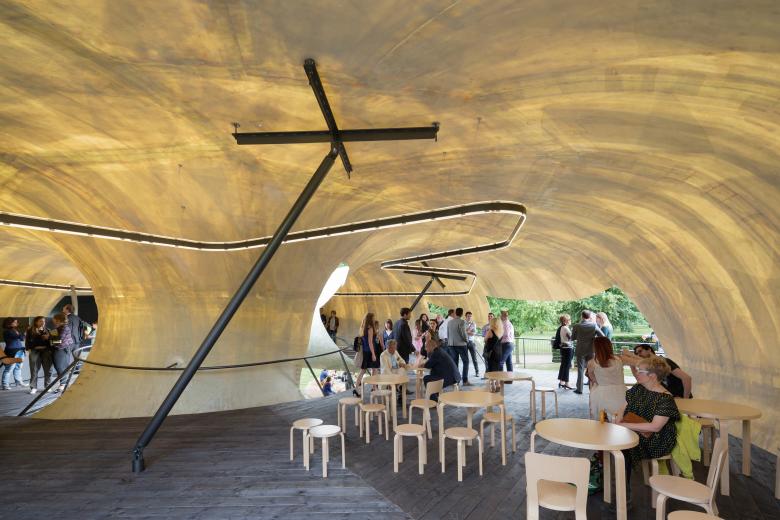
At the time of the commission, the architect described the pavilion as “a fragile shell suspended on large quarry stones,” something that was accentuated after sundown, when light from inside the pavilion would convey the fiberglass shell's thinness. (Photo: Iwan Baan)
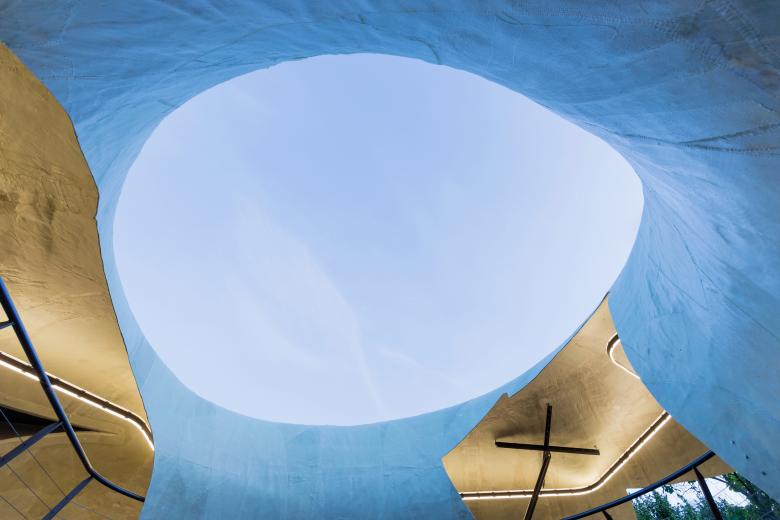
The pavilion was like an irregular torus with multiple openings, rendering it “neither fully enclosed nor entirely open-shaped,” per the Pritzker Prize. (Photo: Iwan Baan)
Events held in the pavilion must have been heightened by the ethereal glow of the structure. The delicate and seemingly improbable building—locally quarried stones and fiberglass shell in all—was moved to Hauser & Wirth's Durslade Farm in Somerset in 2015. (Photo: Iwan Baan)
Guatero
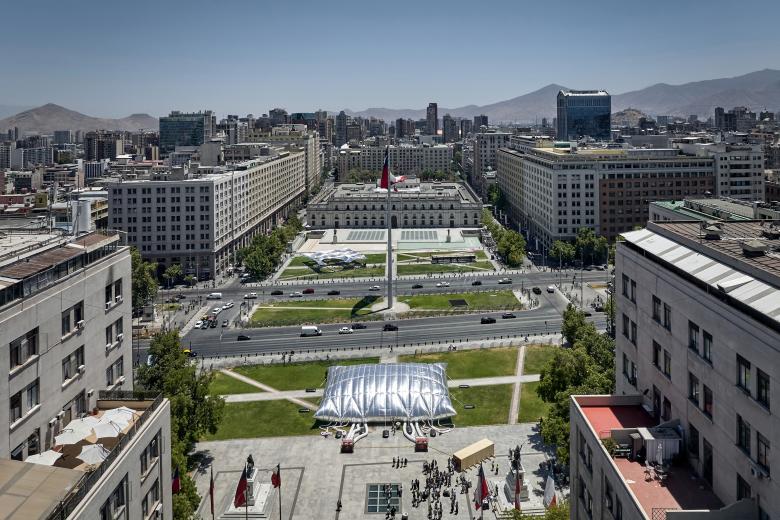
Another temporary structure akin to the Serpentine Pavilion was Guatero, designed by Smiljan Radić Clarke and Nicolás Schmidt for the XXII Chilean Architecture Biennial in Santiago in 2023. The metallic pavilion located in Plaza de la Cultura across from La Moneda Cultural Center. (Photo: Cristobal Palma)
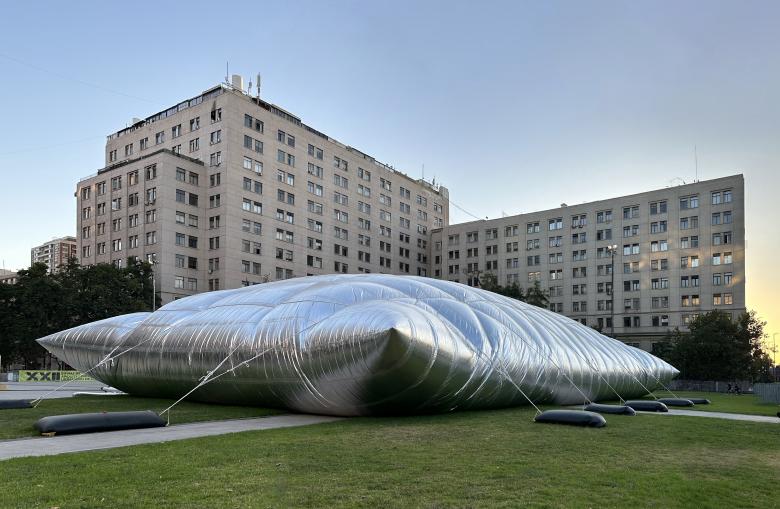
Resembling a foil pillow, the pneumatic structure served as the venue for the biennial's opening and hosted the event’s programs. (Photo: Smiljan Radić)
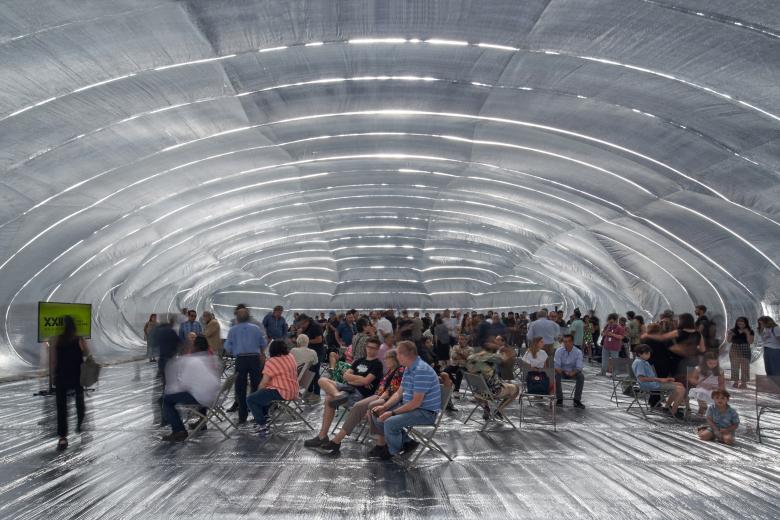
“Its translucent skin diffuses light and amplifies sound, creating an interior that feels intimate despite its scale,” per the Pritzker Prize. “Light, sound, and movement subtly alter its interior condition.” (Photo: Cristobal Palma)
NAVE
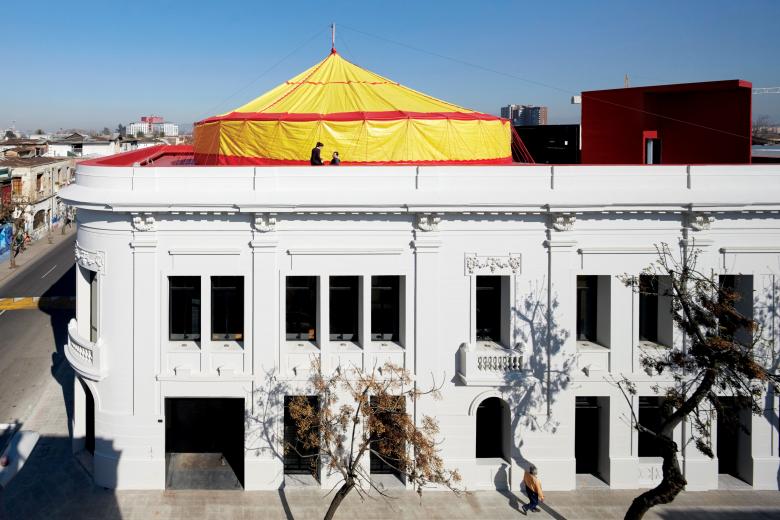
Radić's apparent affinity for translucent structures is found atop NAVE, the transformation of a damaged early-20th-century residence in Santiago into a performing arts center, completed in 2015. (Photo: Cristobal Palma)
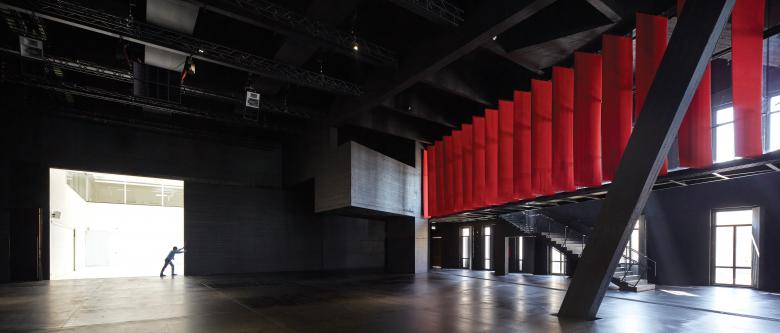
Radić inserted new volumes within the existing building, “creating a layered interior in which rehearsal rooms, workshops, and open-ended performance spaces,” per the Pritzker Prize, “coexist with the memory of the former house.” (Photo: Cristobal Palma)
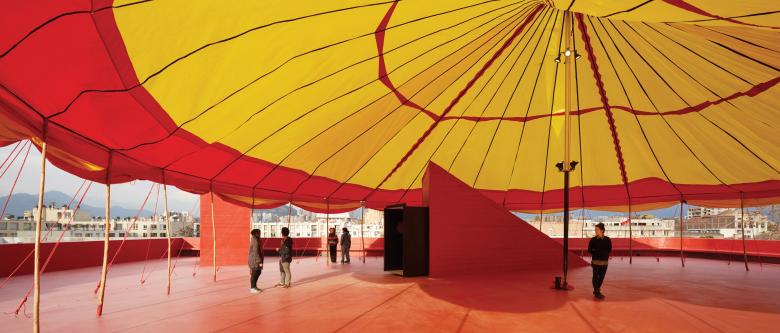
The rooftop terrace is topped by a literal circus tent that is a bold contrast with the old building and its new interiors. (Photo: Cristobal Palma)
House for the Poem of the Right Angle
The black surfaces inside NAVE find kin in the earlier House for the Poem of the Right Angle (2013), located in the forested landscape of Vilches, Chile. (Photo: Cristobal Palma)
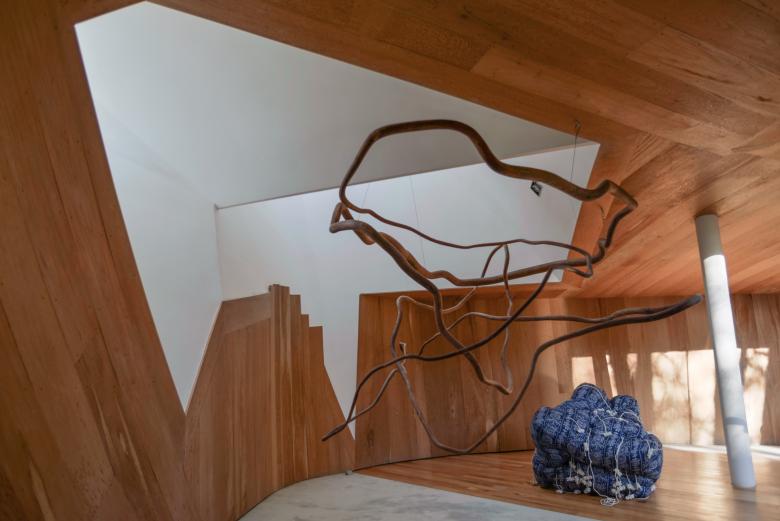
The house is made of thick reinforced-concrete walls painted black, with three skylights protruding from the main volume. (Photo: Cristobal Palma)
The house's form and interior spaces take their name and inspiration from Le Corbusier's The Poem of the Right Angle, a series of lithographs the architect created in the mid-1950s. (Photo: Cristobal Palma)
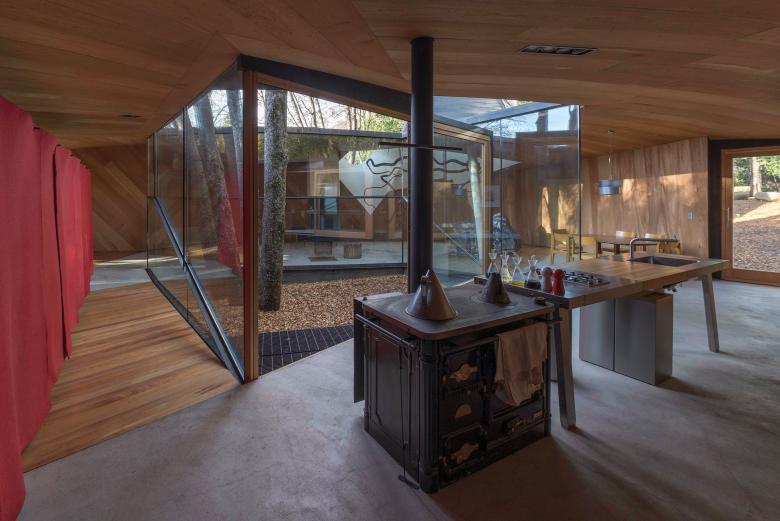
Like the Serpentine Pavilion, what looks solid from the outside is actually a building that wraps a small courtyard, in this case a means of bringing light and nature to the interior while maintaining privacy. (Photo: Cristobal Palma)
Vik Millahue Winery
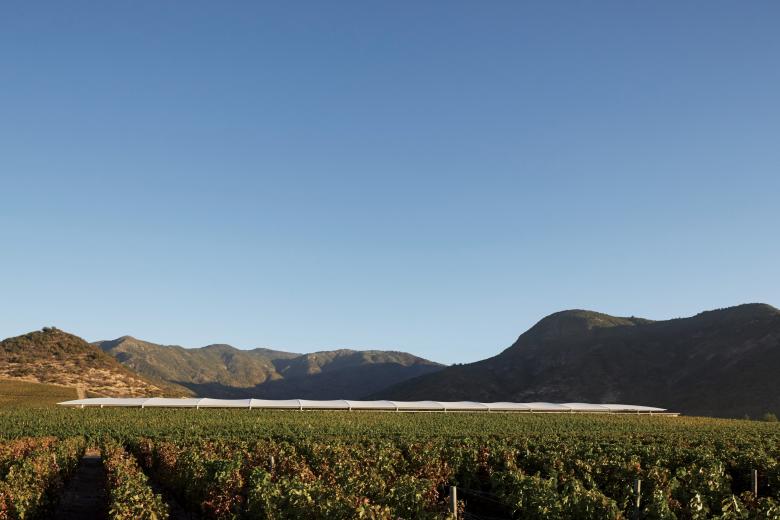
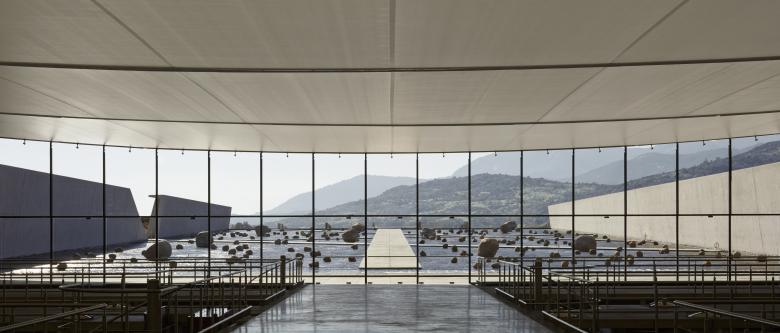
Located in Millahue, Chile, the Vik Millahue Winery was completed in 2013, the same year as the House for the Poem of the Right Angle. While it similarly rural, it is clearly different formally, thereby exhibiting the diversity and site-specificity of each of Radić's designs. (Photo: Cristobal Palma)
The low-slung building seems to dissolve into the landscape from afar, as in the previous photograph, but the building itself is articulated as a sequence of indoor and outdoor spaces that present the process of winemaking to visitors. (Photo: Cristobal Palma)
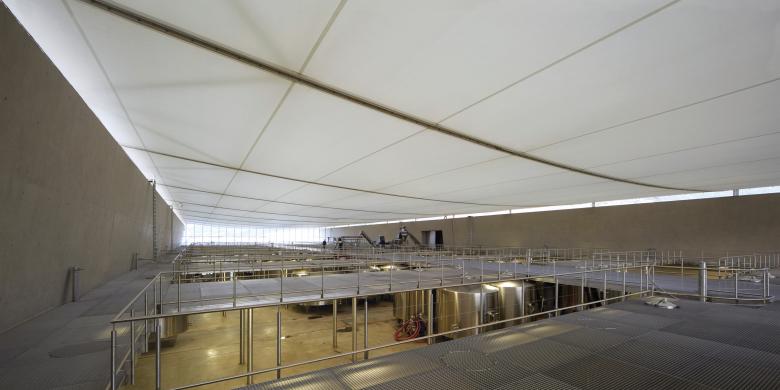
Concrete retaining walls stabilize the building structurally and thermally, the latter in concert with the stretched fabric roof that allows for diffuse natural light into the production facilities. (Photo: Cristobal Palma)
Teatro Regional del Biobío
Completed in 2018, the boxy Teatro Regional del Biobío sits on the edge of the Biobío River in Concepción, Chile. Radić designed the building with architects Eduardo Castillo and Gabriela Medrano. (Photo: Iwan Baan)
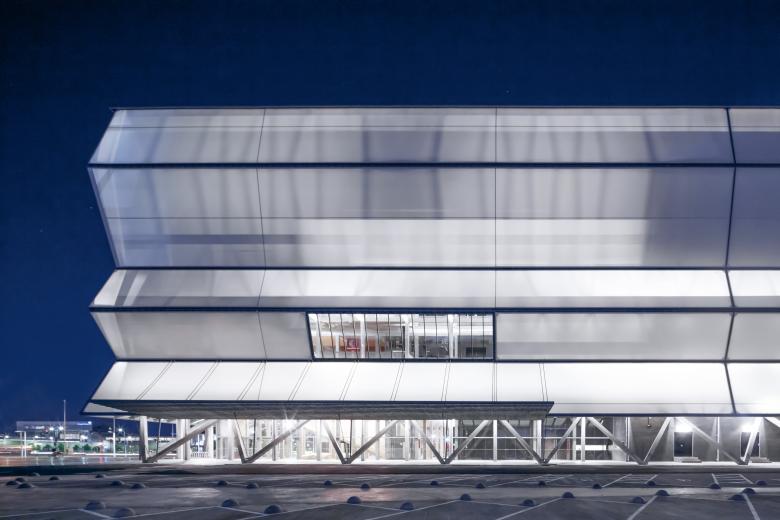
The exterior's serrated profile is made from semi-translucent polycarbone cladding over a steel frame that filters light into the building during the day and allows it to glow at night. (Photo: Cristobal Palma)
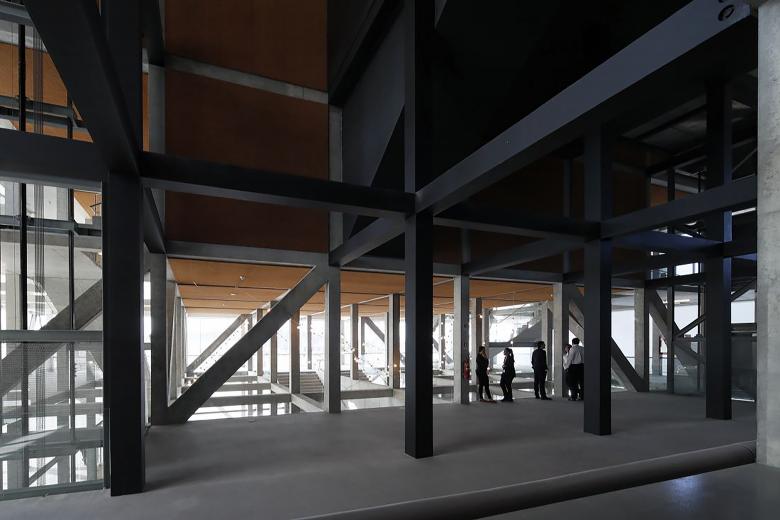
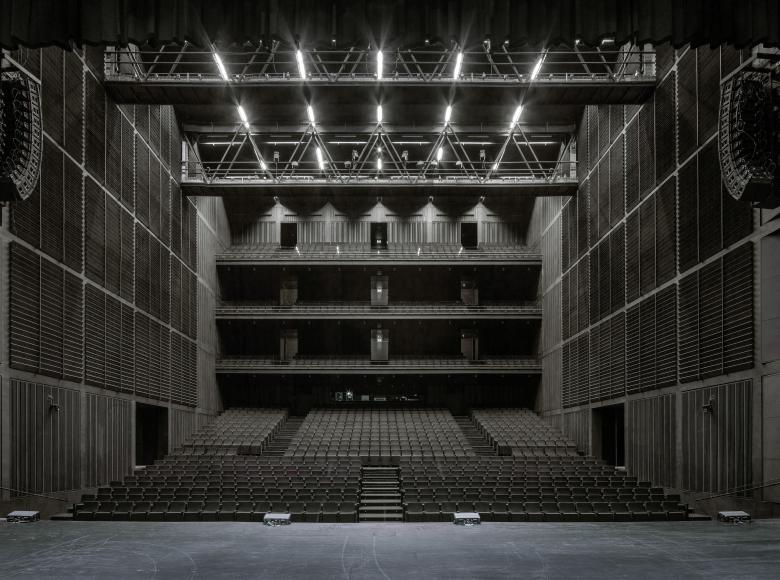
The interior is structured by a concrete frame whose regular grid is meant to echo the scaffolding used to support theatrical scenery. (Photo: Iwan Baan)
The concrete grid supports two halls, one small and, seen here, one large. (Photo: Hisao Suzuki)
Restaurant Mestizo
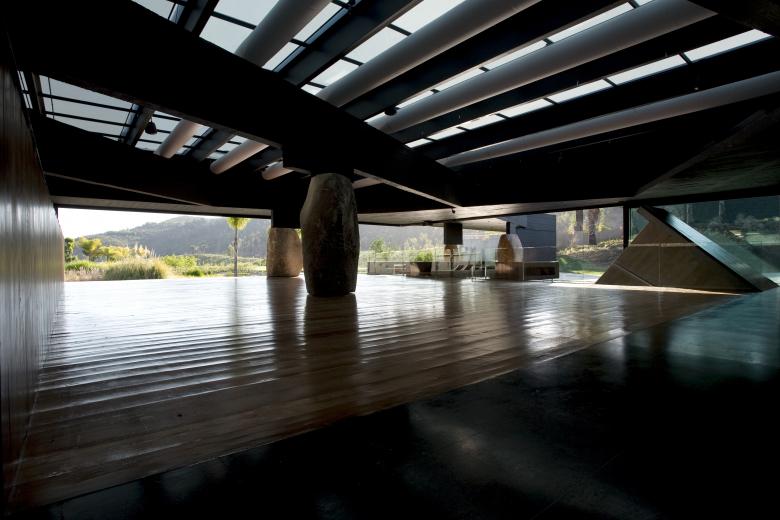
This photograph tour of the architecture of Smiljan Radić Clarke ends with an early work that mirrors the Serpentine Gallery Pavilion. Restaurant Mestizo, completed in Santiago's Bicentenario Park in 2006, features a roof structured by reinforced-concrete beams resting on large stones sourced from a nearby quarry. (Photo: Gonzalo Puga)
These vertical structural members are found throughout the interior, a semi-enclosed space that is illuminated from above by translucent skylights. (Photo: Gonzalo Puga)
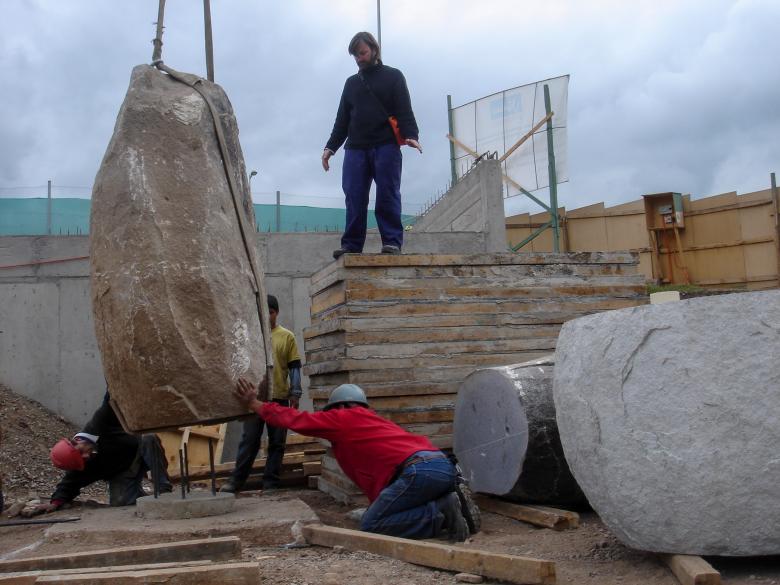
We end with a candid photo of Radić helping to position one of the “lumps of granite” that would support the roof of Restaurant Mestizo. (Photo: Marcela Correa)