Wave Cube
The Three-Body Problem: Trapped in a Wave Sandwich
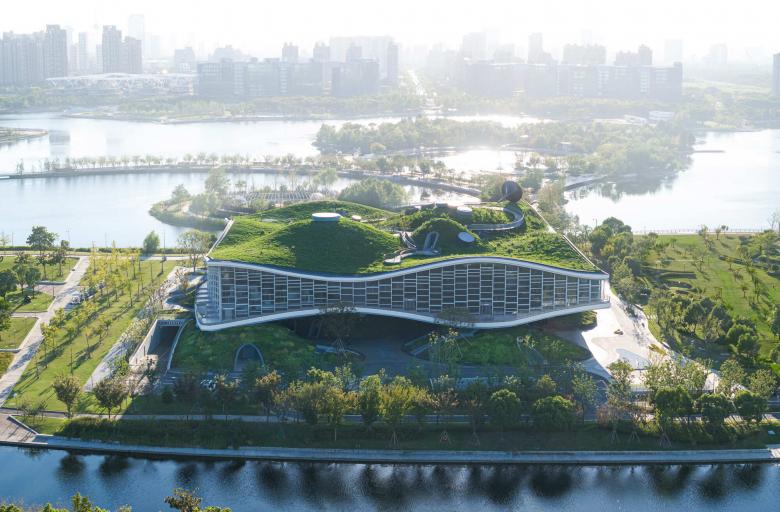
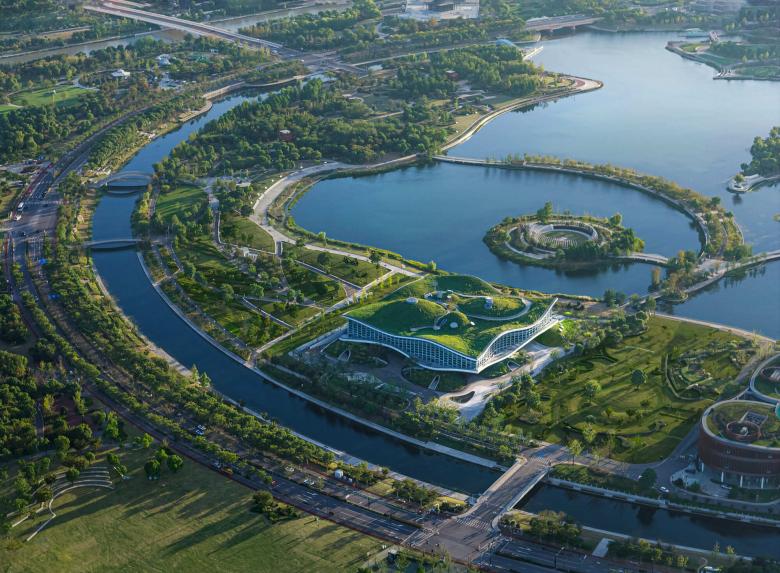
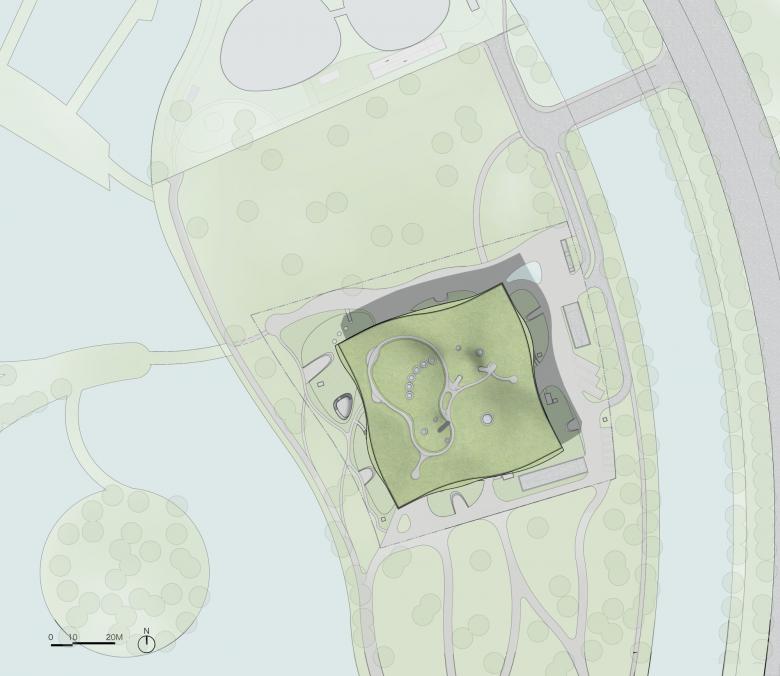
With his firm Scenic Architecture Office, and in collaboration with Tongji Architectural Design Group, Zhu Xiaofeng won the competition to design the Wave Cube science fiction museum in a suburb of Shanghai. The museum is located in the Fengxian District, one of five new districts along the coast to the south of the city center, bordering Hangzhou Bay. At the center is Jinhai Lake, the main landscape feature of the district. The museum site occupies part of a peninsula along the eastern shore of this circular lake on a roughly square-shaped site that fronts the water on its east and west borders.
New buildings always embody a promise of the future. But what kind of promise emerges when a structure is designed to house a specific fictional future, in this case the “Three-Body Future Academy”? Chinese science fiction writer Liu Cixin published the first volume of his trilogy, The Three-Body Problem, in 2006; the English translation followed in 2014. In it, he explores the fragility of human culture, the unpredictability of the universe, and the question of how humanity might confront an aggressive, technologically superior civilization. The story has inspired film and television adaptations, both in China and internationally—including a version produced by Netflix, though thus far these have struggled to fully visualize its speculative future world. Critics have also accused the author of occasional scientific inaccuracies, yet this has done little to diminish the work’s popularity and enduring fascination.
The landscape of Fengxian District is defined by its expansive flatness and agricultural fertility, with areas remaining in active cultivation. Through their design, the architects sought to extend the surrounding landscape into the building and to establish continuity with it through an artificial “hill.” The architects drew on the phenomenon of waves as the conceptual foundation of this design. Waves transmit energy from one point to another without transporting the oscillating particles themselves. They repeat across time and space and are measured by length, frequency, and amplitude. There are different types of waves, including electromagnetic and mechanical waves. Waves of the first type —such as light, radio waves, and X-rays—can occur without a medium, while waves of the second type require a medium like water or, in the case of earthquakes, the earth’s crust. The most visually intuitive manifestation of wave behavior is found in water.
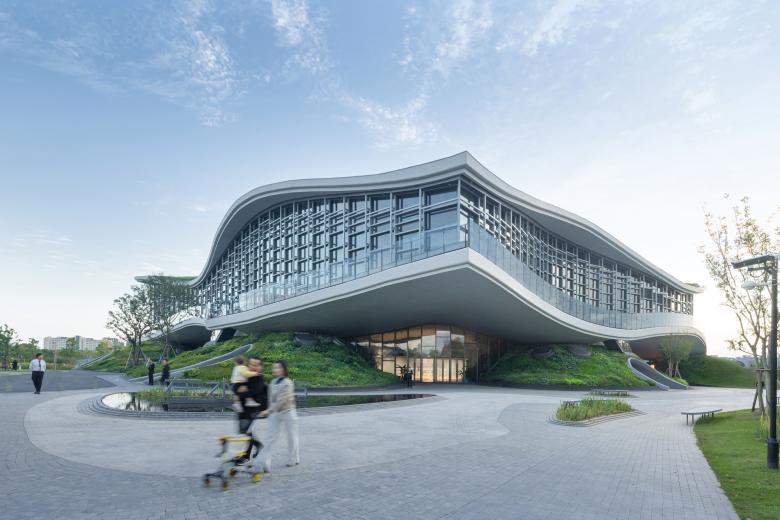
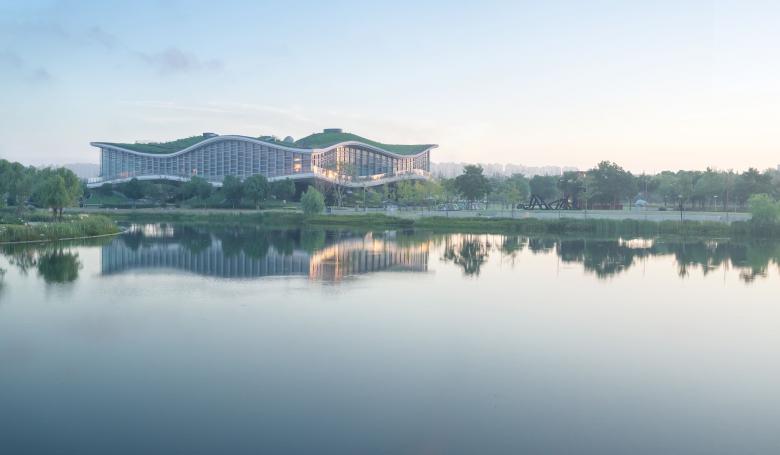
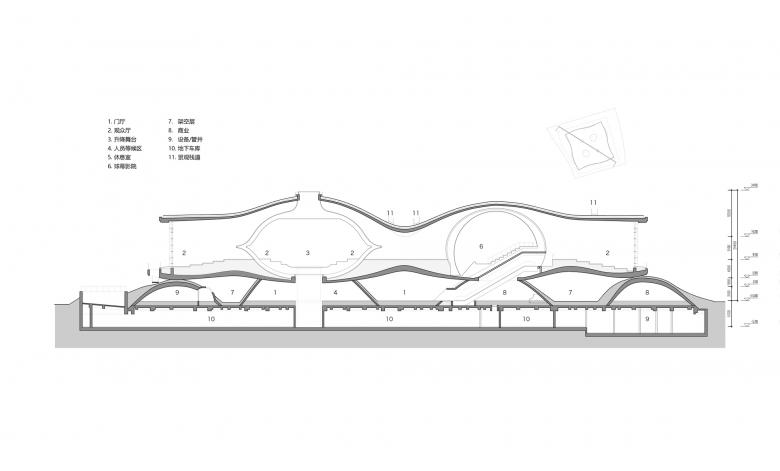
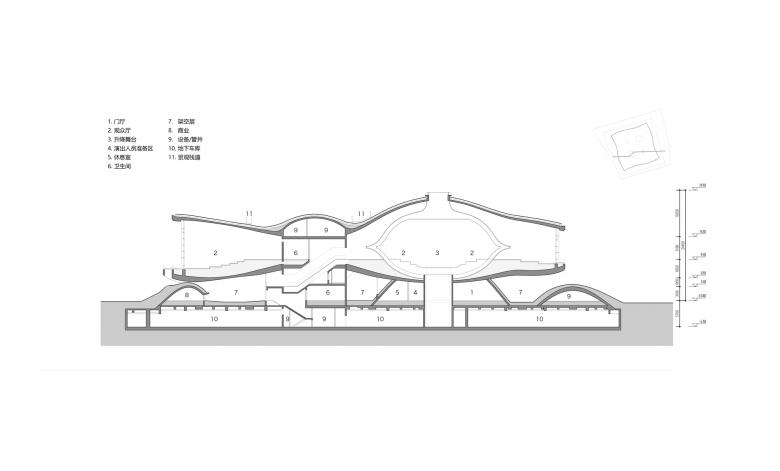
An imagined waveform shapes the museum building’s exterior while also generating an innovative interior spatial form that suggests an infinite expansion in all directions and thereby reflecting a conceptual engagement with space and science fiction. Three wave-shaped layers are stacked within a footprint measuring 80 by 80 meters and rise to a total height of 20 meters. The amplitude and phase of the waveform were defined using a three-dimensional nine-square grid, with the frequency of the wave units in the upper volume determined by two full units, four half units, and two quarter units. This configuration produces a wave-like structure with an amplitude of approximately twelve meters, a span of about 54 meters, and a cantilever of roughly 27 meters.
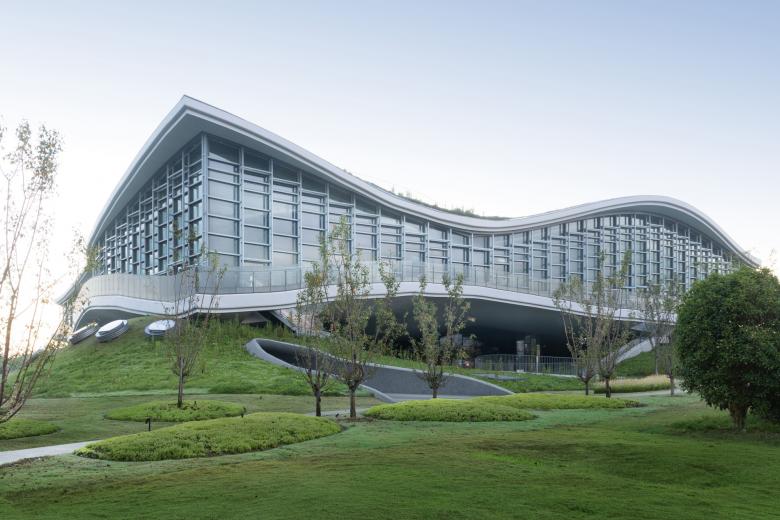
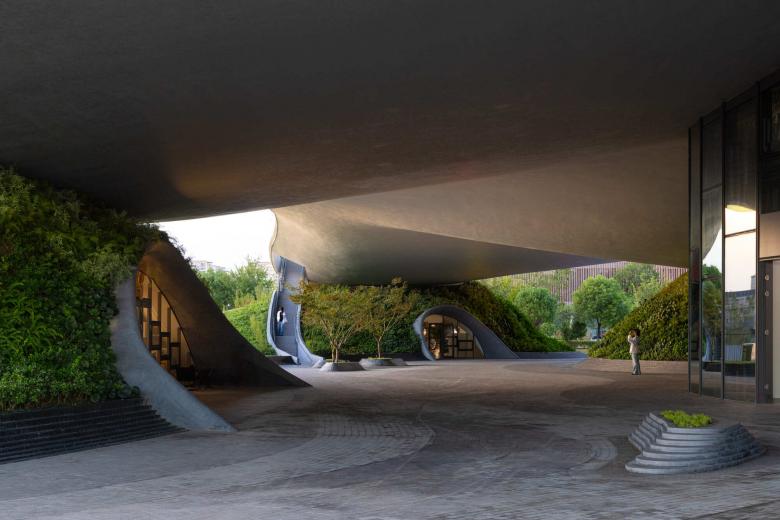
In its formal language, the building is reminiscent of the architectural vocabulary of the Space Age which influenced global design trends in the 1960s and 1970s. Today, China stands on the threshold of deeper space exploration, with successful exploratory missions to the Moon and Mars and its Tiangong space station. These real-world achievements, combined with the popularity of science fiction, fuel public imagination and curiosity and make a building like the Wave Cube not only feasible but culturally resonant.
Zhu Xiaofeng’s architecture reflects a deep-seated belief in a better future shaped by humanity’s expansion into space. Yet a novel like The Three-Body Problem also suggests that the cosmos may not be defined solely by benevolence. If human behavior on Earth serves as a point of reference, it is reasonable to assume that less benign—and perhaps hostile—encounters may await in the vastness of space.
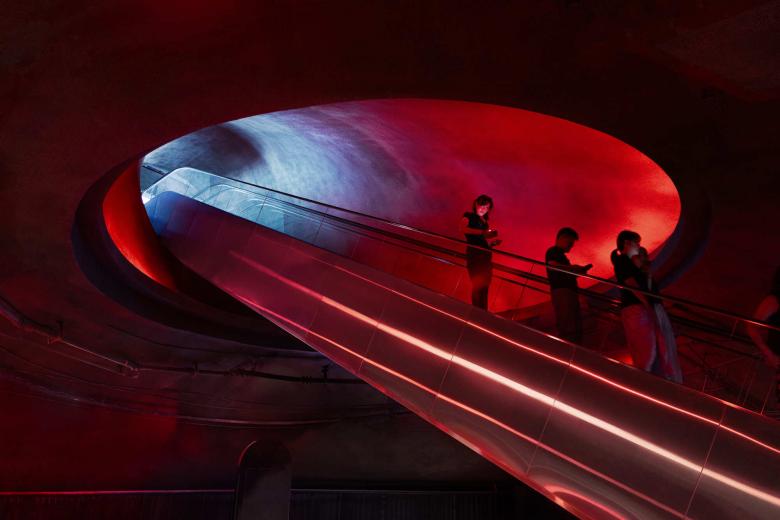
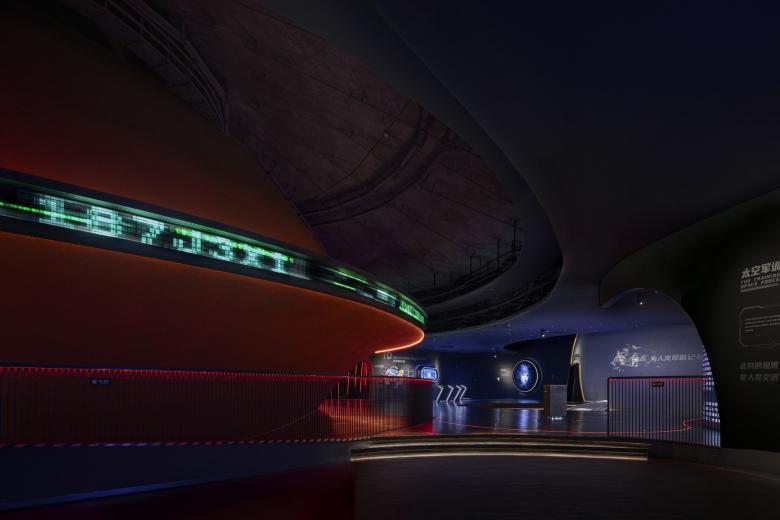
The architects and engineers have met the challenge of shaping the space of undulating geometries with remarkable ingenuity. This distinctive spatial experience invites visitors to engage with new and speculative questions. The composite structure of the three-layered, curved-shell surfaces pushes the limits of reinforced concrete construction. Within this irregular structure—featuring a cantilever approaching almost thirty meters—a continuous, fluid, yet dynamic wave-like form emerges. Particularly groundbreaking is the stacked prestressed concrete shell system, which, given its scale and complexity, required extensive interdisciplinary collaboration. The result merges engineering precision with architectural experimentation, creating a space that transcends conventional boundaries while opening new aesthetic and functional possibilities.
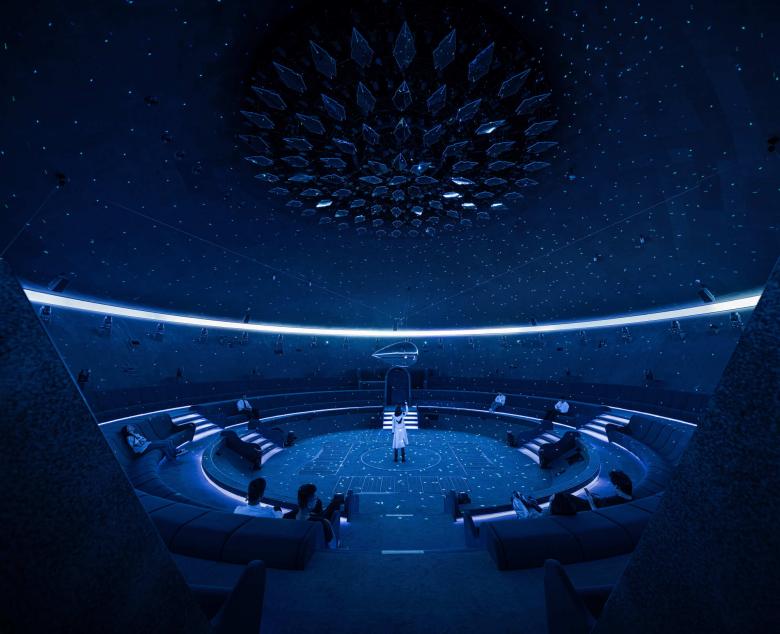
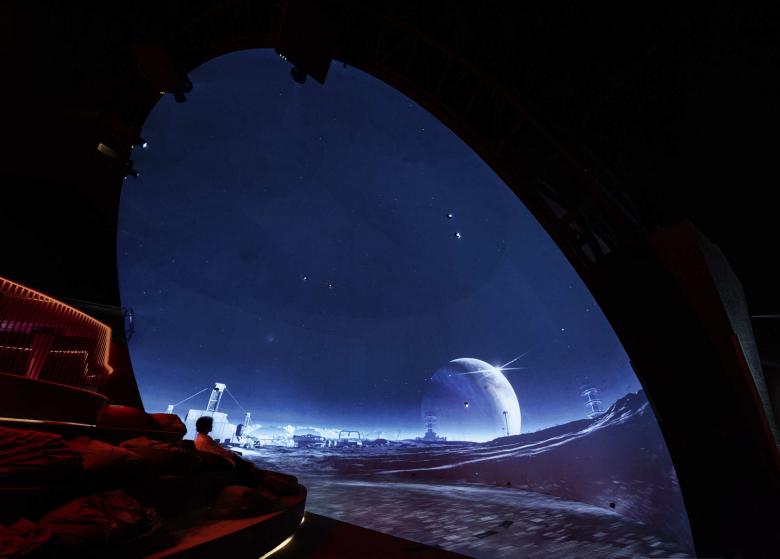
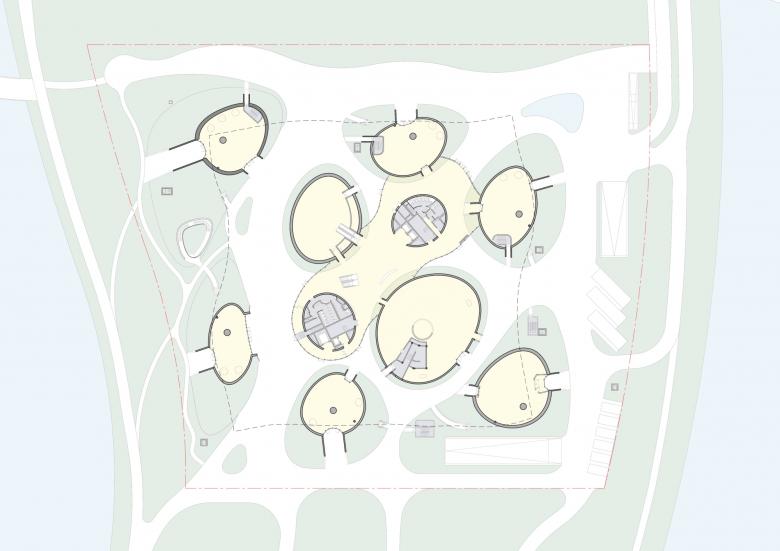
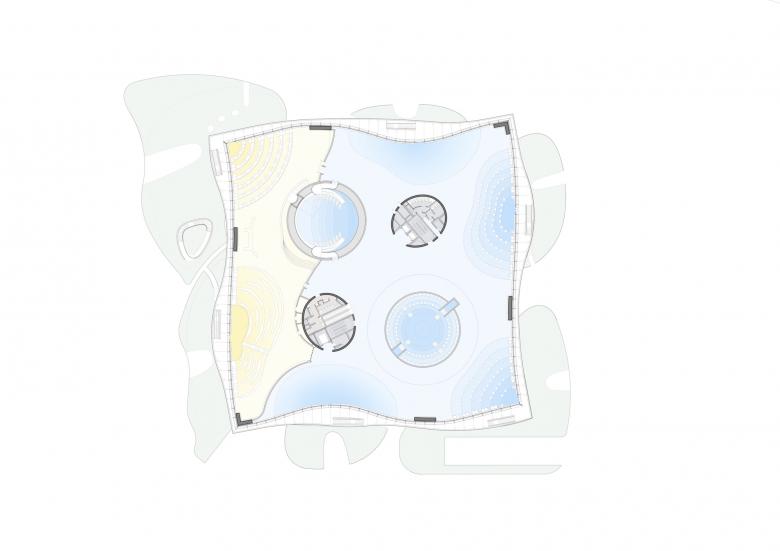
The ground floor consists of eight wave-shaped shells that house the entrance areas, exhibition spaces, and cafés, while the interstitial zones between them form a continuous public realm. On the level above lies a 6,400-square-meter fluid spatial expanse, divided into a northeastern “Dark Zone” for immersive science fiction narratives and a western “Light Zone” overlooking the lake. Atop the structure, the accessible roofscape features the “Grass Landscape on the Waves”—a curved meadow that transforms the building into a green undulating form, integrated with its lakeside setting.
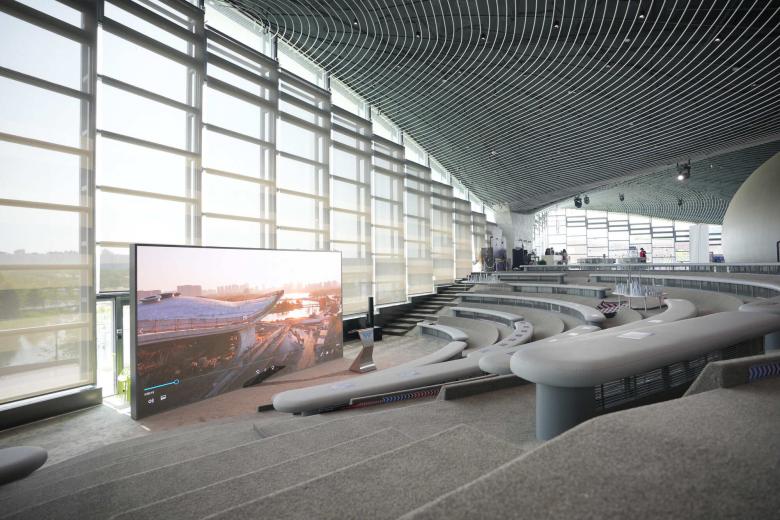
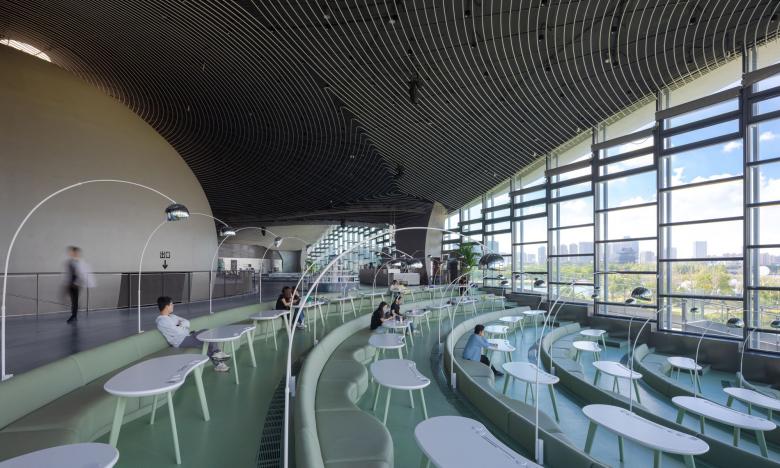
With the Wave Cube, the designers and engineers have realized a visionary architectural statement that gives spatial form to its thematic ambitions. They conceptualized the project as an architectural manifesto of “waves”—not only as a visual metaphor for the surrounding water and landscape, but also as a framework for interactive programs inspired by The Three-Body Problem. Time will reveal how such a conceptual structure ages. For now, however, the architects have created a world that invites visitors to imagine distant futures and the challenges they may hold in store.
Text by Eduard Kögel.
Location: East Shore of Jinhai Lake, Fengxian New City, China
Client: Shanghai Fengxian New City Construction and Development Co., Ltd.
Architecture and Interior Design: Scenic Architecture Office, Shanghai
- Design Principal: Zhu Xiaofeng
- Structural Principal: Zhang Zhun
- Project Manager: Li Qitong
- Design Team: Zhang Xuan (Project Architect), Song Yixuan, Chen Xuanxiang, Su Kaiqiang, Sun Jianong, Zhu Xiaoye, Geng Yutong, Hu Siyuan, Shen Ziwei, Zhang Chi
- Interns: Hu Chenghai, Chen Xi, Xu Youlu, Sun Yihan, Li Jing
- Architectural Team: Huang Jianming, Nie Fei, Gao Yun, et. al.
- Structural Team: Zhang Jinxiao, et. al.
- HVAC Team: Li Weijiang, et. al.
- Plumbing Team: Zhao Shiguang, et. al.
- Electrical Team: Xu Chaoqun, et. al.
- Lighting Team: Yang Xiu, et. al.
Landscape Design: Growdesign Co. Ltd.
Operations and Interior Planning: Shanghai Fengyuzhu Culture Technology Co., Ltd.
General Contractor: Shanghai Construction Group Co., Ltd.
Gross Floor Area: 29,700 m²
Building Height: 19.8 m
Main Materials:
- Walls: Reinforced and Steel-Reinforced Concrete, Medium and Dark Grey Concrete Protectants, Laminated Hollow Ultra-White Glass (Triple Glazed with a Single Chamber on the Ground Floor, Quadruple Glazed with Two Chambers on the Second Floor), Dark Grey T-shaped Steel Curtain Wall Frame (Ground Floor), Light Grey Truss Curtain Wall Frame (Second Floor), Stainless Steel and Laminated Ultra-White Glass Railing System
- Flooring: Concrete Hardener Floor, Granite Tiles, PC Bricks (Ground Floor), PVC Flooring (Second Floor)
- Ceiling: Iridescent Protective Coating (Ground Floor), Dark Grey Protective Coating (Second Floor)